


The customer digital experience is the complete story of every interaction a customer has with your brand online. It’s not just a single website visit; it’s every digital touchpoint, from seeing you on social media to using your mobile app, opening an email, or chatting with a bot.
Think of it as the sum of all digital moments that shape how a customer feels about your business.
What Is the Customer Digital Experience, Really?

Let’s move past the buzzwords. Imagine your brand’s online presence is a beautifully designed building. The customer digital experience is how it feels to walk through that building. Is the entrance welcoming? Are the hallways easy to navigate? Does every room serve a clear purpose and connect logically to the next?
In this analogy, a static website is just one room. A true digital experience considers the entire structure—how someone moves from the lobby (your homepage) to specialized areas (product pages) and service desks (support portals). Every step needs to feel connected, intuitive, and designed with the visitor's goal in mind.
From Static Pages to Dynamic Ecosystems
The modern digital experience has grown far beyond simple, static web pages. Today, it’s a dynamic ecosystem of interconnected platforms working together to deliver one cohesive journey. This shift is critical because customers don’t see channels; they just see your brand.
They expect the conversation they started on a mobile app to continue seamlessly on a desktop website and be referenced in the next email they receive. A disjointed experience, where a customer has to re-introduce themselves at every turn, is no longer acceptable. It just creates friction and breaks trust.
This evolution is driven by a few key realities:
- Sky-High Customer Expectations: Users now compare every online interaction to the best they've ever had, whether that’s with a leading e-commerce retailer or a streaming service.
- Too Many Channels: The journey is fragmented across devices and platforms, from social media and search engines to smart speakers and in-store kiosks.
- The Demand for Personalization: Generic, one-size-fits-all content just doesn’t work anymore. Customers expect brands to understand what they need and want.
A superior digital experience isn’t a competitive advantage anymore—it’s the basic expectation. Businesses that fail to deliver a connected, personal, and frictionless journey across all digital touchpoints risk becoming irrelevant.
The Foundation for a Modern Experience
To build this seamless journey, businesses need more than just a standard Content Management System (CMS). They need a powerful foundation that can manage content, data, and interactions across the entire ecosystem. This is where a robust Digital Experience Platform (DXP) comes in.
Platforms like Sitecore are purpose-built to orchestrate these complex journeys, integrating content delivery, customer data, and commerce tools into a single, cohesive system. To see how this works, explore our guide on what is a Digital Experience Platform. A DXP acts as the central hub, ensuring every interaction is consistent, personalized, and impactful—making it the bedrock of modern business growth and customer retention.
The Anatomy of a Winning Digital Experience
A great customer digital experience doesn’t just happen. It’s carefully engineered from a handful of distinct, interconnected pillars that work together to turn a simple interaction into a memorable journey—one that builds real loyalty and drives growth. Without this solid foundation, even the sharpest-looking website or app will fall flat.
At the core, it all comes down to three things: deep personalization, seamless omnichannel consistency, and a flexible content engine. Each one tackles a specific customer need, from feeling understood as an individual to enjoying a smooth, uninterrupted journey across every single touchpoint. Nailing these pillars is how you create an experience that feels both intelligent and genuinely human.
Hyper Personalization Beyond the First Name
True personalization is so much more than just dropping a customer's name in an email subject line. It’s about understanding their intent, anticipating what they need next, and delivering content that feels like it was made just for them, right when they need it. Pulling this off requires a serious data foundation.
This is where a solution like Sitecore's Customer Data Platform (CDP) really shines. It pulls together data from all over the place—browsing history, purchase behavior, app usage, even interactions from a brick-and-mortar store. By stitching all that together into a single, 360-degree view of the customer, you can move past clunky segmentation and start delivering true one-to-one personalization that makes every interaction feel relevant.
Hyper-personalization is the difference between a brand speaking at its audience and speaking with an individual customer. It’s about using data to build a relationship, not just complete a transaction.
Omnichannel Consistency a Single Conversation
Your customers don’t think in channels. They just see one brand. A winning digital experience has to mirror that reality, delivering a consistent, intelligent conversation no matter where it’s happening. The journey needs to feel connected, whether it kicks off with a social media ad, continues on your website, or wraps up with an in-store pickup.
Making this happen requires a platform that can orchestrate experiences across a scattered digital world. For example, if someone adds an item to their cart on your mobile app, that cart should be waiting for them when they log in later on their laptop. That kind of consistency builds trust and gets rid of the friction that sends customers running. The goal is to make the jump between channels totally invisible. To learn more about designing these smooth transitions, you can explore some of the best UX design practices.
The Agile Content and Knowledge Engine
Trying to deliver personalized, omnichannel experiences is impossible without a powerful content engine humming along behind the scenes. Content is the fuel for every digital interaction, from product descriptions and blog posts to personalized offers and support articles. You need a flexible system that can create, manage, and push that content to any channel at a moment’s notice.
- External Content Delivery: A headless, composable architecture like Sitecore XM Cloud is perfect for this. Its agile setup lets marketers push content anywhere—websites, mobile apps, smart kiosks, you name it—without getting bogged down in long development cycles. This makes sure the right message gets to the customer on whatever channel they prefer.
- Internal Knowledge Backbone: At the same time, SharePoint acts as the crucial internal brain. It organizes the documents, training materials, and workflows that empower your employees to deliver top-notch service. When your customer service team can pull up accurate information from SharePoint in seconds, the quality of the external customer experience goes way up.
A truly winning experience often pulls in innovative features like virtual fitting room technology, which helps customers visualize products and make smarter buying decisions. Features like these simply can't work without this kind of robust content and data infrastructure supporting them.
Connecting Digital Experience to Business Growth
A great customer digital experience isn't just about getting five-star reviews; it's a powerful engine for real, measurable business growth. When you invest in a cohesive digital strategy, you're not just adding to your expenses—you're making a direct investment in your bottom line. The results show up quickly in the KPIs that your leadership and stakeholders actually care about.
It's a simple connection: when you remove friction from the customer journey, you get higher revenue and stronger loyalty. Think of every slow-loading page, confusing interface, or broken link as a leak in your sales funnel. A unified platform like Sitecore seals those leaks, creating a smooth, clear path from the moment a customer discovers you to the point of purchase and beyond.
Turning Experience Into Revenue
The most immediate impact of a polished digital experience is on sales. When customers can easily find what they need, get smart recommendations, and check out without a single hiccup, they are far more likely to buy. This is where a platform like Sitecore's Engagement Cloud shines, orchestrating each step to guide users toward a successful purchase.
Let’s look at a B2B manufacturer that uses Sitecore OrderCloud to run its customer portal. In the past, their customers had to wrestle with complex catalogs and place orders over the phone or by email—a slow process ripe for human error. By shifting to a seamless, self-service portal, the manufacturer doesn't just make customers happier; they see tangible results:
- Increased Average Order Value (AOV): With intelligent product suggestions and one-click reordering, customers end up buying more in every transaction.
- Higher Conversion Rates: A frictionless checkout process drastically cuts down on abandoned carts.
- Reduced Sales Overhead: When customers can manage their own orders, the sales team is freed up to focus on landing strategic accounts instead of tedious manual entry.
To really dig into making your digital experience profitable, it’s crucial to understand what Conversion Rate Optimisation is. It's the art and science of stopping your website from leaking potential revenue.
Empowering Teams to Drive Growth
An exceptional customer experience on the outside is almost always the result of a well-oiled machine on the inside. When your internal teams have the right tools and information at their fingertips, they can deliver faster, more accurate service—which directly boosts the customer digital experience. This is where a tool like SharePoint becomes an indispensable internal knowledge hub.
Picture an enterprise sales team getting ready for a big client meeting. Instead of digging through a maze of shared folders full of outdated documents, they log into a central SharePoint intranet. Everything they need is right there: the latest product specs, relevant case studies, and approved pricing, all current and in one place.
This kind of internal efficiency isn't just a nice-to-have operational perk; it's a genuine competitive advantage. An empowered sales team can respond to customer needs faster and with more confidence, leading directly to shorter sales cycles and higher close rates.
Building Loyalty That Lasts
Winning new customers is exciting, but keeping the ones you have is where the real profit is. A consistently positive digital experience is one of the most powerful drivers of customer loyalty. When customers feel like you understand them and value their time, they’re far less likely to jump ship to a competitor, even for a lower price.
This loyalty pays off in several key ways:
- Increased Customer Lifetime Value (CLV): Happy customers stick around longer and make more repeat purchases.
- Reduced Churn: A smooth, intuitive experience gives customers no reason to start looking elsewhere.
- Positive Word-of-Mouth: Loyal customers naturally become brand advocates, driving organic growth through referrals that you don't have to pay for.
Ultimately, investing in a world-class customer digital experience isn't about just meeting expectations anymore. It's about building a sustainable growth model where better satisfaction directly fuels higher conversions, bigger orders, and unshakable loyalty—securing your company’s success for the long haul.
Choosing The Right DXP Architecture For Your Future
Building an incredible customer digital experience isn't just about a great strategy; it all comes down to the technology you build it on. The architecture of your Digital Experience Platform (DXP) is the blueprint that dictates how fast you can adapt, innovate, and grow. Getting this choice right is a massive decision that will shape your business for years.
For a long time, the only real option was a monolithic, all-in-one platform. Think of it like buying a pre-fabricated home—it comes with everything included, from the plumbing to the wiring, all from one company. It's convenient at first, but what happens when you want to upgrade the kitchen appliances or remodel a bathroom? It becomes a huge, expensive headache. You're locked into a single vendor's world.
The Rise of Composable Architecture
This is why modern platforms like Sitecore have made a decisive shift toward a composable DXP. This approach is more like building with high-end, specialized LEGO bricks. Instead of being stuck with one giant, pre-built structure, you get to pick the best-in-class "brick" for each job—commerce, personalization, content management—and snap them together using APIs.
This MACH architecture (Microservices, API-first, Cloud-native, Headless) gives you unprecedented freedom. You can use Sitecore's powerhouse tools like XM Cloud for content and OrderCloud for B2B commerce, then plug in other best-of-breed solutions that are the perfect fit for your specific business needs.
A composable architecture is all about agility. It breaks you free from vendor lock-in and gives you the power to build a flexible, future-proof tech stack that evolves as quickly as your customers' expectations.
The diagram below shows exactly how investing in a modern CDX architecture becomes the engine for real business growth.
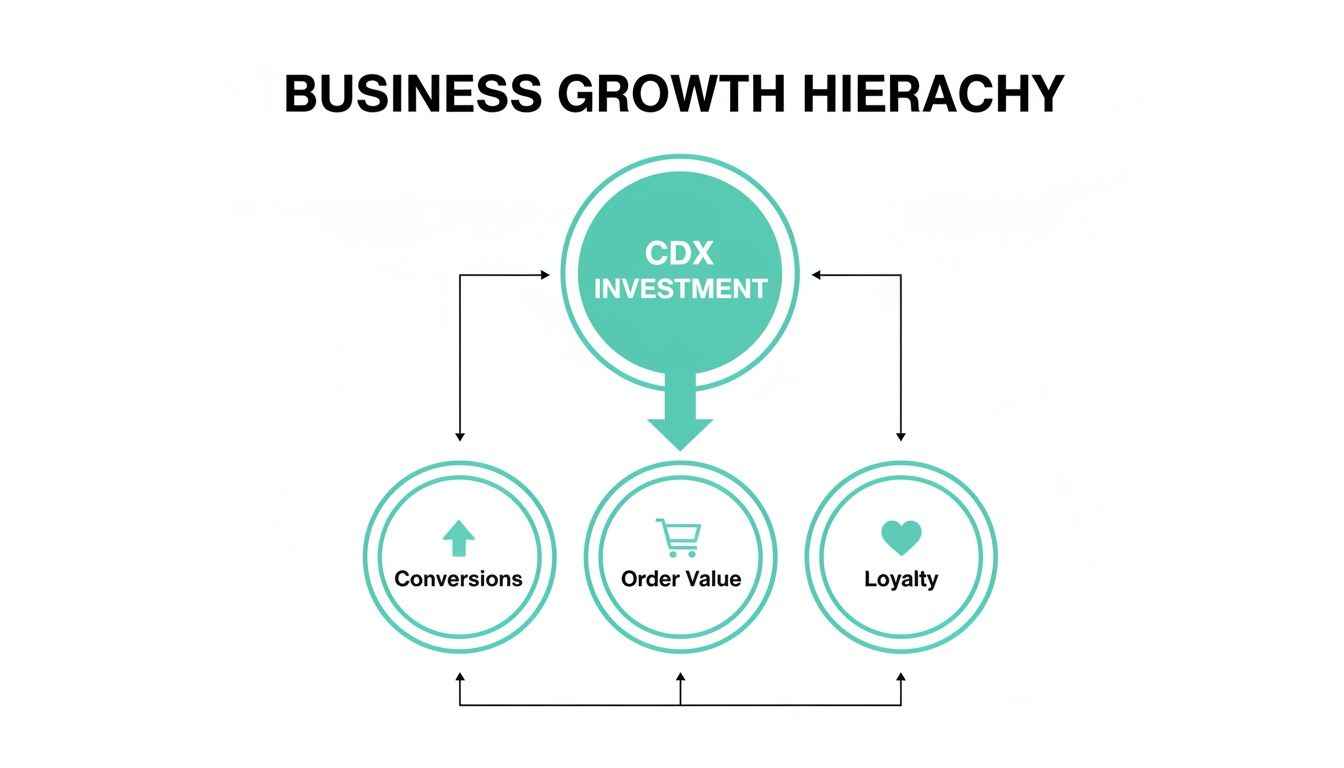
It’s a clear path: smart tech investments lead directly to better conversions, bigger order values, and customers who stick around.
SharePoint's Role in a Composable World
In this flexible ecosystem, SharePoint plays a distinct and critical role. While Sitecore is busy orchestrating the external, customer-facing experience, SharePoint acts as the authoritative engine for your internal operations and enterprise content.
Think of it as the central library and collaboration hub for your entire company. SharePoint becomes the single source of truth for:
- Enterprise Content Management: Managing all the critical documents, policies, and internal knowledge that your teams rely on to do their jobs well.
- Internal Collaboration: Powering the team sites, internal portals, and workflows that make your operations smoother and keep everyone on the same page.
- Knowledge Base: Acting as the ultimate repository of information that your sales and customer service teams tap into, ensuring they always deliver accurate and consistent answers.
When you integrate SharePoint into a composable DXP, the high-quality, internally-managed information can be seamlessly pulled into customer-facing channels whenever needed. This creates a powerful connection where internal efficiency directly elevates the external customer digital experience. For a deeper dive, check out our guide on future-proofing with composable DXP architecture.
Composable DXP vs Monolithic DXP A Comparison
To help make this decision clearer, it's useful to see a direct comparison of the two architectural models. Each has its place, but the momentum is undeniably shifting toward the flexibility that a composable approach provides.
Ultimately, choosing a composable architecture—with Sitecore at the core and SharePoint powering your internal knowledge—gives CTOs and IT leaders the power to build a tech stack that isn't just effective today, but is resilient enough to handle whatever comes next. You're building for the future, not just for right now.
Powering Next-Level Personalization with AI
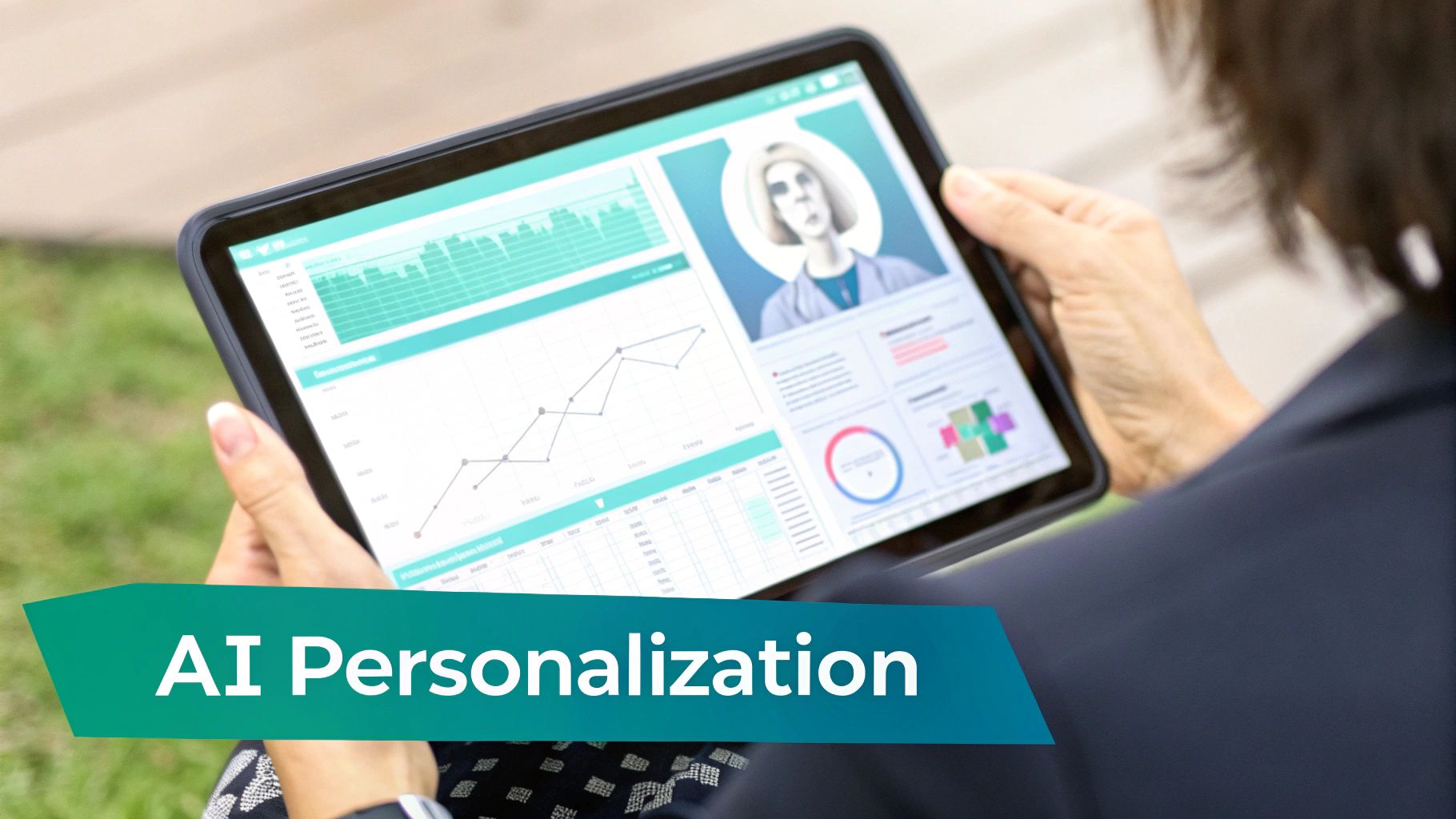
Artificial Intelligence isn't some far-off concept anymore; it's the engine running today's best customer digital experiences. AI works quietly in the background, taking anonymous visitor data and transforming it into interactions that feel genuinely personal and uniquely human. When it's baked into a powerful DXP like Sitecore, AI isn't just about automation—it's a strategic tool that anticipates what your customers need before they even ask.
This isn't just a trend; it's a fundamental shift. Customers expect digital-first interactions, and businesses are rapidly adopting AI to meet those demands. For a platform like Sitecore, AI is more than an add-on; it's woven into its DNA. It’s the intelligence layer that drives everything from predictive analytics to real-time content tweaks, elevating a good experience to an unforgettable one.
Driving Predictive Experiences with Sitecore AI
Sitecore’s tools use AI to help businesses stop being reactive and start being proactive. Instead of just responding to what a user clicks on, the platform starts to predict what they’ll want to see next. This creates a much smarter and more seamless digital journey for every single customer.
This predictive power is built right into Sitecore’s core products:
- Automated Audience Segmentation: Sitecore CDP uses AI to sift through thousands of data points, automatically grouping users into dynamic segments based on their behavior, intent, and likely value. This takes the guesswork out of audience targeting.
- Intelligent Product Recommendations: For e-commerce, AI looks at browsing history and past purchases to suggest products a customer is most likely to buy. It’s a direct path to increasing average order value.
- Real-Time Journey Optimization: Sitecore Personalize can test different content variations on the fly, automatically serving the version that clicks with a specific user segment to push conversions higher.
AI transforms personalization from a manual, rule-based chore into an automated, intelligent system that learns and adapts with every user interaction. It’s the difference between showing a customer what they searched for and showing them what they didn't even know they needed.
Scaling Content Creation with Generative AI
One of the biggest hurdles in personalization is creating enough content to make every experience feel unique. Sitecore tackles this problem head-on by integrating generative AI. Now, marketing teams can produce high-quality content variations at a scale that would be impossible for humans alone.
Imagine a marketer writes one headline for a hero banner. With AI, they can instantly generate ten different versions tailored to specific audiences—one for first-time visitors, another for loyal customers, and a third for someone who abandoned their cart. The messaging stays relevant without burying the content team in extra work. To see a full breakdown of how this works in practice, check out our AI personalization in DXP implementation guide.
Enhancing Knowledge Discovery in SharePoint
While Sitecore excels at the external customer experience, AI is just as vital for the internal experience that powers it. Within SharePoint, AI supercharges the platform’s ability to act as an intelligent knowledge hub for the entire organization.
AI-powered features make critical information instantly available to the employees who need it to serve customers well.
- Intelligent Search: AI-driven search understands the context of an employee's query, not just the keywords, delivering more relevant documents and answers from across the business.
- Automated Content Tagging: AI can automatically scan documents and apply relevant metadata tags, making content much easier to organize and find later.
- Content Discovery: SharePoint can proactively suggest relevant documents and insights to users based on their role, team, and current projects.
When you pair Sitecore’s customer-facing AI with SharePoint’s internal knowledge intelligence, you create a complete ecosystem. Smarter data on the inside directly fuels a better customer digital experience on the outside.
Your Questions on Customer Digital Experience Answered
Making the leap to a world-class customer digital experience naturally brings up questions about technology, strategy, and getting things done. We've covered a lot of ground, and it's clear that the right platform and approach are everything. This final section tackles the most common questions leaders have when using solutions like Sitecore and SharePoint to build truly connected journeys.
Think of this as your practical guide to bridging the gap between a great strategy and flawless execution. The goal here is to give you clear, direct answers that reinforce what it takes to build a digital ecosystem that’s flexible, intelligent, and completely centered on your customers.
How Does Sitecore's Composable DXP Differ from a Traditional CMS?
A traditional Content Management System (CMS) is built to do one thing really well: create and manage website content. It’s like a specialized tool for a single job. In contrast, Sitecore's Composable DXP is an entire ecosystem designed for orchestrating experiences.
Imagine you're setting up a custom workshop. Instead of buying a pre-packaged toolkit with a bunch of tools you’ll never use, you handpick the best drill, saw, and sander from different brands and make them work together seamlessly. That’s the composable approach. It lets you integrate best-of-breed tools for commerce (OrderCloud), personalization (CDP), and content (XM Cloud) into one cohesive platform. The result is far more flexibility and power than you’d ever get from a rigid, all-in-one CMS.
What Is the Role of SharePoint in a Modern Digital Experience?
If Sitecore manages the external, customer-facing experience, then SharePoint is the engine that powers the internal experience supporting it. Think of it as the central hub for documents, internal communications, and the collaborative workflows that keep your teams aligned and effective.
When integrated into your DXP, SharePoint ensures that the knowledge your employees need to deliver great service is organized, accessible, and up-to-date. It’s the internal machinery that keeps the external customer journey running without a hitch.
Where Should I Start with Personalization?
The key to getting personalization right is to start small and build momentum. Don’t fall into the trap of trying to achieve perfect one-to-one personalization on day one. A much better approach is to begin by segmenting your audience based on clear behaviors, like new vs. returning visitors or customers who have made high-value purchases.
Use Sitecore to deliver targeted content or offers to these groups first. As you gather more data in your Customer Data Platform (CDP), you can gradually move toward more sophisticated, real-time personalization that feels genuinely individual.
Expertise is crucial for turning strategy into reality. As industry data shows, many businesses struggle to execute their CX vision, with a significant number failing to improve their customer experience year-over-year. This execution gap often stems from a lack of deep platform knowledge and the inability to centralize data effectively. You can discover more insights on the state of customer experience to see why expert implementation isn't just a nice-to-have—it's critical.
At Kogifi, we specialize in turning complex platform capabilities into real business growth. Our deep expertise in Sitecore and SharePoint ensures your technology investment doesn't just sit there—it delivers a superior customer digital experience that drives measurable results. Let's build your future-proof DXP together.