


In the shift toward composable digital experience platforms (DXP), selecting the best headless CMS has become a critical strategic decision, not just a technical one. Traditional, monolithic systems can no longer keep pace with the demand for omnichannel content delivery, personalized customer journeys, and agile development cycles. Enterprises, particularly those managing complex ecosystems like Sitecore or SharePoint, require a content infrastructure that is both powerful and flexible, capable of serving experiences to websites, mobile apps, IoT devices, and emerging AI-driven interfaces from a single, unified hub.
This in-depth guide is designed to cut through the complexity. We provide a comprehensive evaluation of leading headless CMS platforms, moving beyond surface-level features to deliver actionable insights for enterprise leaders. Our focus is centered on Sitecore's composable product portfolio, its powerful AI capabilities, and how it integrates within a modern DXP. We will also explore how these principles apply to enhancing SharePoint environments. For each platform, you will find a detailed profile, screenshots, and direct links, enabling a thorough and efficient comparison. Our analysis focuses on the criteria that matter most to large-scale organizations: scalability, security, developer experience (DX), and the quality of the editorial user experience (UX).
We will explore how platforms like Sitecore Content Hub ONE, XM Cloud, and others stack up, helping you identify the ideal solution for your specific use case. Whether you're migrating from a legacy system, building a next-generation e-commerce platform, or seeking to integrate advanced AI capabilities into your content strategy, this roundup provides the clarity needed to make a confident, future-proof investment. We'll examine how these solutions can augment and enhance existing Sitecore and SharePoint environments, offering the agility required for modern digital engagement without a complete overhaul.
1. Contentful
Contentful stands out as a pioneering, enterprise-grade headless CMS, designed from the ground up for scalability, governance, and high-performance digital experiences. It provides a composable content platform that decouples content from its presentation layer, empowering development teams to build with any modern tech stack while giving editors a powerful, collaborative workspace. This API-first approach is central to its architecture, enabling businesses to treat content as a structured, reusable asset ready for any channel, from websites and mobile apps to IoT devices.
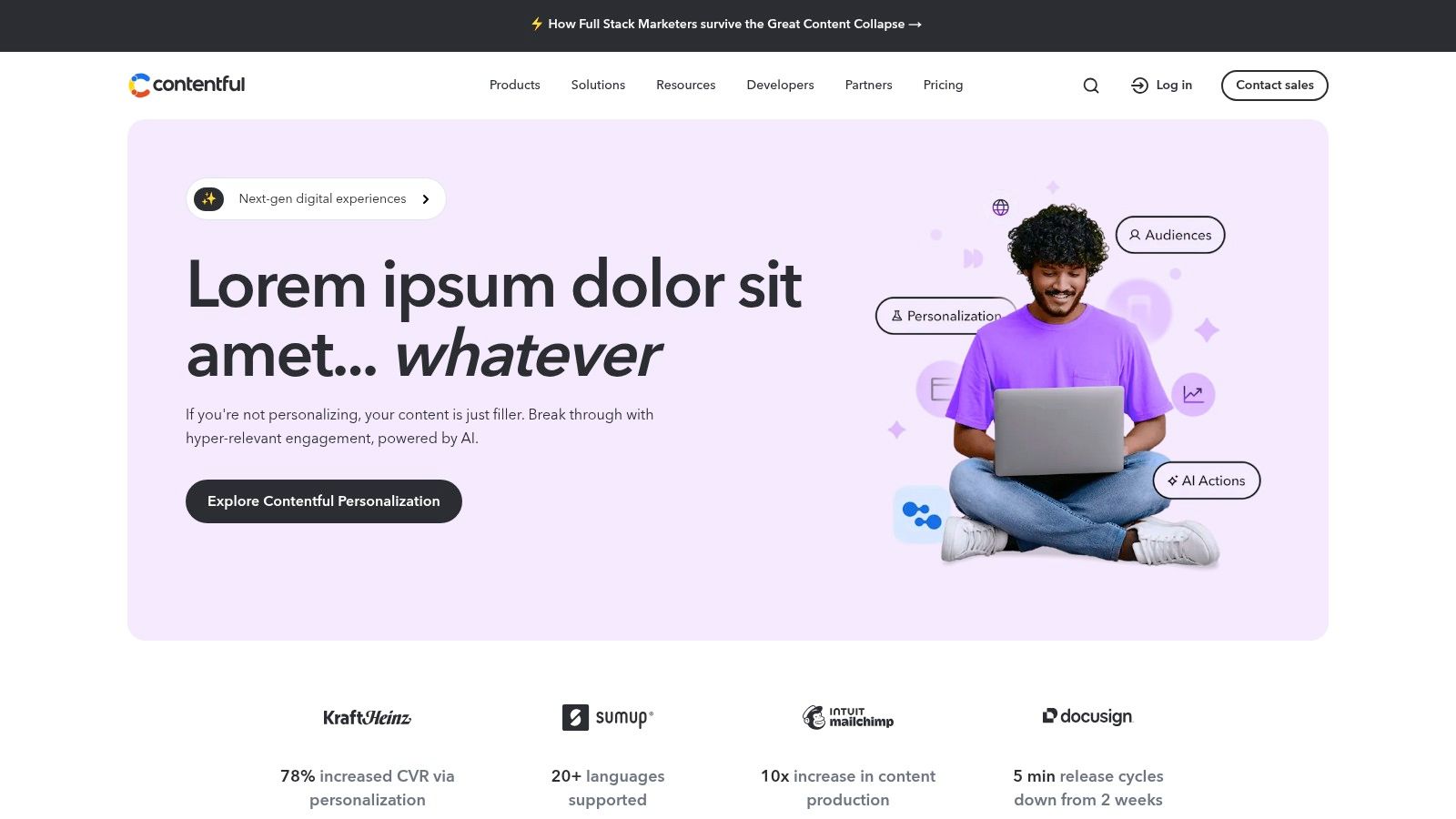
The platform is engineered for large organizations that require robust control and security. Its granular roles and permissions system allows administrators to define exactly who can create, edit, and publish content, ensuring brand consistency and regulatory compliance. For enterprises needing guaranteed uptime, Contentful's Premium plans offer high-availability Service Level Agreements (SLAs) up to 99.99%, backed by a globally distributed CDN for fast, reliable content delivery.
Key Features and User Experience
Contentful excels in both its developer and editor experiences. Developers benefit from comprehensive documentation, SDKs for popular languages, and the choice between REST and GraphQL APIs. This flexibility allows them to fetch precisely the content they need, optimizing application performance. The platform's app framework also enables the creation of custom workflows and integrations, extending the CMS's core functionality to fit specific business needs.
For content teams, the user interface is clean and intuitive. Features like scheduled publishing, commenting, and task assignments are built directly into the editorial workflow, streamlining collaboration. Content modeling is a core strength; users can define custom content types with various fields, creating a structured and predictable content repository.
Expert Insight: Contentful's power lies in its structured content model. By defining content types like "Article," "Author," and "Campaign" with specific fields, you create a future-proof content repository that isn't tied to a single webpage layout, making it a strong contender for one of the best headless cms solutions for omnichannel strategies.
Pricing and Availability
Contentful offers a tiered pricing structure designed to scale with organizational needs:
- Free Tier: A generous free plan for individual projects or for teams to explore the platform.
- Basic Tier: Aimed at small teams building single digital products.
- Premium Tier: The enterprise-focused offering that includes advanced features like customizable SLAs, dedicated support, and enhanced security protocols. Pricing is custom and requires contacting their sales team.
While the entry-level paid plans may seem high for smaller teams, the value for enterprise customers is clear. The platform's emphasis on an API-first approach ensures that it can integrate seamlessly into a larger composable DXP architecture, a critical requirement for global brands and regulated industries.
Website: https://www.contentful.com/
2. Strapi
Strapi has established itself as the leading open-source headless CMS, offering an unparalleled combination of flexibility, developer control, and community support. It empowers teams to build modern, performant digital experiences by providing a highly customizable, self-hostable platform. Its core philosophy centers on giving developers full control over their data structure and APIs, making it a powerful choice for projects that require a tailored backend without vendor lock-in. This open-source nature is its key differentiator, allowing for deep customization and transparent development.
Built on Node.js, Strapi is entirely JavaScript-based, creating a seamless experience for modern development teams. It can be self-hosted on any cloud provider (AWS, Azure, etc.) or on-premises, giving organizations complete data sovereignty and infrastructure control. For teams preferring a managed solution, Strapi Cloud offers a PaaS (Platform as a Service) option that handles hosting, scaling, and maintenance, allowing developers to focus solely on building their applications.
Key Features and User Experience
Strapi's developer experience is a primary strength. It features a powerful Command Line Interface (CLI) for quickly scaffolding new projects and an auto-generated documentation plugin for its REST and GraphQL APIs. Developers can define content models through a graphical user interface or directly in the code, providing flexibility for different workflows. The entire admin panel is customizable, allowing teams to extend its functionality with custom plugins or modify the user interface to match their brand.
For content editors, the admin panel is clean and highly intuitive. It provides a straightforward way to manage content, users, and media. The roles and permissions system is robust even in the free version, enabling administrators to set granular access controls for different user types. This combination of powerful developer tools and a user-friendly editor interface makes Strapi a versatile and one of the best headless cms options for teams of all sizes.
Expert Insight: Strapi's true advantage is its extensibility. Because it's open-source, you can modify anything from the admin UI to the underlying API logic. This makes it ideal for projects with unique integration requirements or those needing a completely bespoke content management backend.
Pricing and Availability
Strapi’s pricing model is designed to be accessible and scalable, catering to individual developers and large enterprises alike:
- Community Edition (Free): The core open-source product, which is free forever. It is fully functional and can be self-hosted without limitations.
- Strapi Cloud: A managed hosting solution with a free tier for small projects and paid plans (Pro, Team) that scale based on usage, users, and environments.
- Enterprise Edition: A self-hosted or cloud-hosted plan that unlocks advanced features like Single Sign-On (SSO), advanced role-based access control, and dedicated enterprise support. Pricing is quote-based.
This flexible model allows businesses to start with the free version and scale into paid tiers as their needs for hosting or advanced security features grow. The platform's adaptability and low barrier to entry highlight the significant benefits of a headless cms, particularly for organizations seeking a cost-effective yet powerful solution.
Website: https://strapi.io/
3. Sanity
Sanity establishes itself as a unique and highly flexible platform, often referred to as "The Composable Content Cloud." It combines a real-time, collaborative content backend with a completely customizable, open-source editing environment called Sanity Studio. This approach empowers developers to build bespoke authoring experiences tailored precisely to their content models and editorial workflows, moving far beyond the rigid interfaces of traditional systems. By treating content as structured data, Sanity ensures it can be fluidly delivered to any front-end framework, website, or application.
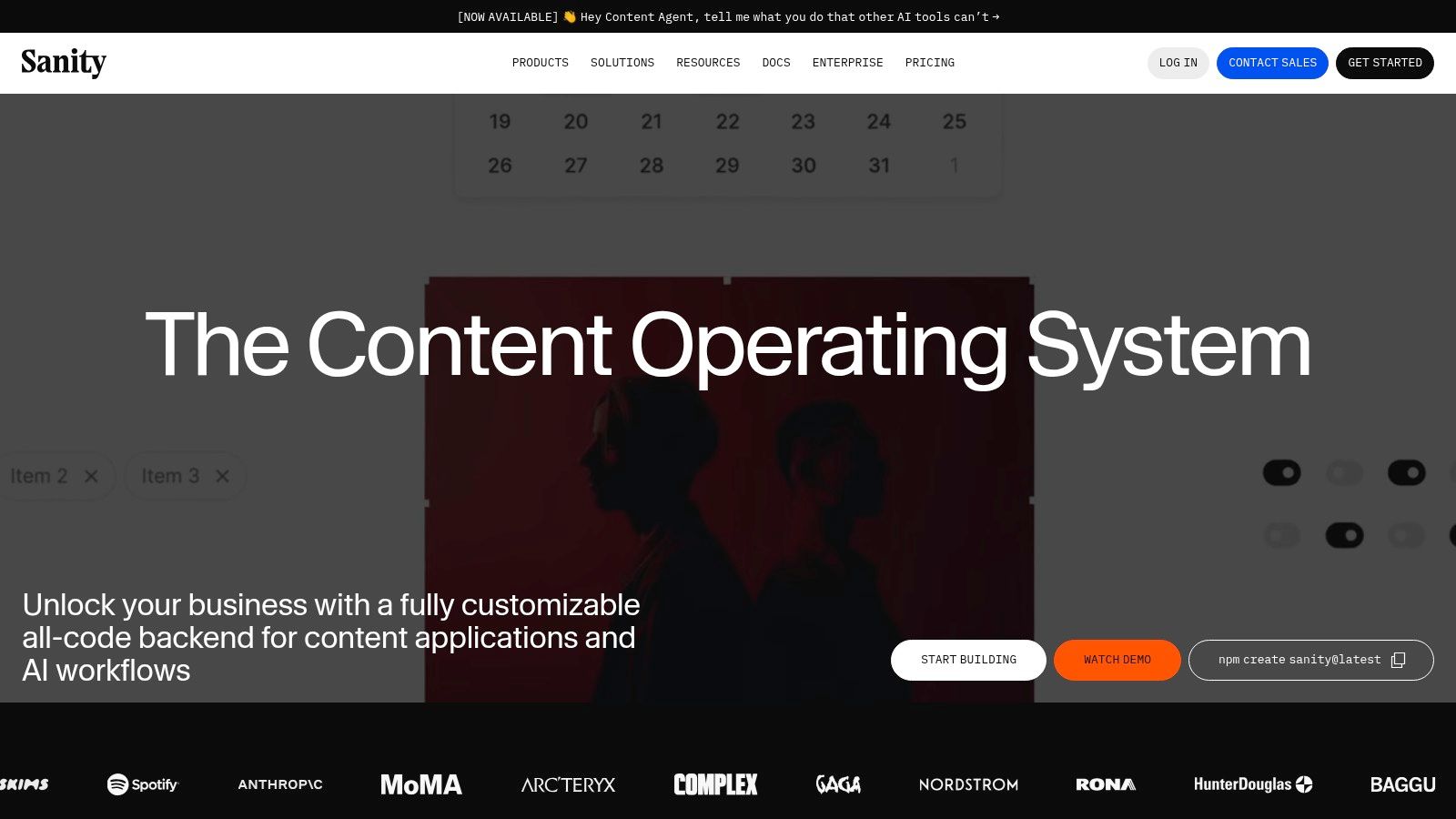
The platform is architected for real-time collaboration, allowing multiple editors to work on the same content simultaneously without conflicts, similar to modern tools like Google Docs. This feature is particularly beneficial for large, distributed content teams that require agility and speed. Sanity's powerful query language, GROQ (Graph-Relational Object Queries), offers developers granular control over data fetching, enabling them to shape and join documents on the fly for highly performant and complex front-end experiences.
Key Features and User Experience
The standout feature for Sanity is its customizable Studio. Built with React, it allows developers to configure the entire editing interface, create custom input components, and integrate third-party tools directly into the authoring workflow. This level of control is unparalleled and makes Sanity one of the best headless cms options for projects with unique content requirements. The real-time collaboration is seamless, providing live presence indicators and instant updates.
For content teams, the experience is defined by the Studio's configuration. A well-designed Studio can drastically simplify complex content management tasks, offering previews, validation rules, and a logical structure that mirrors the business's needs. The learning curve for editors is gentle once the environment is set up, as it's built specifically for their tasks. Understanding the fundamental differences between this model and older systems can be further explored by comparing the headless CMS vs. traditional CMS approaches.
Expert Insight: Sanity’s true power is unlocked by customizing the Sanity Studio. You can build bespoke editing interfaces with live previews, integrated asset management, and custom validation that perfectly match your data model. This developer-led setup creates a highly intuitive and efficient environment for content editors.
Pricing and Availability
Sanity's pricing model is designed to be accessible and scale with usage, making it attractive for projects of all sizes.
- Free Tier: A very generous plan that includes a significant number of API requests, ample bandwidth, and three non-admin users, making it perfect for personal projects, prototypes, and many small business websites.
- Growth Tier: A self-serve plan that bills per user seat, offering higher usage quotas and additional features for growing teams. This model aligns costs directly with the size of the content team.
- Enterprise Tier: Custom pricing for large organizations requiring advanced features like custom SLAs, enterprise-grade security, and dedicated support.
The self-serve plans bill monthly, which provides flexibility, though annual billing is typically reserved for enterprise clients. Teams with high traffic or complex data needs should monitor their usage, as budgeting for API and CDN requests is important to manage overage costs effectively.
Website: https://www.sanity.io/
4. Storyblok
Storyblok uniquely bridges the gap between powerful developer flexibility and an intuitive, visual editing experience for marketers. It positions itself as a headless CMS that doesn't force content teams to give up the live preview and in-context editing capabilities of traditional systems. This is achieved through its standout Visual Editor, which allows non-technical users to build and edit component-based web pages in a "what you see is what you get" (WYSIWYG) environment, all while the content remains decoupled and API-accessible for developers. This approach makes it a powerful choice for teams that require both agility and editorial autonomy.
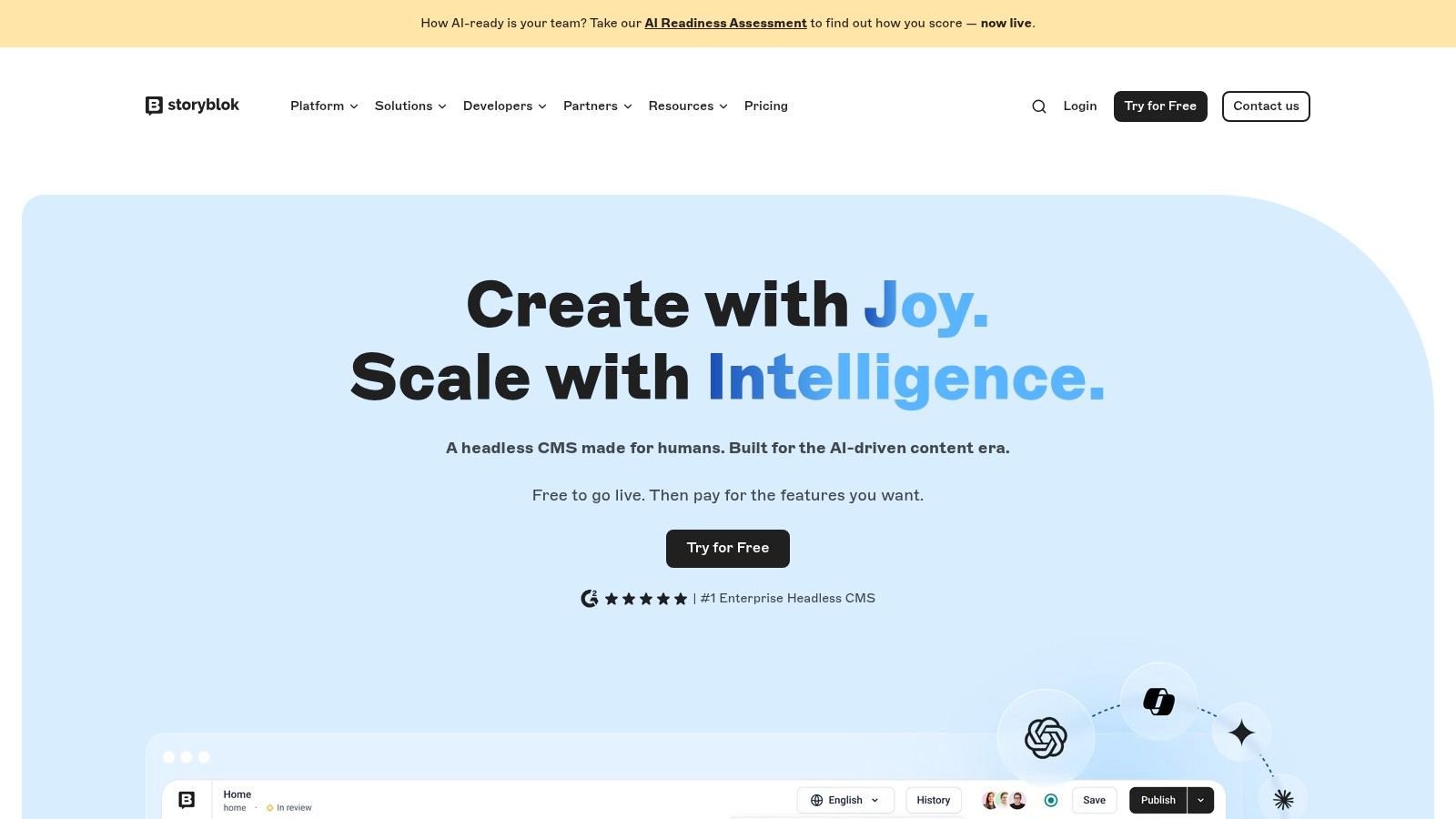
The platform is built on a component-based architecture, where content is organized into reusable blocks or "bloks." These can be anything from a hero banner to a product grid, defined by developers and then used by editors to compose pages. This modularity ensures brand consistency while giving content creators the freedom to assemble dynamic layouts without writing code. Storyblok is engineered for global scale, offering features like internationalization and an image-optimizing CDN out of the box.
Key Features and User Experience
Storyblok’s primary differentiator is its user experience, especially for content editors. The Visual Editor provides a real-time preview of the website or application, allowing users to click directly on elements to edit them. This seamless workflow drastically reduces the learning curve often associated with headless platforms. For developers, Storyblok offers both REST and GraphQL APIs, comprehensive SDKs, and a robust app ecosystem for extending functionality.
Content teams benefit from features like content scheduling, approval workflows, and version history. The component-based model also means that once a developer creates a "blok," the marketing team can reuse it across any number of pages or channels, streamlining content creation and ensuring a consistent user experience. This balance of control and creativity is central to its appeal.
Expert Insight: Storyblok's Visual Editor is a game-changer for team adoption. It removes the abstraction layer typical of many headless systems, allowing marketers to see their changes live. This makes it one of the best headless cms options for organizations transitioning from monolithic platforms like WordPress, as it offers a familiar editing paradigm with the modern benefits of a headless architecture.
Pricing and Availability
Storyblok provides a transparent, tiered pricing model that caters to a wide range of users, from individual developers to large enterprises.
- Free Tier: A generous plan for individuals and small projects that can be taken live.
- Self-Service Tiers (Entry, Teams, Business): These plans offer progressively more features, users, and higher usage limits for API requests and traffic, with clear pricing and the option to add on extras.
- Enterprise / Enterprise Plus: Custom-priced tiers for large organizations requiring advanced security, premium support, dedicated infrastructure, and unlimited roles and permissions.
The self-service model is a significant advantage for teams who want to get started quickly without a lengthy sales process. For those curious about the underlying technology, learning what is a headless CMS can provide valuable context for how Storyblok delivers its unique visual editing experience.
Website: https://www.storyblok.com/
5. Kontent.ai
Kontent.ai establishes itself as an enterprise-first modular content platform, meticulously engineered for organizations where governance, security, and global scale are paramount. It delivers a secure, composable system that empowers distributed teams to manage content centrally while deploying it across any digital channel. The platform's core philosophy is built around providing a highly controlled and auditable content lifecycle, making it an ideal choice for businesses in regulated industries or those managing complex, multi-market operations.
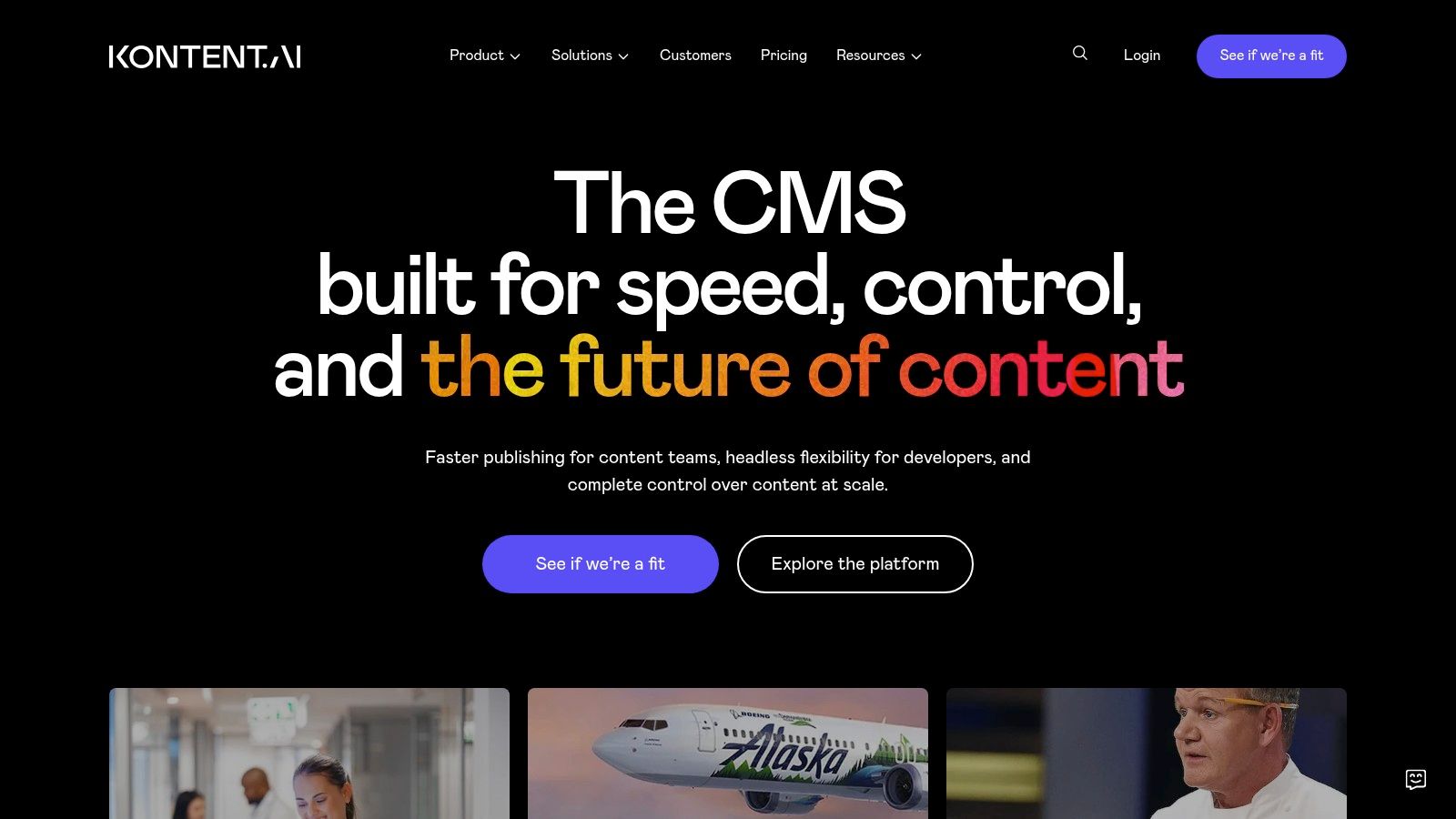
The platform is designed for enterprise clients who cannot compromise on compliance and security. It boasts an impressive array of certifications, including SOC 2 Type 2, ISO 27001/27017, and a strong focus on GDPR alignment, providing the necessary assurances for IT leaders and CTOs. This emphasis on security is woven into its feature set, with robust, customizable workflows and granular user permissions that give administrators precise control over who can create, review, and publish content.
Key Features and User Experience
Kontent.ai provides a powerful and distinct experience for both developers and content creators. Developers can leverage REST and GraphQL APIs, along with SDKs and comprehensive documentation, to build high-performance applications. The platform’s modular content approach allows them to pull specific content components, not entire pages, which is crucial for building fast, modern front-ends.
For content teams, the platform offers an intuitive authoring environment that simplifies complex workflows. Features like simultaneous editing, commenting, and content scheduling facilitate seamless collaboration across global teams. The Web Spotlight feature is a standout, providing a visual editor that allows non-technical users to edit content in-context and preview changes in real-time, bridging the gap between headless architecture and a traditional WYSIWYG experience.
Expert Insight: Kontent.ai’s strength is its uncompromising focus on enterprise governance. For global brands in sectors like finance or healthcare, the ability to enforce strict, multi-step approval workflows and maintain detailed audit trails makes it one of the best headless cms options for mitigating risk and ensuring compliance.
Pricing and Availability
Kontent.ai’s pricing model is tailored to enterprise and mid-market organizations, reflecting its advanced feature set:
- 30-Day Full-Featured Trial: A key differentiator, Kontent.ai offers a no-obligation trial that provides complete access to its enterprise-grade capabilities without requiring a credit card. This allows teams to conduct a thorough proof-of-concept.
- Business Tier: Designed for single brands or product lines that need a scalable content solution.
- Enterprise Tier: A custom-priced plan for large organizations requiring advanced security, unlimited custom roles, dedicated support, and enterprise-level SLAs. Pricing is available upon consultation with their sales team.
While the platform may be more than what a small team needs, its value for organizations with stringent compliance requirements is undeniable. The low-friction trial process makes it easy for enterprise buyers to fully evaluate its capabilities before making a commitment.
Website: https://kontent.ai/
6. Hygraph
Hygraph, formerly known as GraphCMS, positions itself as the first GraphQL-native federated content platform. It is engineered to not only manage content but also to unify it from various sources, making it a powerful hub for complex enterprise ecosystems. By providing a single, highly performant GraphQL API, Hygraph enables organizations to connect and query content from different microservices, legacy systems, and third-party APIs as if it were all native. This content federation capability is its core differentiator, allowing teams to build ambitious digital experiences without being constrained by siloed data.
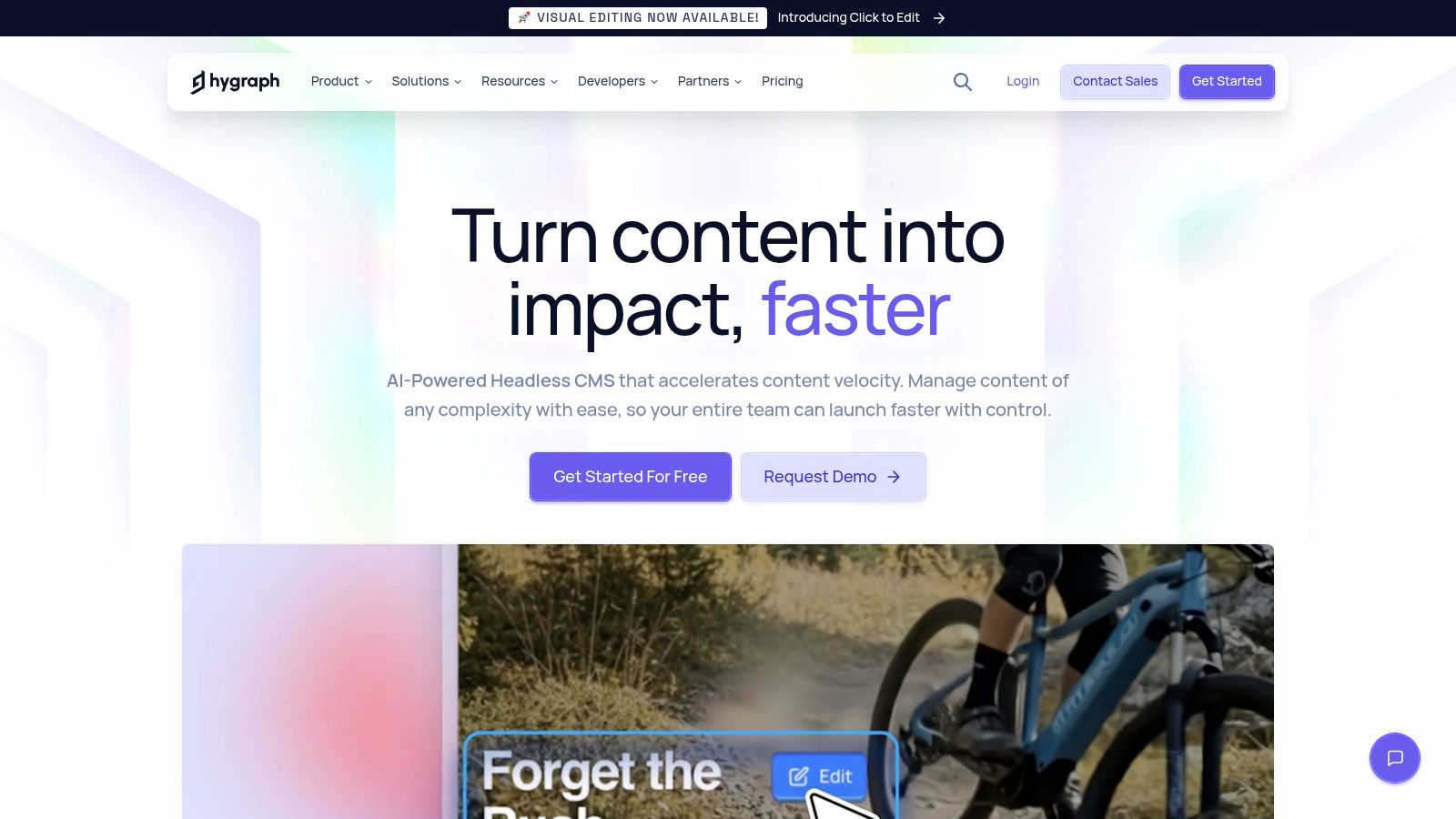
The platform is designed for businesses that need to integrate and orchestrate content from multiple services to create a seamless customer journey. Its GraphQL-native architecture offers developers unparalleled flexibility and efficiency, allowing them to request precisely the data they need and nothing more. For large organizations, Hygraph provides enterprise-grade features such as single sign-on (SSO), granular permissions, audit logs, and dedicated infrastructure options, ensuring security and governance are maintained at scale.
Key Features and User Experience
Hygraph provides a robust developer experience centered around its powerful GraphQL API and schema tooling. Developers can model complex content structures and define relationships with ease, creating a highly organized and queryable content layer. The platform's standout feature, Content Federation via "Remote Sources," allows developers to connect external APIs and services, effectively extending the Hygraph schema to include data from anywhere.
For content editors, the user interface is clean and component-based, facilitating an intuitive content creation process. The platform supports content staging, scheduling, and detailed versioning, which streamlines collaborative workflows between marketing and development teams. While it may have fewer out-of-the-box visual tools compared to some competitors, its focus on structured content ensures maximum reusability and consistency across all channels.
Expert Insight: Hygraph's federated architecture makes it one of the best headless cms choices for enterprises looking to modernize their tech stack without a complete overhaul. By connecting to legacy systems and third-party services, it acts as a unifying content layer, enabling a gradual and pragmatic transition to a composable DXP.
Pricing and Availability
Hygraph offers a flexible, usage-based pricing model that scales from individual developers to large enterprises:
- Community Tier: A generous free plan for personal projects and proof-of-concepts, including API call and asset traffic limits.
- Professional Tier: Aimed at small teams and growing businesses, offering higher usage limits and more user seats.
- Scale Tier: Designed for larger teams building multiple projects, with increased limits and advanced features.
- Enterprise Tier: A custom-priced plan for large organizations requiring features like SSO, multitenancy, advanced security, guaranteed SLAs, and dedicated support.
The pricing structure is transparent, with clearly defined usage caps for API calls, content entries, and asset delivery, allowing businesses to predict costs effectively. While the advanced federation and enterprise security features are reserved for higher-tier plans, the accessible entry points make Hygraph a compelling option for companies at various stages of their digital maturity.
Website: https://hygraph.com/
7. G2 (Headless CMS Category)
While not a CMS itself, G2's Headless CMS category is an indispensable research platform for any organization navigating the complex vendor landscape. It serves as an aggregated, peer-review-driven hub that provides critical social proof and real-world data on leading platforms. For enterprise teams, G2 offers a vital layer of third-party validation, allowing them to cross-reference vendor claims with the unfiltered experiences of actual users, from implementation challenges to customer support quality.
The platform is engineered to streamline the procurement process. Its signature Grid® reports visually map out the market, categorizing vendors into Leaders, High Performers, Contenders, and Niche players based on market presence and customer satisfaction scores. This provides a quick, data-backed snapshot of the competitive landscape. For deeper analysis, its detailed comparison tools allow buyers to evaluate up to four platforms side-by-side on specific features, pricing models, and user-reported satisfaction ratings. This granular approach is invaluable for creating informed shortlists before committing to resource-intensive demos and proof-of-concept projects.
Key Features and User Experience
G2 excels at translating vast amounts of user feedback into actionable insights. The platform's strength lies in its structured review system, which prompts users to rate specific attributes like "Ease of Use," "Quality of Support," and "Ease of Setup." This provides a standardized data set for more objective comparisons. Users can filter reviews based on company size and industry, making it easier to find feedback from peers with similar organizational challenges and scale.
For enterprise buyers, the platform offers more than just reviews. It hosts a wealth of content, including market reports, trend analyses, and buyer guides that help contextualize the technology and its business impact. The ability to directly click through to vendor websites to request a trial or demo from a trusted, neutral starting point simplifies the initial outreach and discovery phase.
Expert Insight: Use G2's comparison feature and review filters to validate a vendor's claims, especially for enterprise-critical features like security, scalability, and support. While a vendor’s marketing may highlight certain strengths, G2 reviews often reveal the practical reality of day-to-day use, making it an essential tool for finding the best headless cms for your specific needs.
Pricing and Availability
Accessing G2's reviews, comparisons, and reports is completely free for technology buyers. The platform's business model is based on vendors paying for enhanced profiles, marketing assets, and lead-generation tools.
- Free Access: All user reviews, Grid® reports, and comparison tools are available without a subscription.
- Sponsored Visibility: Buyers should be aware that some vendors may have sponsored placements. It's crucial to look beyond the top-level rankings and delve into the substance of individual reviews to get a complete picture.
While G2 provides an excellent starting point, enterprise-level procurement often requires further due diligence, such as formal analyst consultations and hands-on proof-of-concept projects. However, for initial market research and vendor shortlisting, it is an unparalleled, data-rich resource.
Website: https://www.g2.com/categories/headless-cms
Top 7 Headless CMS Comparison
Making Your Decision: How to Choose the Right Headless CMS for Your Enterprise
The journey to select the best headless CMS is not about finding a single definitive winner, but about identifying the platform that aligns perfectly with your enterprise’s unique digital ambitions, technical architecture, and strategic goals. For organizations invested in the Sitecore or SharePoint ecosystems, this means evaluating how a composable solution can enhance existing capabilities. A deep understanding of Sitecore's product portfolio, including its AI-driven personalization and content operations tools, is paramount for making a future-proof decision. The one constant is the paradigm shift away from monolithic systems toward flexible, API-first architectures that empower both developers and marketers to deliver exceptional, channel-agnostic experiences.
Your final decision hinges on a strategic evaluation of your specific requirements. The ideal choice isn't just a content repository; it's the central hub of a modern, adaptable digital experience platform. This decision requires a careful audit of your internal capabilities, future growth plans, and the complexity of your digital ecosystem, whether that is built on Sitecore DXP or Microsoft technologies like SharePoint.
Synthesizing Your Evaluation Criteria
To move from analysis to action, distill your findings into a clear decision framework. Revisit the core evaluation criteria we discussed, but view them through the lens of your organization's immediate and long-term needs.
- Developer Experience vs. Editorial Workflow: Where does your organization need the most support? In a Sitecore environment, XM Cloud Pages offers a visually-rich editing experience for marketers. For pure-play headless scenarios demanding bespoke authoring interfaces, a solution like Sitecore Content Hub ONE provides a focused, agile platform for developers and content creators. Organizations using SharePoint can leverage its content management capabilities and connect them headlessly via the Microsoft Graph API.
- AI and Personalization at Scale: Sitecore's key differentiator is its deeply integrated AI and machine learning. Sitecore Search delivers AI-powered, relevant search results, while Sitecore Personalize uses advanced algorithms to orchestrate 1:1 customer journeys across all touchpoints. When selecting a headless CMS, evaluate how it will integrate with these powerful tools to deliver hyper-personalized experiences, not just static content.
- Integration and Composability: A headless CMS is only as powerful as the ecosystem it connects to. For Sitecore users, seamless integration with the full DXP suite—including CDP, DAM (Content Hub), and XM Cloud—is critical. For SharePoint-centric organizations, the solution must easily connect with the Microsoft 365 ecosystem. The best headless CMS for your enterprise will offer robust APIs, webhooks, and pre-built connectors that simplify integration, not complicate it.
Your Strategic Next Steps
Selecting your platform is a critical milestone, but the implementation journey is where your strategy comes to life. A successful transition to a headless architecture requires more than just new software; it demands a strategic partner who can guide you through the complexities of migration, integration, and optimization, particularly within the Sitecore and Microsoft ecosystems.
- Conduct a Content Model Workshop: Before writing a single line of code, bring together developers, content strategists, and marketers to design a structured, future-proof content model. This is a foundational step whether you're using Sitecore's composable products or extending SharePoint. It ensures your content is reusable, adaptable, and optimized for any channel.
- Pilot a Proof of Concept (PoC): Identify a specific, high-impact use case—such as a new marketing microsite or a mobile app—and build a PoC with your top CMS candidate. This provides invaluable, real-world insights into developer workflow, content editing, and performance within your existing technology stack.
- Plan for Governance and Training: A new CMS introduces new workflows. Proactively develop a governance plan that defines roles, permissions, and content lifecycle management. Invest in comprehensive training to ensure your editorial teams can fully leverage the new platform's capabilities from day one.
Ultimately, the best headless CMS will act as a catalyst for innovation, enabling you to build the next generation of digital experiences with speed and agility. By focusing on your core business objectives and partnering with experts who understand the nuances of enterprise-grade composable architectures like those from Sitecore, you can confidently make a choice that will serve as the cornerstone of your digital strategy for years to come.
Embarking on a headless CMS implementation requires deep expertise in composable architecture and enterprise-level integration. Kogifi specializes in architecting and delivering sophisticated DXP solutions, helping global brands navigate the complexities of digital transformation and harness the full potential of a modern, headless strategy. Visit Kogifi to learn how our expert teams can accelerate your journey to a more agile and powerful digital future.