


Marketing cloud personalization is far more than just another marketing tool; it's an AI-powered engine that shifts the focus from broad audience segments to true one-to-one experiences. Instead of lumping users into generic buckets, it dives deep into individual behaviors in real time. It’s all about understanding a user's intent right now and serving up the perfect content or offer at that exact moment.
What Is Marketing Cloud Personalization Anyway?
Let’s cut through the jargon. Think of marketing cloud personalization less as a piece of software and more as a dedicated digital concierge for every single person who interacts with your brand. This isn't just about tracking clicks; it's an intelligent system that understands why someone clicked and anticipates what they’ll do next.
Imagine a master tailor who knows a client’s measurements, style preferences, and past purchases by heart. When that client walks in, the tailor doesn’t overwhelm them with every suit in the shop. They pull out the one outfit that’s a perfect match. That’s the essence of modern personalization—a system that captures and acts on behavioral data in milliseconds.

From Segmentation to Individualization
Traditional segmentation is pretty basic, grouping users into broad categories like "new visitors" or "returning customers." It's a start, but it still treats everyone within that group identically. True personalization, the kind powered by platforms from leaders like Sitecore, crafts a unique, dynamic experience for each individual.
This shift isn't just a "nice-to-have"; it's critical. Consumer expectations are higher than ever. Customers expect brands to understand their needs and deliver relevant experiences. When messages feel irrelevant, shoppers will simply ignore them. The numbers don't lie—personalization is no longer optional.
To make this work, it's essential to have a clear view of how these tools fit together. Getting this right often starts with mastering your marketing technology stack.
The Engine Behind the Experience
So, how does it all work? At its core, marketing cloud personalization relies on a few key components working in perfect sync:
- Real-Time Data Capture: The system collects every interaction—every click, scroll, search, and even mouse hover—to build a rich, constantly evolving user profile.
- AI-Powered Decisioning: This is where the magic happens. Sophisticated algorithms analyze all that data to predict what the user wants next and determine the best action or piece of content to show them.
- Omnichannel Activation: This personalized experience isn't just stuck on your website. It follows the user across email, mobile apps, and even in-store touchpoints to create a completely seamless journey.
This technology marks a fundamental move from reactive marketing to a predictive one. Instead of waiting for a customer to make a move, the system anticipates their needs and guides them, building brand loyalty one interaction at a time.
Ultimately, the goal is to make every touchpoint feel intentional and genuinely helpful. By understanding the core principles of what is content personalization, businesses can build a strategy that connects with each user on a personal level, turning anonymous traffic into loyal customers.
The Core Capabilities That Drive Real Engagement
To really get what Marketing Cloud Personalization can do, you need to look under the hood. It’s not just one feature; it’s a symphony of interconnected parts working together to create experiences that feel intelligent and seamless. Platforms like Sitecore Personalize are built on these core pillars, turning raw data into meaningful engagement in the blink of an eye.
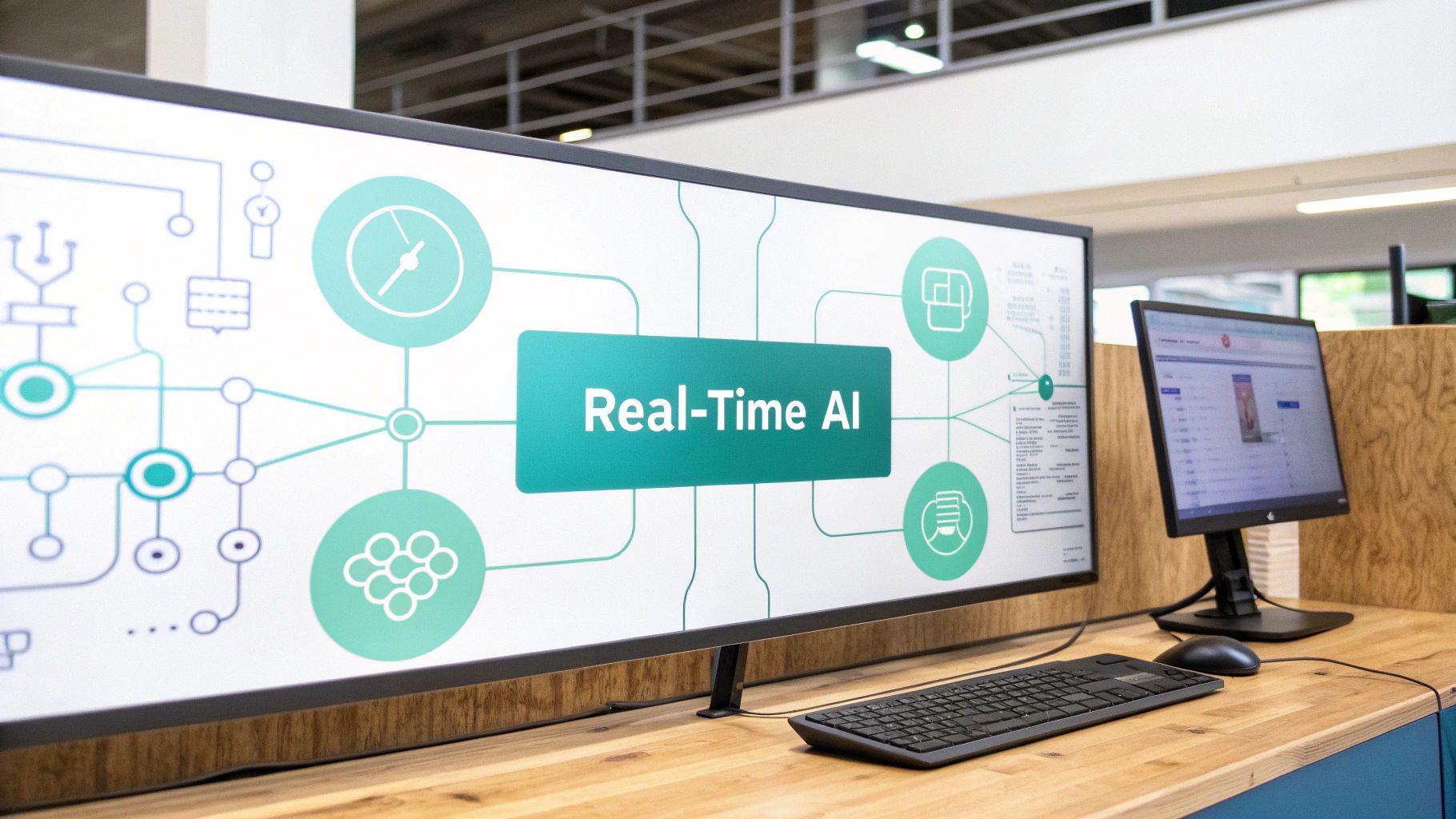
These components work in concert to shift your strategy from simply reacting to what users do to proactively anticipating what they need. Let's break down the four foundational pillars that make this happen.
Real-Time Behavioral Tracking
At the heart of any marketing cloud personalization engine is its ability to listen. Every click, scroll, search query, and even a moment's hesitation is a signal—a breadcrumb of intent. Real-time behavioral tracking is the system that captures these signals the moment they occur.
Think of it as a digital nervous system. As a visitor moves through your site, this system logs their activity not just for some report you’ll look at later, but for immediate action. For example, in a Sitecore setup, the platform can track a user viewing multiple pages in the "enterprise solutions" category, instantly flagging their interest.
AI-Powered Decisioning
Grabbing data is just the first step; making sense of it is where the real magic happens. AI-powered decisioning acts as the brain of the operation. It uses machine learning algorithms to analyze all that incoming behavioral data and predict what the user wants to see next.
This isn't simple "if-then" logic. We're talking about sophisticated models that calculate the best piece of content, the right offer, or the ideal experience for that specific person at that exact moment. For instance, after seeing that interest in enterprise solutions, the AI might decide to show a case study from a similar industry on the homepage instead of a generic welcome banner. To really make an impact, leveraging advanced AI marketing automation tools is key to turning these predictions into engaging experiences.
Unified Customer Profiles
Data is often scattered across different silos—your CRM, e-commerce platform, email service, you name it. A critical capability of marketing cloud personalization is creating unified customer profiles. It stitches together data from every single touchpoint into one coherent, 360-degree view of the customer.
This is where the platform truly shines, connecting anonymous activity with known identities. A visitor might browse your site a few times before finally creating an account. Instead of starting fresh, Sitecore Personalize merges that anonymous browsing history with the new user profile, making sure no context is ever lost.
The platform's ability to stitch anonymous and known profiles together is a game-changer. It means the personalization journey doesn't reset when a user logs in; it only gets smarter.
Omnichannel Activation
Finally, a personalized experience shouldn't be trapped on your website. Omnichannel activation ensures that the intelligent insights gathered follow the customer across all your digital channels. This consistency is absolutely crucial for building trust and a cohesive brand experience.
For example, if a user abandons a cart on your e-commerce site, the personalization engine can trigger a follow-up email showing the exact products they left behind. When they click back to your site from that email, the homepage banner might feature a special offer on those very same items. Understanding the right content personalization software is what allows you to activate these strategies effectively and consistently, no matter where your customer interacts with you.
Weaving Personalization Into Your DXP
A powerful personalization engine is one thing, but its real value comes to life when it talks seamlessly with your Digital Experience Platform (DXP). This integration is where the technical magic happens, bridging the gap between ambitious marketing ideas and the IT reality of making them work. While the architectural approach will vary depending on your platform, the goal is always the same: deliver dynamic, individual content without messing with your core CMS.
For enterprises running on robust platforms like Sitecore or SharePoint, this process involves different but equally powerful strategies. Getting a handle on these integration patterns is the key to unlocking the true potential of your personalization efforts.
Connecting Sitecore Personalize with XM Cloud
For businesses already in the Sitecore ecosystem, connecting Sitecore Personalize with a composable DXP like XM Cloud is a masterclass in modern, API-first architecture. This setup uses a headless approach, where the personalization engine works independently from the content management system. This separation is exactly what gives it so much agility and power.
Instead of being hardwired into the CMS, Sitecore Personalize connects to XM Cloud through APIs. Think of it as a smart remote control for your website. The personalization engine watches what a user does, makes a split-second, AI-driven decision, and then sends a command to XM Cloud: "For this user, swap out the generic hero banner with this specific offer."
This approach lets you:
- Modify components in real time: Instantly change banners, product carousels, or calls-to-action based on live user data.
- Keep your CMS clean: Marketers can launch endless personalization experiments without ever touching the core code or content templates in XM Cloud.
- Deliver a consistent experience everywhere: Because the personalization logic is centralized, the same rules and insights can power experiences on your website, mobile app, and other digital touchpoints.
This headless model gives your marketing team the freedom to respond to customer needs in milliseconds, while your developers can maintain a stable, secure, and uncluttered core platform. To dive deeper into the strategy behind this, check out our complete AI personalization in DXP implementation guide.
Layering Personalization onto SharePoint
SharePoint is often pegged as just an internal collaboration tool, but it's also a surprisingly powerful platform for public-facing websites and customer portals. Adding marketing cloud personalization on top of a SharePoint site opens up huge opportunities to create more relevant and engaging experiences. Here, the integration typically relies on client-side scripting.
It’s as simple as adding a lightweight JavaScript beacon from a platform like Sitecore Personalize to your SharePoint master page or modern site template. This tiny script acts as the eyes and ears of the personalization engine, tracking every user interaction right inside their browser.
By using client-side scripts, you can dynamically modify SharePoint's out-of-the-box components without complex server-side development. It’s a flexible and non-intrusive way to introduce powerful personalization capabilities to a mature platform.
Once that script is in place, you can start tailoring the experience for every single visitor. Imagine a corporate intranet where:
- News feeds are customized to show articles relevant to an employee's specific department or role.
- Document libraries proactively suggest files based on their recent projects or team collaborations.
- Quick links and navigation menus adapt to feature the tools each person uses most often.
On a public-facing SharePoint site, this could mean showing case studies that align with a visitor’s industry or promoting events based on their location. This approach breathes new life into SharePoint, transforming it from a static content repository into a dynamic, user-centric hub. The technical lift is minimal, but the impact on user engagement and productivity is anything but.
From Theory to Practice: High-Impact Use Cases
Translating the power of a marketing cloud personalization engine into tangible business results is where strategy meets execution. It's time to move beyond concepts and explore concrete, high-value use cases you can implement to drive conversions and deepen customer loyalty. Each scenario transforms a generic interaction into a meaningful, one-to-one conversation.
These examples aren't just theoretical; they represent practical applications that deliver measurable ROI. The key is to start with a clear objective, identify the right technology signals, and define the metrics that will prove success. This is especially true for platforms like Sitecore, where the personalization potential is immense.
The Anonymous Visitor Welcome
The first impression is everything. For an anonymous visitor arriving on your site, the standard homepage can feel impersonal and irrelevant. This use case aims to tailor that initial experience based on observable data, like their referral source, geolocation, or campaign tags.
Imagine a user clicks through from a LinkedIn ad promoting an enterprise software solution. Using a personalization engine, you can instantly swap the generic homepage hero banner with one that speaks directly to enterprise challenges. You could also feature case studies from relevant industries, transforming a cold entry into a warm, relevant welcome.
- Objective: Increase engagement and reduce bounce rates for new visitors.
- Technology: Capturing UTM parameters, IP-based geolocation, and referral data.
- Metrics: Lower bounce rate, increased time on page, and higher click-through rate on personalized content.
The B2B Content Funnel
In the B2B world, the sales cycle is longer and relies on building trust through valuable content. This use case personalizes the content journey, serving increasingly sophisticated materials as a user shows more interest. A visitor who has read two blog posts on "cloud migration," for example, is clearly demonstrating intent.
With a platform like Sitecore, you can automatically promote a more in-depth "Cloud Migration Strategy" whitepaper to this user. If they download it, the next step might be to display a call-to-action for a one-on-one consultation. This approach nurtures leads by aligning the content with their stage in the buying funnel. You can explore many other website personalization examples to see how this can be applied across different industries.
The Abandoned Cart Rescue
For e-commerce, cart abandonment is a constant challenge. This use case goes beyond a simple follow-up email. It uses real-time behavioral data to trigger immediate, personalized interventions aimed at bringing the customer back to complete their purchase.
When a user adds items to their cart but navigates away from the checkout page, the system can trigger a personalized web push notification or an exit-intent pop-up offering a small discount. If they return later, the homepage could feature the exact items they left behind, creating a seamless and persuasive reminder to finalize their order.
AI-driven personalization is essential to address escalating consumer expectations and operational challenges. Poor experiences can be costly, emphasizing the critical need for flawless personalization. Learn more about the latest AI and data trends in marketing.
The VIP Customer Experience
Your most loyal customers deserve special treatment. This use case focuses on recognizing and rewarding your VIPs by unlocking exclusive content, offers, and experiences. The system identifies these customers based on their purchase history, lifetime value, or engagement level.
Once a customer is flagged as a VIP, they might see a special "Loyalty Member" banner upon logging in, giving them early access to new products or exclusive discounts. This not only reinforces their value to your brand but also incentivizes others to strive for that VIP status, creating a powerful feedback loop of loyalty and engagement.
Use Case and KPI Alignment
Connecting each personalization tactic to clear, measurable business outcomes is non-negotiable. The table below outlines how specific use cases align with the key performance indicators (KPIs) that prove their value. This helps teams focus their efforts and demonstrate ROI effectively.
By tracking these metrics, you move personalization from a "nice-to-have" feature to a core driver of business growth. It's about making sure every tailored experience contributes directly to the bottom line.
Building Your Phased Implementation Roadmap
Trying to launch a full-blown personalization strategy on day one is a classic recipe for frustration. A far better approach is to break it down into phases—what many in the industry call the "crawl, walk, run" model. This framework lets your team build momentum, show value quickly, and develop the skills you need for the long haul without getting overwhelmed.
This roadmap splits the journey into manageable stages, each with its own goals, tech requirements, and team capabilities. It’s a proven path to building a mature personalization practice that’s grounded in real-world wins.
The Crawl Phase: Secure Early Wins
The first phase, "crawl," is all about keeping it simple and moving fast. The goal here is to get some quick, visible wins that prove the value of personalization to the rest of the company. This stage leans on simple, rule-based logic instead of complex AI, making it perfect for teams who are just getting started.
In a Sitecore environment, a classic crawl-phase tactic is personalizing a homepage banner based on a visitor's location. You could show visitors from a specific city an invite to a local event, for example. For a SharePoint intranet, you might customize a "Quick Links" section to show different resources for employees in sales versus engineering.
Key activities in this phase include:
- Simple A/B Testing: Test two versions of a call-to-action button to see which one performs better.
- Rule-Based Targeting: Show content based on straightforward data points like device type or where the visitor came from.
- Basic Segmentation: Target broad audience segments, like new versus returning visitors.
The crawl phase isn't about one-to-one personalization. It's about proving the concept, learning the tools, and building the organizational confidence needed to move forward.
The Walk Phase: Optimize Key Journeys
Once your team has a few wins under its belt, it’s time for the "walk" phase. This is where you introduce more advanced techniques, like AI-powered recommendations and more sophisticated A/B/n testing. The focus shifts from tweaking a single page to enhancing critical user journeys across your entire digital presence.
Now you can start tapping into the real power of your personalization engine. With Sitecore Personalize, you could add an AI-driven product recommendation carousel to your e-commerce pages. This model learns from user behavior to suggest items that are most likely to convert for each individual shopper.
On SharePoint, this might mean using personalization to bring relevant documents or project sites to the forefront based on a user's recent activity and team, making their workflow much smoother.
This graphic shows a few common use cases that typically fall into the walk and run phases, moving from a basic welcome to a full-blown VIP experience.
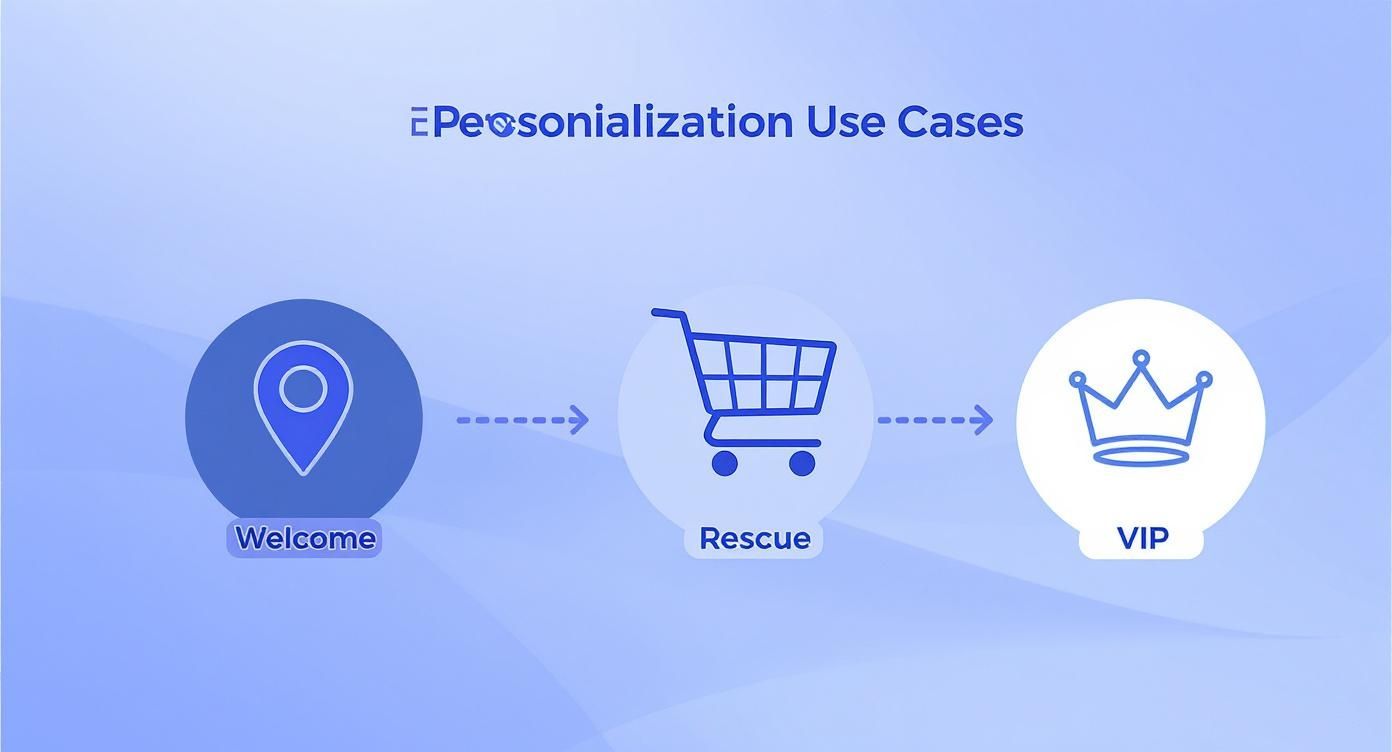
As you can see, the journey progresses from welcoming new users to rescuing abandoned carts and rewarding loyal customers, showing how personalization efforts become more sophisticated over time.
The Run Phase: Achieve Omnichannel Mastery
The final "run" phase is the pinnacle of personalization maturity. At this stage, your organization is delivering true, one-to-one, omnichannel personalization. The experience is no longer stuck on the website; it follows the customer seamlessly across every touchpoint, from email and mobile apps to customer service calls.
This is where the entire Sitecore composable DXP ecosystem really shines. A user browsing a specific product category on your website could automatically get a targeted email campaign about related items. If they add something to their cart in your mobile app, a reminder banner could pop up the next time they visit your desktop site.
Pulling this off requires deep integration of data sources, a mature data governance strategy, and tight collaboration between marketing, IT, and sales. The end goal is a completely fluid and consistent customer experience, where every interaction is informed by the last, creating a powerful and lasting brand relationship.
Common Personalization Pitfalls and How to Avoid Them
Even the most powerful personalization engine is only as good as the strategy behind it. I’ve seen many promising initiatives stumble, not because of the tech, but because they fell into a few common, completely avoidable traps. Getting ahead of these challenges is what separates a flashy new tool from a real, measurable return on investment.
One of the biggest mistakes is leading with technology. Teams get excited about all the bells and whistles of a platform like Sitecore Personalize but forget to ask the most important question first: Why are we doing this? This leads to a lot of aimless experimentation that doesn’t connect to what the business actually needs, like boosting conversions or increasing customer lifetime value.
Another major hurdle is what I call data paralysis. Companies often have mountains of customer data but no clear plan for how to actually use it. They'll spend months trying to get their data infrastructure perfect before launching a single campaign, losing valuable time and momentum. The key is to start with the data you have, not the data you wish you had.
Overcoming Common Obstacles
Avoiding these pitfalls isn't about having better tech; it's about a shift in mindset. You have to stop thinking of this as a technical project and start treating it like a strategic business initiative. The focus should always be on the customer and the business outcome, with technology simply being the tool that gets you there.
To keep your project on the right track, here’s how to be proactive:
- Define Goals First, Technology Second: Before you even think about building an experience, ask: "What business problem are we solving?" Whether it's cutting down on cart abandonment or improving B2B lead quality, that goal will dictate your entire strategy.
- Embrace an Agile "Crawl" Phase: Don't try to do everything at once. Start with a simple, high-impact use case, like personalizing a homepage banner for a few key audience segments. This approach is central to any good Sitecore implementation because it proves value quickly and builds internal support.
- Avoid the "Set It and Forget It" Mindset: Personalization isn't a one-and-done setup. It demands continuous monitoring, testing, and tweaking. You need to be regularly diving into your campaign performance in Sitecore Personalize or your SharePoint analytics to refine your approach and adapt to what your customers are telling you.
A successful personalization strategy is a continuous loop: hypothesize, test, and learn. The goal isn’t to launch one perfect campaign, but to build an agile system of ongoing improvement that consistently delivers better customer experiences.
By recognizing these potential roadblocks and adopting a strategic, goal-oriented mindset from the start, you can prepare your team for both the technical and organizational hurdles that lie ahead. This is how you ensure your personalization efforts drive real, sustainable growth for the business.
A Few Common Questions About Personalization
Stepping into the world of marketing cloud personalization often brings up some practical questions. Here are a few direct answers to the queries we hear most often, especially when it comes to implementing these tools within Sitecore and SharePoint environments.
How Is Sitecore Personalize Different From Traditional A/B Testing Tools?
Think of it this way: traditional A/B testing is on a mission to find the single "best" experience for everyone. Sitecore Personalize, on the other hand, is built to find the best experience for each individual. It’s a fundamental shift away from optimizing for the average user.
Instead of just comparing two static versions of a page, its AI engine decides in real-time which content variation is most likely to resonate with a specific visitor based on their unique behavior and profile. This is how you automate and scale countless personalized journeys at the same time—something that just isn't possible with classic A/B testing tools.
Can We Personalize a SharePoint Intranet?
Absolutely. In fact, personalizing an internal platform like a SharePoint intranet is one of the most powerful ways to boost employee engagement. By layering in a solution like Sitecore Personalize, you can transform the intranet experience for every single user.
Imagine an intranet that automatically surfaces company news relevant to an employee's department, promotes internal job openings based on their current role, or customizes quick links to the tools they use every day. It stops being a static file cabinet and becomes an indispensable resource that people actually want to use.
What Is the First Step to Get Started with Personalization?
The best advice I can give is to start small and prove the value quickly. Don't try to boil the ocean. Your first move should be to identify a single, high-impact use case that’s tied to a clear business goal and isn't overly complex to implement.
A perfect example would be increasing conversions on a key landing page. You could run a simple campaign that changes the hero banner based on a visitor's industry or where they came from. This "crawl" approach lets you demonstrate a tangible ROI, learn the platform, and build the momentum you need for more advanced initiatives down the road.
Ready to transform your digital experience with expert guidance? The team at Kogifi has over a decade of experience implementing sophisticated personalization strategies for platforms like Sitecore and SharePoint. Contact us today to build your personalization roadmap.