


In 2026, the digital experience is paramount, and selecting the right headless CMS is a critical strategic decision. The market is saturated with options, but for enterprises, the choice transcends simple content delivery. It's about scalability, security, personalization, and future-proofing your entire digital ecosystem. This guide cuts through the noise, focusing on the platforms that truly deliver at an enterprise level. We'll provide an in-depth analysis to help you identify the best CMS headless architecture for your specific business needs, from composable DXPs to AI-driven personalization engines.
A foundational aspect of headless architecture is its reliance on robust APIs. For any of these advanced platforms to integrate seamlessly into your stack, understanding API development best practices is essential for a successful implementation and long-term stability. This ensures your content can be delivered reliably to any frontend or channel you choose.
This comprehensive resource moves beyond surface-level feature lists. We will dive deep into the top headless platforms, including an extensive look at the powerful Sitecore XM Cloud and its AI-driven product portfolio. For each option, you will find:
- Honest Assessments: An analysis of strengths and limitations based on real-world implementations.
- Practical Use Cases: Scenarios where each platform excels, helping you match a solution to your goals.
- Implementation Insights: Key considerations for migration, team structure, and integration.
- Visual Guides: Screenshots and direct links to help you explore each platform further.
Our analysis is informed by deep expertise in implementing enterprise-grade solutions, particularly Sitecore's composable DXP and complex SharePoint architectures. We provide a strategic framework to help you choose the correct technology to power your global, scalable, and AI-driven digital presence. Let's explore the solutions that will drive your omnichannel strategy forward.
1. Contentful
As a foundational player in the API-first content management space, Contentful has established itself as a go-to platform for enterprises seeking a mature, scalable, and one of the best CMS headless solutions. It separates content from its presentation, allowing teams to create structured content models and deliver that content via REST or GraphQL APIs to any digital channel, from websites and mobile apps to IoT devices. This architecture is ideal for organizations building composable digital experience platforms (DXPs), enabling them to integrate best-of-breed tools for personalization, e-commerce, and analytics.
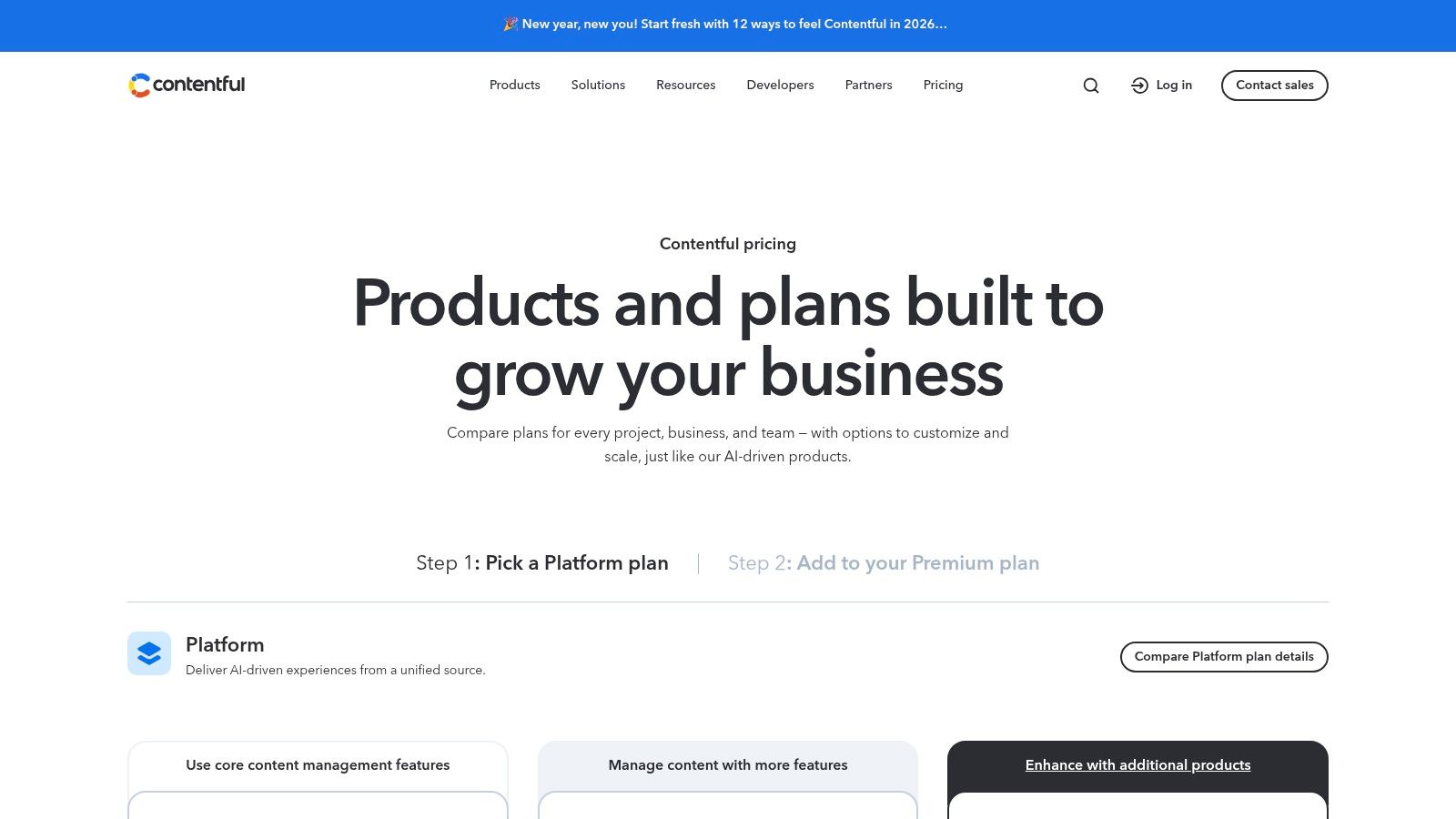
The platform’s strength lies in its governance features, extensive documentation, and a robust ecosystem. For global teams, Contentful offers powerful localization and role-based permissions, ensuring brand consistency and security across regions. While it provides a clean, user-friendly editing interface, complex visual page-building requires add-ons like Contentful Studio. For those new to this model, it’s beneficial to understand the core concepts; you can find a detailed headless CMS explanation here to see how it differs from traditional systems.
Key Details & Use Cases
- Best For: Global enterprises needing strong governance, security, and a rich integration marketplace for building a composable DXP.
- Pricing: Starts with a generous free "Community" tier for individual projects. Paid plans, including "Team" and custom "Premium" tiers, are designed for business and enterprise scale, offering higher usage limits, advanced features, and dedicated support.
- Pros: Excellent developer experience with comprehensive APIs and SDKs; mature enterprise features including up to 99.99% uptime SLAs; vast marketplace of apps and integrations.
- Cons: Pricing can become a significant investment at scale; the free plan lacks overage protection, risking service interruption if limits are exceeded.
Website: https://www.contentful.com/pricing/
2. Contentstack
Contentstack positions itself as a premier composable digital experience platform (DXP), empowering enterprises to move beyond monolithic systems. It is engineered for agility and scalability, providing an API-first headless CMS that excels in complex, multi-brand ecosystems. The platform facilitates the seamless creation and delivery of content across any digital touchpoint, from websites to augmented reality experiences, making it a strong contender for one of the best CMS headless solutions for global organizations. Its architecture is built to integrate with a modern tech stack, enabling teams to select and connect best-in-class services for a customized DXP.

The platform is distinguished by its commitment to enterprise-grade support, robust governance features, and business-user-friendly tools like visual editing and automation. With its "Care Without Compromise" program and brand-aware AI capabilities, Contentstack ensures both technical teams and marketers can collaborate effectively. Enterprises can also leverage marketplace procurement options, such as through AWS Marketplace, to simplify legal and billing processes. By adopting such a system, businesses can realize the significant benefits of a headless CMS, including enhanced performance and omnichannel readiness.
Key Details & Use Cases
- Best For: Large enterprises requiring a high-touch, secure, and scalable DXP solution with dedicated customer success and simplified procurement paths.
- Pricing: Offers a free trial for developers. Paid plans ("Pro," "Grow," and "Scale") are custom-quoted for enterprise needs, reflecting its focus on tailored, large-scale deployments.
- Pros: Strong emphasis on enterprise support and customer success; marketplace procurement simplifies legal and billing for large organizations; powerful automation and governance features.
- Cons: Public pricing information is limited as most deals are custom-quoted; enterprise contracts can represent a significant investment and vary widely.
Website: https://www.contentstack.com/pricing
3. Sanity
Sanity sets itself apart with a developer-centric approach, offering an open-source, customizable editing environment called Sanity Studio and a powerful real-time backend. It treats content as data, enabling teams to build highly structured and interconnected content models that can be queried with its expressive GROQ language or GraphQL. This real-time, collaborative nature makes it one of the best CMS headless platforms for teams that require live updates and concurrent editing, similar to a Google Docs experience for structured content.
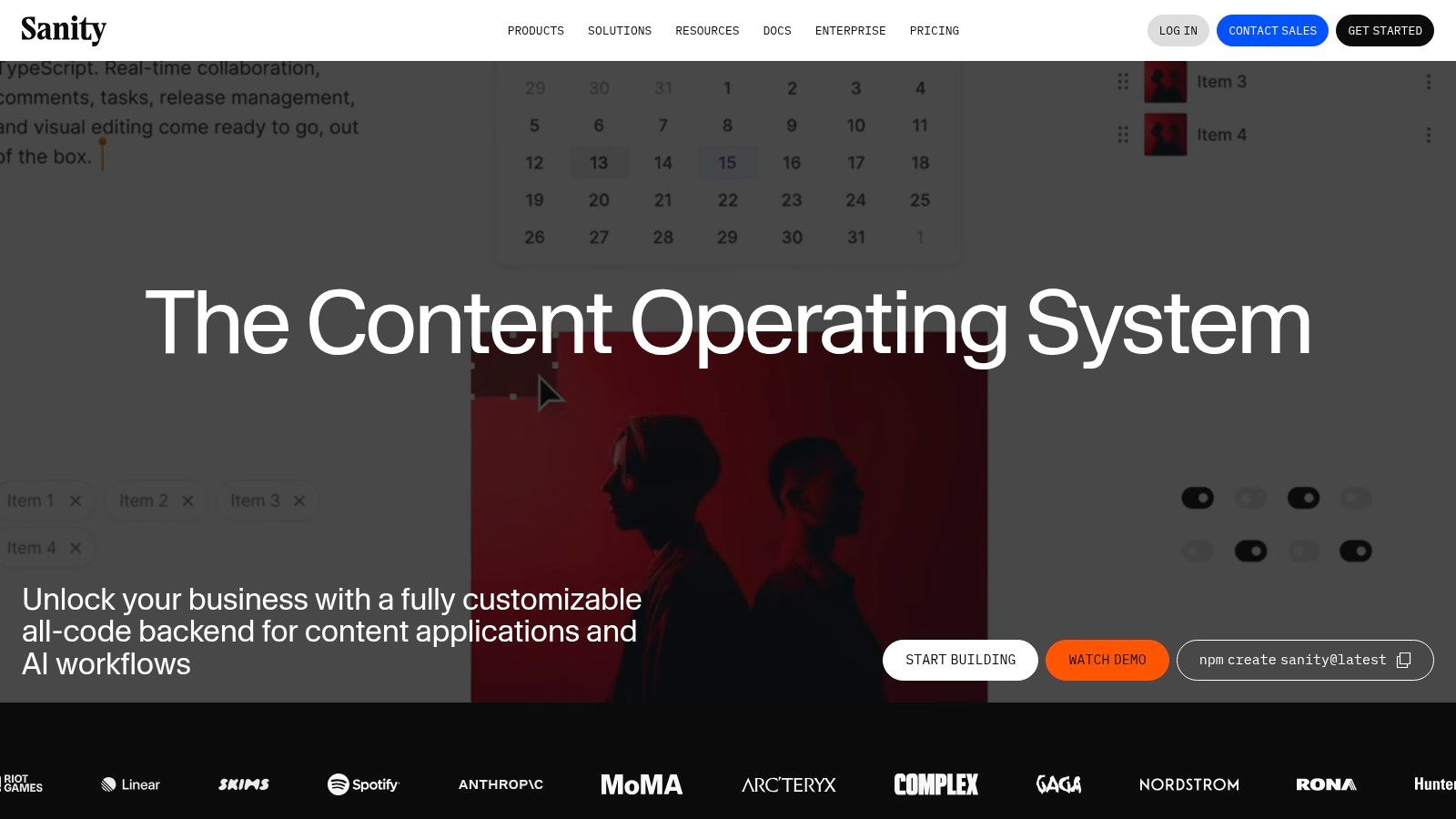
The platform is engineered for speed and scalability, featuring a globally distributed API CDN for cached reads and pay-as-you-go overages that provide flexibility. This model ensures performance is maintained while allowing costs to scale predictably with usage. For organizations transitioning from monolithic systems, understanding the fundamental differences in content delivery is key; you can explore a headless CMS vs. traditional CMS comparison here to grasp the architectural shift Sanity represents.
Key Details & Use Cases
- Best For: Development teams and content creators who need a highly customizable editing experience, real-time collaboration, and a scalable, pay-as-you-go infrastructure.
- Pricing: Features a generous free plan ideal for prototyping. The transparent "Growth" plan is priced at $15 per user per month with included quotas and pay-as-you-go overages. Custom "Enterprise" plans add SSO, advanced security, and dedicated support.
- Pros: Highly flexible and customizable Sanity Studio; real-time collaboration and content previews; scales well with a powerful CDN and offers generous free quotas.
- Cons: Cost modeling requires a clear understanding of API usage quotas and potential overages; advanced enterprise features like SSO are gated in higher-tier plans.
Website: https://www.sanity.io/
4. Strapi
Strapi carves out a unique space in the market as the leading open-source Node.js headless CMS, giving developers unparalleled flexibility and control. It empowers teams to build customizable content APIs quickly, supporting both REST and GraphQL out of the box. This open-source foundation means you can self-host the entire platform on your own infrastructure for maximum data sovereignty and control, making it a strong contender for the best CMS headless for teams prioritizing adaptability. For those who prefer a managed solution, Strapi Cloud offers a turnkey hosting environment.
The platform is renowned for its highly customizable content structure and intuitive, clean admin panel that simplifies content management for non-technical users. Strapi's plugin architecture allows for extensive functionality extension, from adding custom fields to integrating with third-party services. This balance between developer freedom and user-friendly content editing makes it an attractive option for projects ranging from small websites to complex, multi-channel applications where custom logic and direct database access are critical requirements.
Key Details & Use Cases
- Best For: Development teams and businesses wanting full control over their code and infrastructure, or those looking for a cost-effective, highly customizable open-source solution.
- Pricing: A free, self-hosted Community Edition is available. Strapi Cloud offers a 14-day free trial and paid tiers ("Pro" and "Team") with defined usage quotas for API requests, storage, and bandwidth, plus features like backups and additional environments. An Enterprise edition is available for advanced security and support needs.
- Pros: Complete control with open-source and self-hosting capabilities; highly extensible through a robust plugin system; excellent developer experience with a modern tech stack.
- Cons: Advanced enterprise features like Single Sign-On (SSO) and audit logs are locked behind the higher-tier paid plans or Enterprise license; managing a self-hosted instance requires dedicated DevOps resources.
Website: https://strapi.io/
5. Storyblok
Storyblok bridges the gap between traditional and headless CMS platforms by offering a unique, in-context Visual Editor. This feature is a game-changer for marketing teams, allowing them to edit content and compose pages with live, real-time previews, eliminating the guesswork often associated with headless systems. By focusing on a component-based architecture, Storyblok empowers developers to create reusable content blocks that marketers can then assemble visually, making it one of the best CMS headless options for collaborative teams that prioritize an intuitive editing experience. This approach provides the flexibility of an API-first backend with the user-friendliness of a classic page builder.
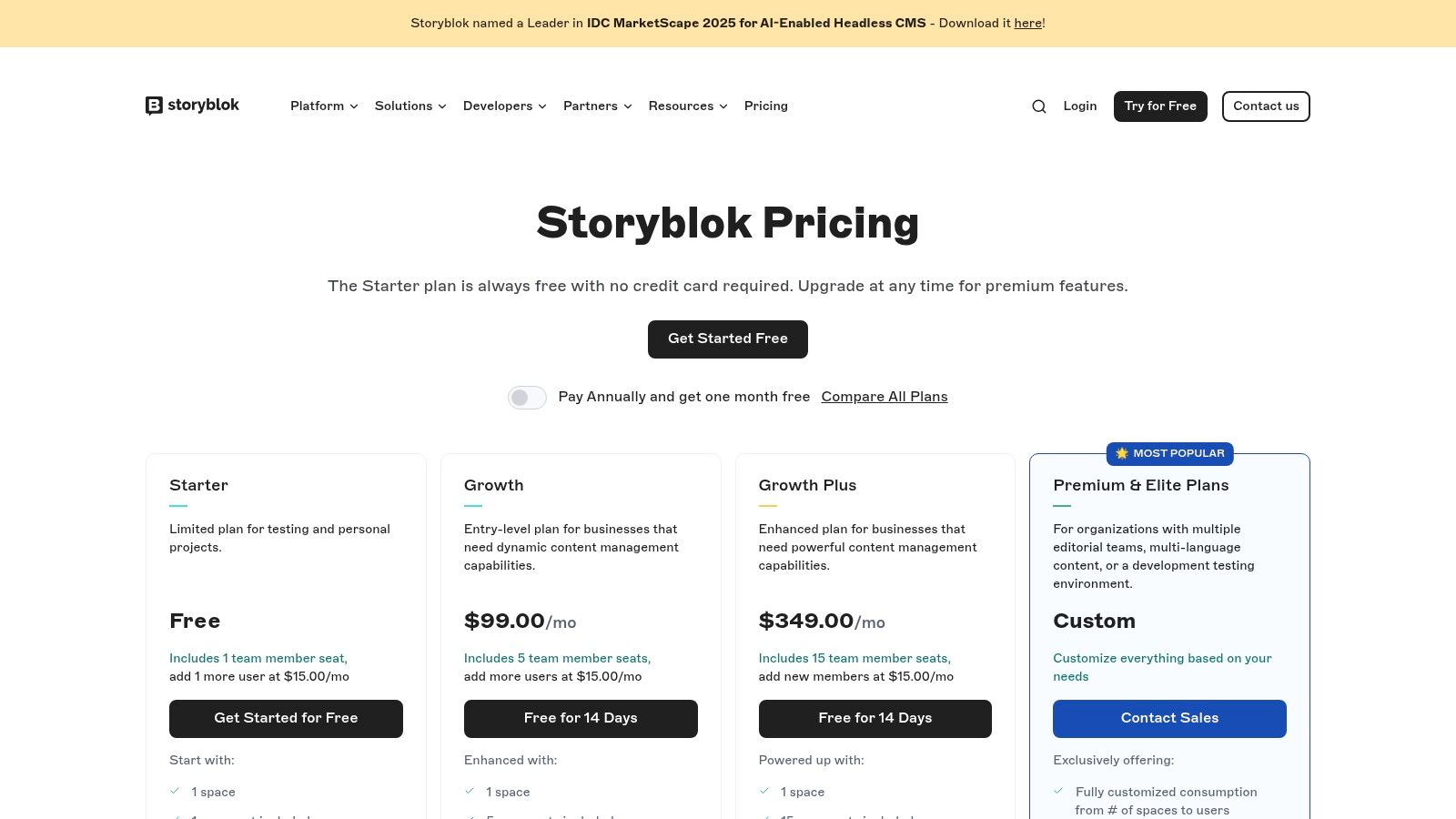
The platform delivers content via REST and GraphQL APIs, supported by a global CDN and a built-in image service to ensure high performance. It also caters to enterprise needs with robust features like granular roles and workflows, ISO 27001 certification, and autoscaling infrastructure. For global organizations, Storyblok’s strong multilingual support is a key asset, enabling teams to manage localized content efficiently within the same visual interface. While its self-serve plans are accessible, organizations requiring the highest levels of performance, support, and security will need to opt for its premium tiers.
Key Details & Use Cases
- Best For: Marketing-led organizations that need a powerful visual editing experience without sacrificing the developer-friendly nature of a headless CMS.
- Pricing: Offers a free "Community" tier for developers. Paid plans range from "Entry" to custom "Elite," with pricing based on user seats, traffic, API requests, and feature sets like advanced SLAs and SSO.
- Pros: Industry-leading Visual Editor provides a superior experience for content creators; component-based architecture is highly flexible; transparent self-serve pricing tiers are available.
- Cons: Lower-tier plans have strict limits on traffic, API requests, and locales; advanced security and the highest uptime SLAs are reserved for premium enterprise plans.
Website: https://www.storyblok.com/pricing/
6. Prismic
Prismic offers a unique, developer-friendly approach to content management, centered around its component-based "Slices." This model allows teams to build composable, visually rich pages by combining reusable content sections, making it a strong contender for the best CMS headless for teams that prioritize structured yet flexible page building. It's designed to be intuitive for both developers and marketers, enabling content creators to assemble pages without needing technical support, while developers maintain control over the codebase and design system. This slice-based architecture simplifies the creation of dynamic landing pages, marketing sites, and portfolios.
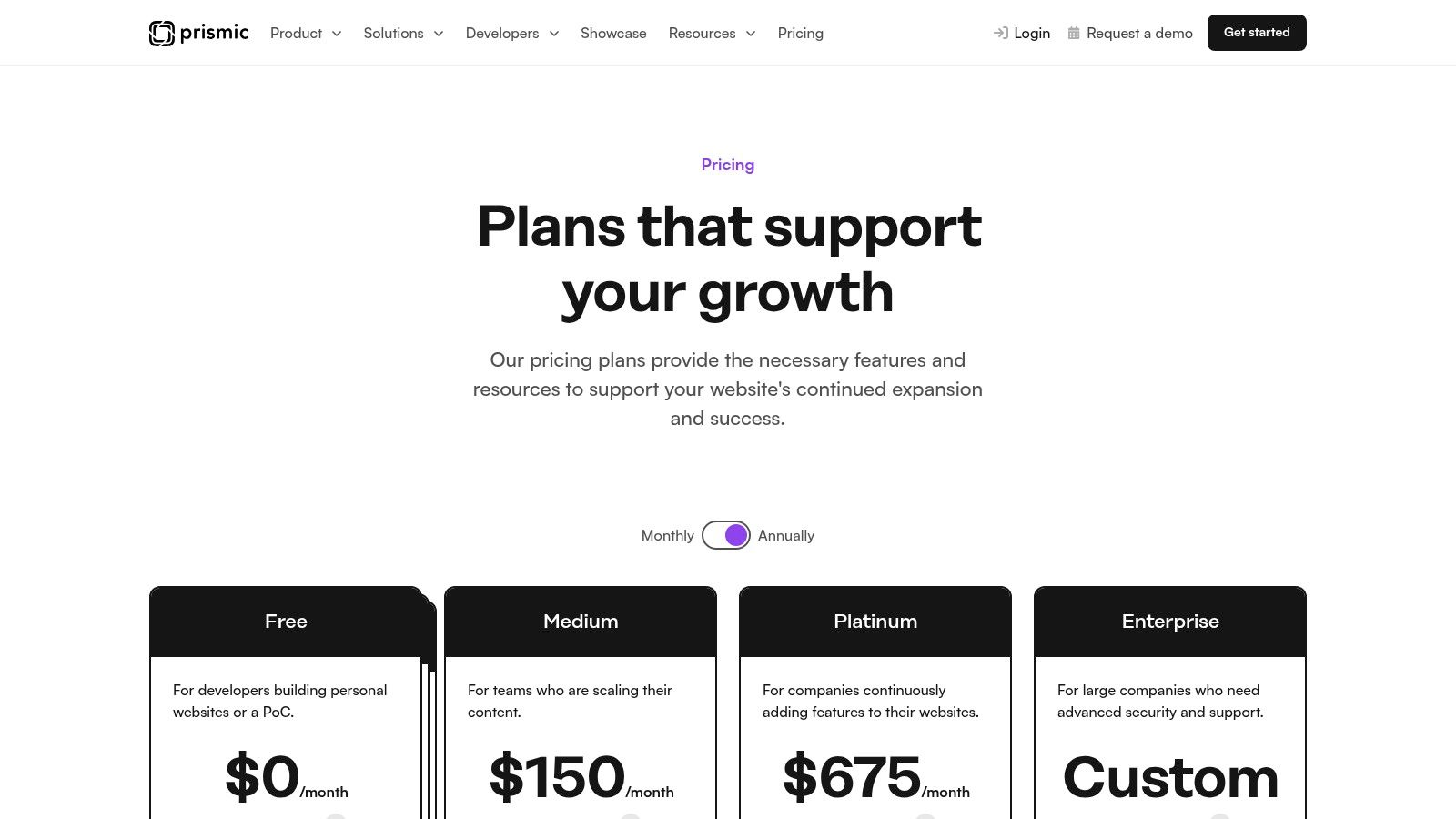
The platform stands out with its straightforward, per-repository pricing model and a highly generous free tier, making it accessible for startups, freelancers, and small to medium-sized businesses. Features like a built-in image optimizer, a Migration API for importing content, and a reliable global CDN ensure good performance out of the box. Prismic effectively bridges the gap between a pure, developer-centric headless CMS and a more visual, user-friendly editor, empowering marketing teams to launch campaigns quickly.
Key Details & Use Cases
- Best For: SMBs, marketing teams, and developers who need a visual page-building experience within a headless architecture without a steep learning curve or high initial cost.
- Pricing: Features a very generous free "Community" plan with one user. Paid plans like "Starter," "Small," and "Medium" scale with user seats, locales, and features, offering predictable costs based on the number of repositories.
- Pros: The "Slices" feature provides an excellent visual page-building experience; a generous free tier makes it easy to start; predictable, per-repository pricing simplifies budget forecasting.
- Cons: The free plan has hard limits that can interrupt service if exceeded; bandwidth overages can apply on paid plans, requiring careful monitoring of usage.
Website: https://prismic.io/pricing
7. Hygraph (formerly GraphCMS)
As the original GraphQL-native headless CMS, Hygraph carves out a unique space for development teams committed to a GraphQL-first architecture. It empowers developers to build sophisticated content models and federate content from multiple sources, unifying them into a single, streamlined GraphQL API. This content federation capability is a key differentiator, allowing enterprises to connect disparate data sources like legacy systems or third-party APIs into one manageable content graph. For organizations building complex, data-rich digital experiences, Hygraph is one of the best CMS headless options for simplifying backend complexity.
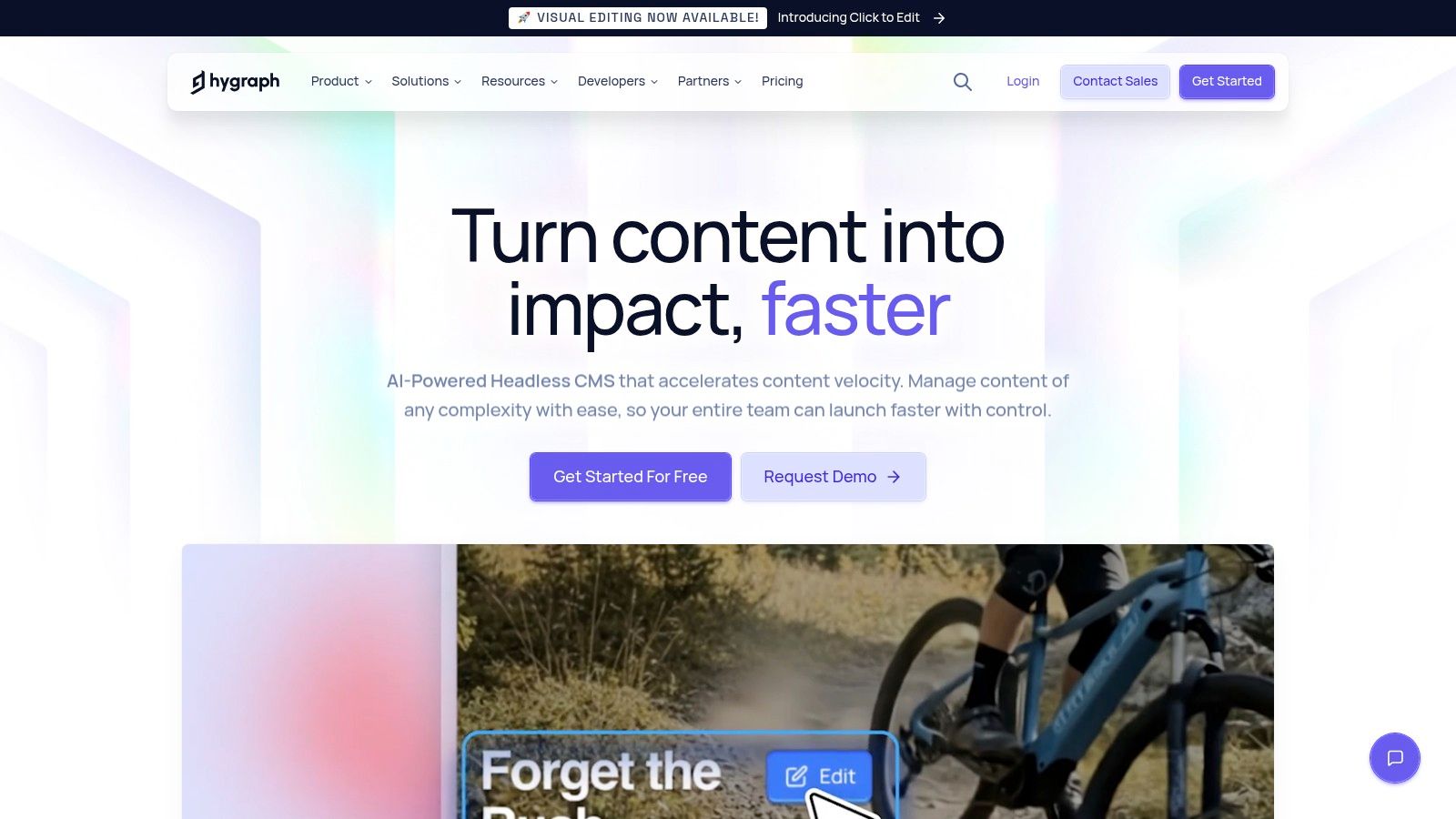
The platform is engineered for high performance and scalability, providing developers with powerful tools for asset transformation, localization, and granular role-based permissions. Its self-serve pricing tiers are known for being competitive, with a generous free plan that includes high API quotas, making it accessible for projects of all sizes. While the user interface for content editors is clean and functional, the platform's core strength and primary appeal lie in its robust, developer-centric features that excel in a GraphQL-centric ecosystem.
Key Details & Use Cases
- Best For: Development teams and enterprises standardizing on GraphQL, and those needing to federate content from multiple systems into a single API.
- Pricing: Offers a free "Community" tier for individual developers and small projects. Paid plans include "Professional" and "Scale," with custom enterprise pricing available upon request for advanced needs like dedicated clusters and premium support.
- Pros: GraphQL-native from the ground up, offering superior performance and features for GraphQL queries; powerful content federation capabilities; competitive and transparent self-serve pricing tiers.
- Cons: Official enterprise pricing can be opaque and requires engaging with the sales team; may present a steeper learning curve for teams not already familiar with GraphQL concepts.
Website: https://hygraph.com/
8. Kontent.ai
Kontent.ai is an enterprise-grade headless CMS designed for organizations that require stringent governance, security, and scalability. It provides a modular content platform that empowers global marketing and development teams to create and manage content across all digital channels without being constrained by a single presentation layer. The platform’s architecture is built to support complex digital experiences, emphasizing collaboration through features like simultaneous editing, custom workflows, and granular user roles, making it a strong contender for the best CMS headless solution for regulated or large-scale environments.
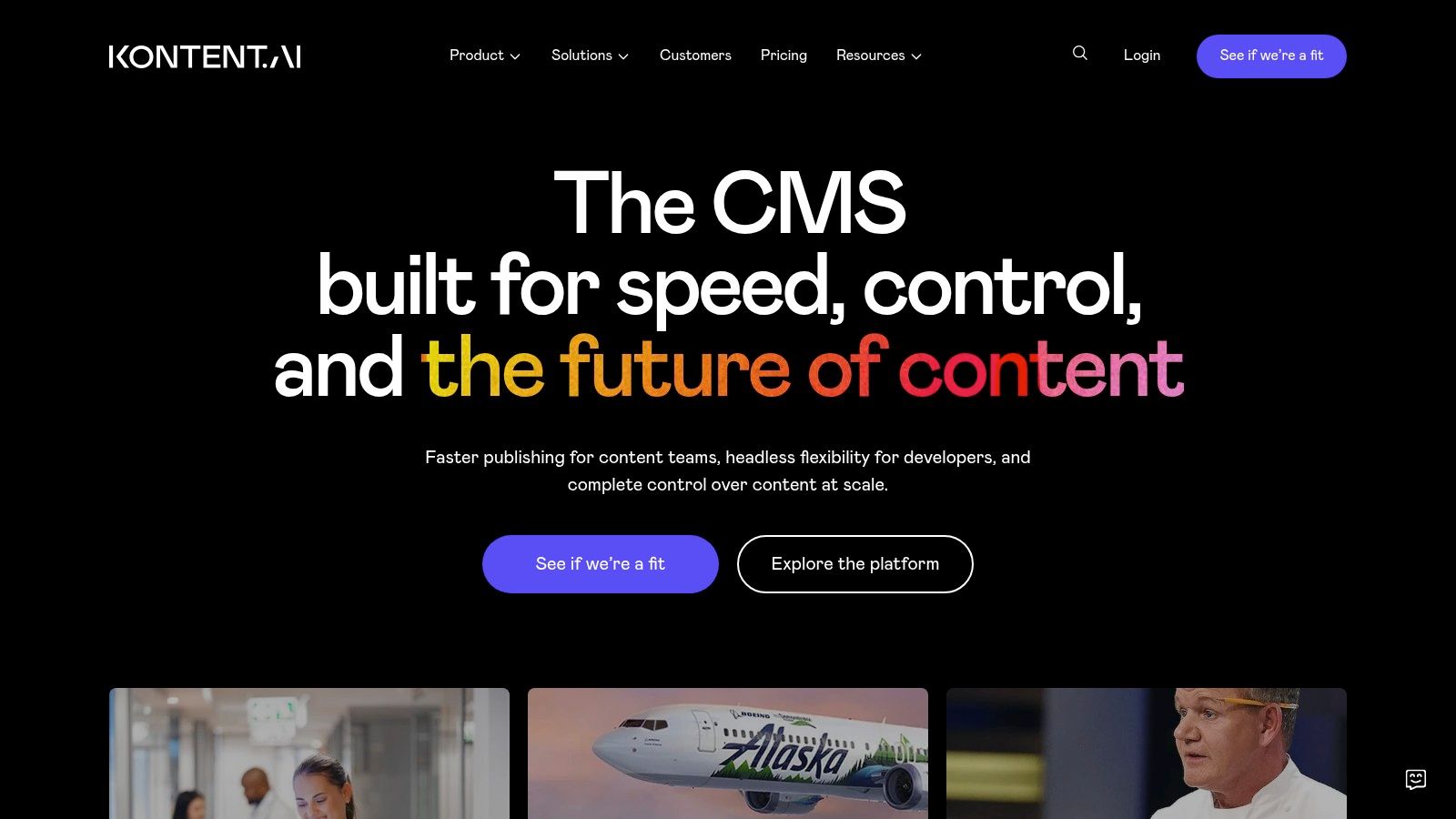
A key differentiator for Kontent.ai is its clear and predictable "fair use" policy, which helps businesses plan and budget for their content operations without unexpected overage fees. This transparency, combined with robust SLAs and compliance certifications, makes it particularly suitable for enterprises in finance, healthcare, and other highly regulated industries. The platform's strong focus on content modeling and localization also ensures that global brands can maintain consistency while adapting messaging for local markets, a critical function for modern digital strategy.
Key Details & Use Cases
- Best For: Global enterprises and regulated industries needing a secure, compliant, and scalable content hub with strong governance and predictable pricing.
- Pricing: Offers a free 30-day trial to explore the platform. Production plans are custom-quoted based on enterprise needs, including Business, Premium, and Enterprise tiers that offer varying levels of support, features, and usage limits.
- Pros: Enterprise-focused with advanced security and compliance; transparent fair-use policy aids in budget planning and avoids surprise costs; powerful collaboration and localization features.
- Cons: Production pricing is not publicly listed and requires a custom quote; the entry-level cost for a production environment is generally higher than platforms geared toward SMBs.
Website: https://kontent.ai/
9. Magnolia
Magnolia positions itself as a powerful hybrid solution, offering the flexibility of a headless architecture alongside the visual authoring tools of a traditional system. It's a composable digital experience platform (DXP) designed for enterprises that require robust multisite and multilingual governance without sacrificing marketer-friendly workflows. This makes it one of the best CMS headless choices for complex organizations that need to manage diverse digital properties from a single, unified hub, delivering content via powerful APIs to any frontend framework or channel.
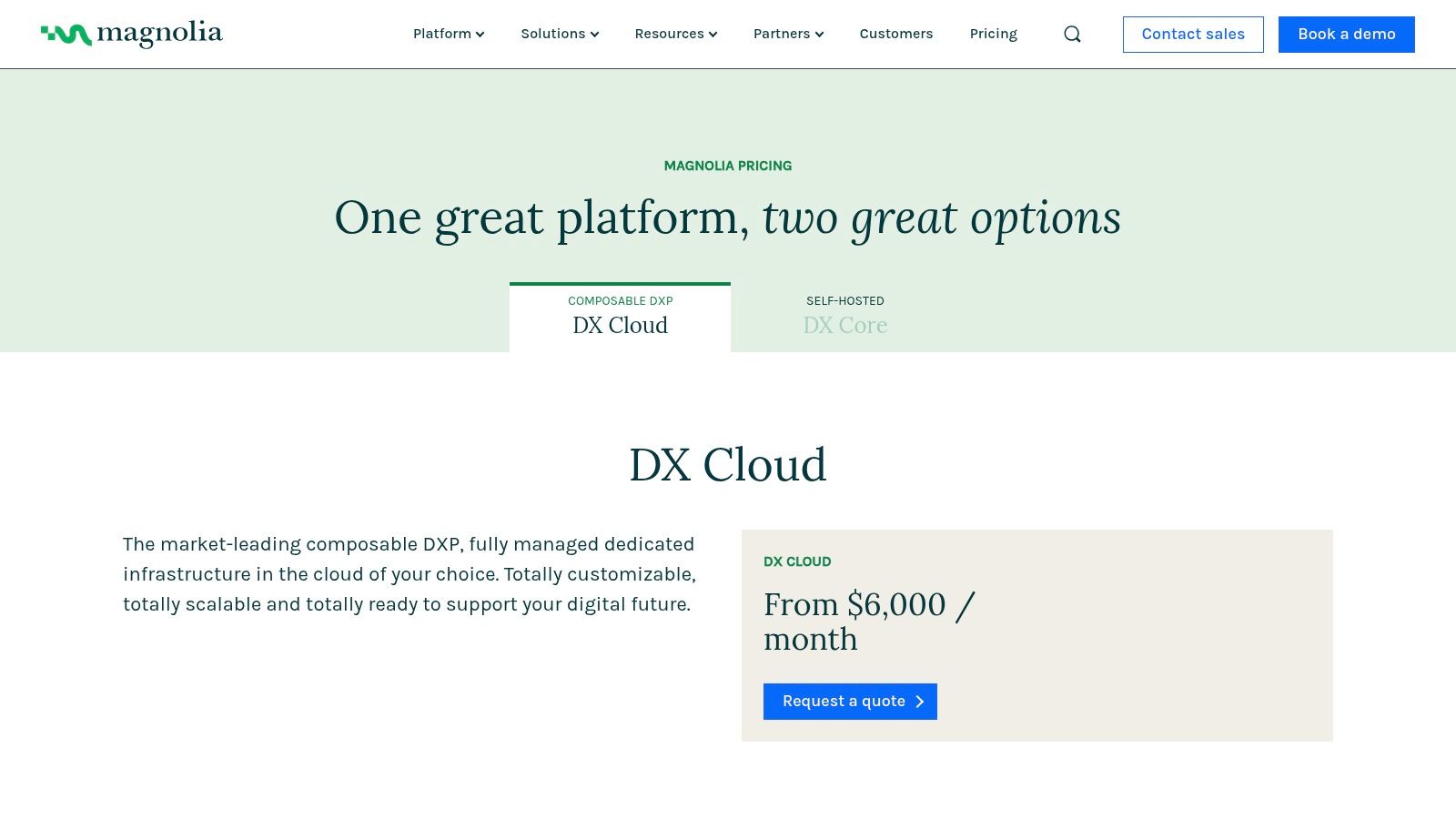
The platform’s key differentiator is its commitment to both developer freedom and content creator autonomy. Developers can leverage REST and GraphQL APIs to build modern experiences, while marketers use intuitive visual editing tools, including a WYSIWYG editor and in-context previews, to manage content layouts. Magnolia’s architecture supports both self-hosted on-premise deployments and a fully managed PaaS DX Cloud on AWS, Azure, or GCP, providing the operational flexibility that large-scale IT departments demand for security and performance.
Key Details & Use Cases
- Best For: Enterprises needing a hybrid CMS that combines headless flexibility with strong visual authoring and multisite management, especially in regulated industries.
- Pricing: Magnolia offers transparent "from" pricing for its DX Cloud, which helps with initial budgeting. However, the total cost is enterprise-oriented and scales based on region, uptime SLAs, traffic, and feature requirements.
- Pros: Flexible deployment options (self-hosted or managed cloud); powerful visual authoring and personalization tools; transparent starting prices are useful for budget forecasting.
- Cons: Starting prices are significant, placing it firmly in the enterprise category; the final cost can vary considerably based on specific operational needs and SLAs.
Website: https://www.magnolia-cms.com/get-started/pricing.html
10. Adobe Experience Manager Sites (AEM)
Adobe Experience Manager (AEM) Sites represents a powerful hybrid approach to content management, blending traditional web management with robust headless capabilities. As a cornerstone of the Adobe Experience Cloud, it’s designed for large enterprises that need to deliver personalized, data-driven experiences at a global scale. AEM allows teams to manage content centrally using its Content Fragments and Experience Fragments features, which can be delivered to any endpoint via GraphQL APIs. This makes it a formidable candidate for organizations seeking one of the best CMS headless solutions without abandoning visual editing.
The platform's standout feature is the Universal Editor, which provides a seamless, in-context editing experience for both headless and head-on web pages. This empowers marketers to create and modify content visually without requiring developer intervention. Its deep integration with Adobe Target and Adobe Journey Optimizer allows for unparalleled personalization and campaign management, making it an ideal choice for complex digital marketing ecosystems. Available as both a managed Cloud Service and a self-hosted option (AEM 6.5), it offers flexibility for different infrastructure strategies.
Key Details & Use Cases
- Best For: Large enterprises deeply invested in the Adobe ecosystem that require sophisticated personalization, analytics, and governance for omnichannel content delivery.
- Pricing: AEM does not offer public pricing. Licensing is premium and tailored for enterprise-level deployments, requiring direct engagement with the Adobe sales team to get a quote.
- Pros: Unmatched integration with Adobe's suite of marketing tools; extensive enterprise-grade governance and security; powerful visual editing capabilities for headless content.
- Cons: Licensing costs are significant and targeted at the high end of the market; the platform's complexity often requires specialized developers and extensive training.
Website: https://business.adobe.com/products/experience-manager/sites/headless-cms.html
11. Sitecore XM Cloud
Sitecore XM Cloud stands at the forefront of the composable DXP revolution, merging decades of enterprise content management leadership with a cutting-edge, SaaS-based headless architecture. It is purpose-built for organizations demanding scalable, high-performance digital experiences without sacrificing powerful authoring tools. By combining a globally distributed Experience Edge CDN with headless APIs, Sitecore XM Cloud enables developers to build with any modern frontend framework. Simultaneously, it empowers marketers with best-in-class visual tools like Sitecore Pages and Components, a WYSIWYG editor that supports real-time, in-context page composition. This hybrid approach makes it one of the best CMS headless platforms for enterprises refusing to compromise between developer freedom and marketer agility.
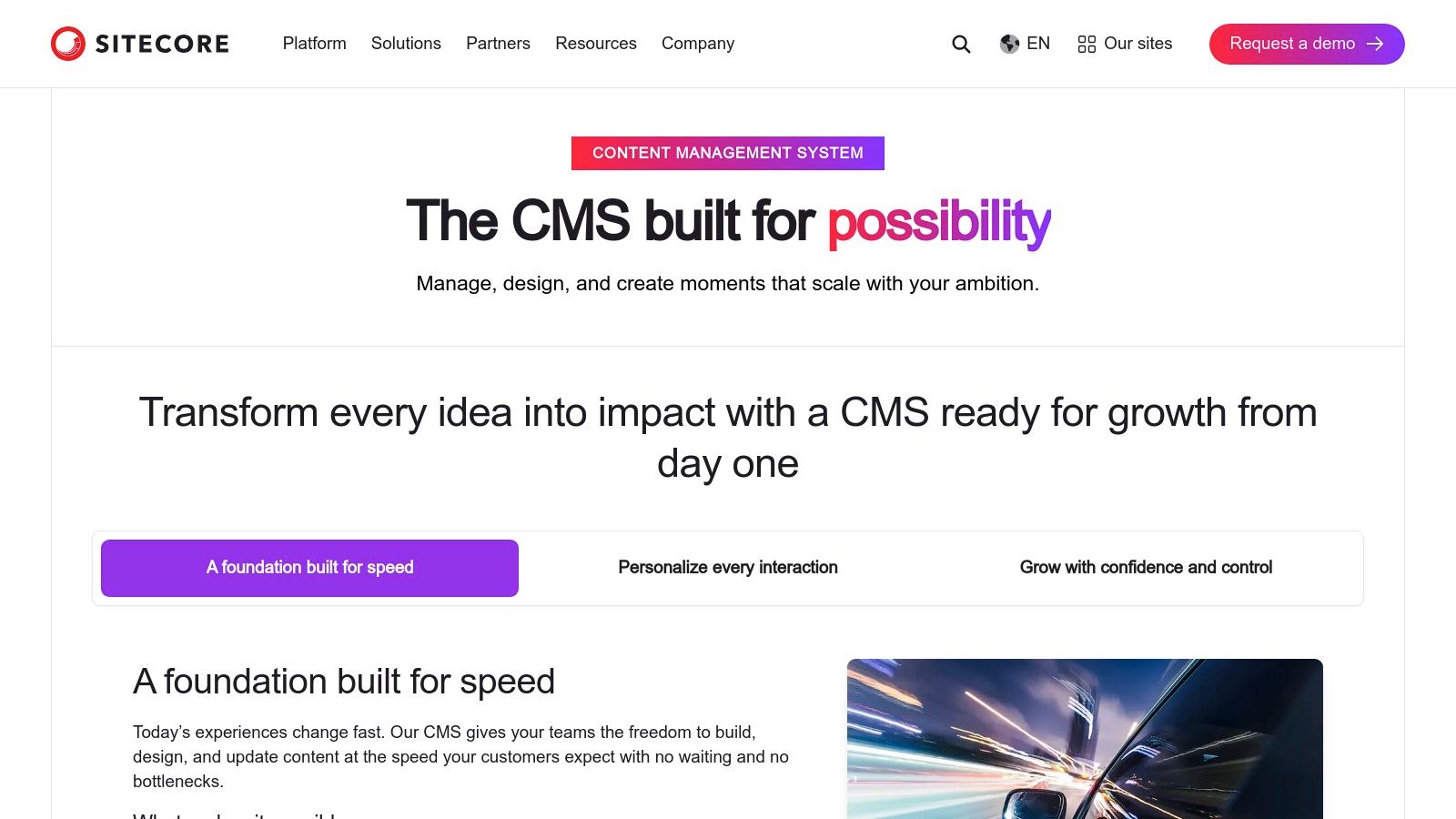
Beyond content delivery, Sitecore's true power lies in its fully integrated, AI-driven personalization and analytics portfolio. XM Cloud serves as the hub for a composable suite that includes:
- Sitecore Personalize: Delivers AI-powered, 1-to-1 personalization, A/B/n testing, and decisioning across any channel.
- Sitecore CDP: Creates a unified, real-time customer profile by aggregating data from all touchpoints, fueling hyper-relevant experiences.
- Sitecore Search: Provides AI-driven, predictive search capabilities that enhance content discovery and user engagement.
This integrated stack allows enterprises to move beyond basic content management and create intelligent, data-driven digital journeys. For organizations seeking to fully leverage these capabilities, Sitecore's official documentation and partner resources at sitecore.com offer deep insights into building a comprehensive DXP.
Key Details & Use Cases
- Best For: Large enterprises, especially those needing a fully managed SaaS DXP with advanced, AI-driven personalization, analytics, and robust visual authoring tools.
- Pricing: Entirely quote-based and tailored to enterprise scale. Pricing is structured around the components of the composable DXP required, usage metrics, and support levels, necessitating direct engagement with Sitecore or a certified partner.
- Pros: Best-in-class hybrid authoring experience; fully managed SaaS platform with autoscaling and elite security; seamless integration with a powerful, AI-driven personalization and CDP stack.
- Cons: Represents a significant enterprise investment with non-transparent pricing; maximizing the platform's value requires specialized implementation expertise.
Website: https://www.sitecore.com/products/xm-cloud
12. Bloomreach Content
Bloomreach Content carves out a powerful niche within the headless CMS landscape by focusing intently on commerce-driven experiences. It is a composable platform designed for retailers and e-commerce brands, merging content management with AI-powered search and marketing automation. Its architecture enables teams to deliver highly personalized, dynamic content across various digital touchpoints, directly integrating with product catalogs and customer data. This makes it one of the best CMS headless solutions for organizations where content and commerce are inextricably linked.
The platform's standout feature is its visual-first editing experience, which includes a drag-and-drop page builder and in-context previews. This empowers marketers to create and manage campaigns without heavy developer reliance, a common pain point in purely developer-centric headless systems. By bundling content with its Discovery (search and merchandising) and Engagement (marketing automation) pillars, Bloomreach offers a more holistic, yet modular, approach to building a cohesive digital experience platform tailored to the unique demands of online retail.
Key Details & Use Cases
- Best For: E-commerce and retail enterprises that require a tight integration between content, AI-powered product discovery, and marketing personalization.
- Pricing: Pricing is not publicly listed and requires direct engagement with their sales team. It follows a modular, pillar-based model with usage-based components, tailored to specific business needs.
- Pros: Strong fit for retail and e-commerce content workflows; modular product structure allows for tailored commercial packaging; excellent visual editing and personalization tools for marketers.
- Cons: Opaque pricing requires a sales consultation; annual billing with usage-based components can make budget forecasting complex.
Website: https://www.bloomreach.com/en/pricing/content
Top 12 Headless CMS Comparison
Choosing Your Partner for Digital Excellence
The journey to find the best headless CMS is more than a technical evaluation; it's a strategic decision that redefines how your organization creates, manages, and delivers digital experiences. Throughout this guide, we've explored a spectrum of powerful platforms, from the developer-centric flexibility of Sanity and Strapi to the enterprise-grade, AI-driven capabilities of Sitecore XM Cloud. Each option presents a unique pathway toward a more agile, scalable, and future-proof digital architecture.
The core takeaway is clear: the modern digital landscape demands a decoupled approach. Monolithic systems are giving way to composable architectures that allow you to select best-in-breed tools for each specific function. This shift empowers marketing and IT teams to innovate faster, personalize at scale, and deliver consistent, high-performance content across any channel, from websites and mobile apps to IoT devices and beyond.
From Selection to Transformation: The Implementation Imperative
Choosing the right headless CMS is a critical first step, but it is only half the battle. The true value and return on investment are realized during implementation, integration, and ongoing optimization. This is where a deep understanding of your business goals, existing technology stack, and future ambitions becomes paramount. The difference between a successful digital transformation and a costly, fragmented system often lies in the expertise of the partner you choose to guide you.
Consider these critical factors as you move forward:
- Strategic Architecture: A successful headless implementation requires a well-designed architecture that accounts for content modeling, API strategy, and integration with other critical systems like commerce platforms, CRMs, and analytics tools.
- Migration Complexity: Moving from a traditional, coupled CMS to a headless model is a significant undertaking. A partner with proven migration methodologies can ensure a seamless transition, preserving SEO equity and minimizing disruption to your business operations.
- Leveraging Advanced Features: Platforms like Sitecore XM Cloud offer sophisticated, AI-driven personalization and testing capabilities. Unlocking the full potential of these tools requires specialized expertise to configure them effectively and align them with your marketing objectives.
- Governance and Team Enablement: Adopting a headless CMS fundamentally changes how your content and development teams work. Proper training, clear governance models, and establishing new workflows are essential for long-term success and adoption.
The Kogifi Advantage: Expertise in Sitecore and SharePoint Ecosystems
For enterprise organizations, especially those invested in powerful ecosystems like Sitecore or SharePoint, generic implementation support is not enough. You need a partner with profound, specialized knowledge. This is particularly true when navigating the complexities of Sitecore's composable DXP and its integrated AI capabilities. Deep expertise is required to orchestrate Sitecore Personalize, CDP, and Search to create truly intelligent user journeys. Similarly, leveraging SharePoint as a robust backend for enterprise content requires specific expertise to architect secure, scalable, and performant headless solutions that integrate seamlessly with your corporate infrastructure.
Finding the best CMS headless for your organization is the start of a transformative journey. Executing that vision with precision, however, requires a partner who understands the intricate details of your chosen platform and can translate its powerful features into tangible business outcomes. The ultimate goal is not just to adopt new technology, but to build a resilient, intelligent, and high-performing digital experience engine that fuels growth for years to come.
Ready to transform your digital presence with a world-class headless architecture? Kogifi is a premier digital experience partner specializing in complex Sitecore AI and SharePoint implementations, ensuring your investment delivers maximum impact and ROI. Contact us to architect your future-proof digital ecosystem today at Kogifi.