


Think of digital transformation consulting services as the architects and general contractors for your company's future. This isn't just about plugging in new software; it's a strategic partnership designed to fundamentally rebuild how your business runs, connects with customers, and creates value in a digital-first world. Our expertise in the Sitecore DXP portfolio and SharePoint solutions provides a clear, expert-led roadmap for overhauling everything from your customer experience to your internal operations.
Understanding The Core Partnership
Let's use an analogy. Imagine your business is a high-performance race car. You know you need more speed, better handling, and greater efficiency to win, but you're not an automotive engineer. A consultant is the specialist who inspects your current vehicle, designs a custom engine based on your race goals, and then expertly installs and tunes it for peak performance.
This process goes far beyond isolated tech upgrades. The goal is to create a cohesive digital ecosystem where every single component works in harmony. This means connecting your customer-facing platforms—like a composable DXP built with Sitecore’s product portfolio—with your internal collaboration tools, such as SharePoint, to create a seamless flow of information and a truly unified operational backbone.
The Role of a Specialized Consultant
A true digital transformation consultant brings much more than just technical chops to the table; they provide indispensable strategic direction. Their main job is to bridge the gap between your business ambitions and the technology needed to make them happen. This involves a deep dive into your current processes to spot bottlenecks and opportunities you might be too close to see. For a deeper look into these foundational concepts, our guide on what is digital transformation provides essential background information.
This partnership is built on deep expertise in specific, powerful platforms. For example, a consultant with extensive Sitecore knowledge can show you how to evolve from a basic website into a fully personalized, omnichannel customer journey using tools like Sitecore XM Cloud, Sitecore Personalize, and Sitecore CDP.
A consultant's job is not just to implement technology, but to reshape the organization's culture and processes around that technology to unlock its full potential. This ensures the transformation is sustainable and delivers long-term business value.
From Ambition to Actionable Reality
Ultimately, the goal is to turn ambitious visions into a practical, step-by-step reality. Whether you want to double your e-commerce conversion rates or slash internal operational costs by 30%, a consultant translates that goal into a tangible project plan. They help you define measurable KPIs, select the right technology stack, and manage the entire complex implementation process from start to finish. With a partner who is deeply versed in the Sitecore DXP and Microsoft SharePoint ecosystems, this journey becomes a clear, manageable process that delivers real, tangible outcomes.
The Four Phases Of A Successful Transformation Journey
A real business overhaul isn't a single, chaotic leap—it’s a structured, methodical journey. When you work with a digital transformation consulting firm, you’re signing up for a clear, four-phase process designed to minimize risk and maximize your return. This structured approach ensures every decision is deliberate, every action is purposeful, and the final outcome hits your strategic goals right on the mark.
This process is all about overhauling what you have, streamlining how you work, and creating new value for the future.
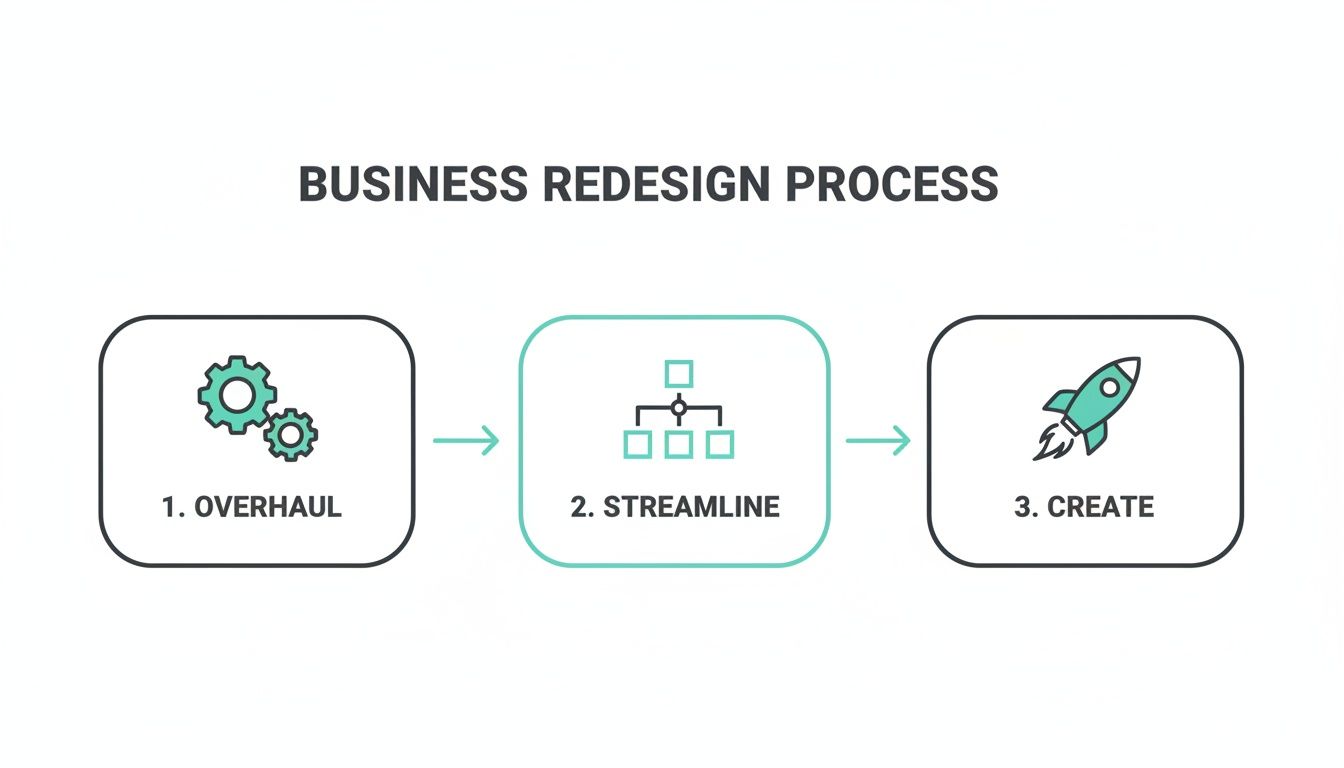
Transformation is a continuum, not a destination. It flows from fixing existing systems to creating future growth.
Phase 1: The Assessment
The journey kicks off with a comprehensive Assessment. Think of us as digital detectives, meticulously examining your current tech, operational workflows, and market position. This is way more than a simple IT audit; it’s a deep dive to uncover hidden inefficiencies, identify untapped opportunities, and understand the exact pain points holding your teams and customers back.
We dig into your existing platforms, looking closely at how systems like an aging CMS or a fragmented SharePoint environment are slowing you down. For instance, we might find that your marketing team spends 20% of their time on manual content updates instead of focusing on strategy—a problem a modern composable DXP like Sitecore XM Cloud could fix in a heartbeat. We map out customer journeys, pinpointing where friction causes people to drop off and costs you revenue.
This foundational phase gives us the data-driven clarity needed to build a powerful case for change, making sure the strategy that follows is grounded in reality, not just assumptions.
Phase 2: Building The Strategy
With a clear picture of where you are, we move to the Strategy phase. This is where we architect the future. Your biggest business goals—like increasing customer lifetime value or making internal collaboration seamless—are translated into a detailed technological and operational blueprint. Our deep expertise in the Sitecore product portfolio and SharePoint solutions is front and center here.
A solid strategy isn’t just about picking software; it’s about designing a cohesive ecosystem.
- Customer Experience Architecture: We design how platforms like Sitecore Personalize and CDP will capture user data to deliver those one-to-one marketing moments that actually drive conversions.
- Operational Efficiency Blueprint: We map out how a modern SharePoint intranet can become a single source of truth, automating document workflows and securing sensitive corporate information.
- Integration and Data Flow: The plan outlines how Sitecore connects with your CRM, ERP, and other business-critical systems, ensuring data moves seamlessly across the entire organization.
This strategic blueprint becomes your North Star for the entire project. It aligns stakeholders, defines measurable KPIs, and creates a clear, phased roadmap that turns abstract goals into an actionable plan.
Phase 3: The Implementation
The Implementation phase is where the blueprint comes to life. This is the hands-on, technical execution where we build your new digital foundation. Our project management ensures this complex process is handled with precision, causing minimal disruption to your daily operations. A typical implementation involves several key workstreams managed by our specialized teams.
For a Sitecore DXP implementation, this includes:
- Platform Setup and Configuration: Installing and configuring Sitecore XM Cloud or your chosen DXP instance, following best practices for security and performance.
- Content and Data Migration: Carefully moving your existing content, product information, and user data from legacy systems into the new platform.
- Custom Development and Integration: Building any necessary custom components and integrating Sitecore with third-party systems as defined in the strategy.
- Team Training and Enablement: Getting your marketing and IT teams up to speed with the knowledge to manage and get the most out of the new platform.
A SharePoint implementation, on the other hand, focuses on creating secure document libraries, building collaborative team sites, and setting up search functionalities to make information instantly accessible.
Phase 4: Optimization And Growth
Finally, we hit the Optimization phase. Launching your new platform isn't the end of the road; it’s the beginning of a continuous cycle of improvement. This ongoing process ensures your investment delivers compounding value over time. Using the built-in analytics from Sitecore and Microsoft, we track performance against the KPIs we set back in the strategy phase.
We use A/B testing to fine-tune user experiences, apply AI to enhance personalization rules, and gather user feedback to make iterative improvements. This data-driven approach allows us to constantly tweak your digital ecosystem. By providing ongoing support and strategic guidance, we help you adapt to shifting market demands and make sure your digital foundation remains a powerful engine for growth long after the initial project is done.
Choosing Your Technology Foundation With Sitecore And SharePoint
Your technology stack is the engine that powers your digital transformation. The right platforms do more than just support your strategy—they act as force multipliers, turning ambitious goals into real business outcomes. For enterprises aiming to master both the external customer journey and internal operational excellence, two platforms consistently rise to the top: Sitecore and SharePoint.
But simply installing software isn't enough. Expert digital transformation consulting services involve architecting a complete ecosystem. It's about configuring these powerful tools to solve your most urgent business challenges, making technology a true strategic asset instead of just another line item on the budget.
Sitecore: The Engine Of Customer Experience
Sitecore has evolved far beyond its roots as a traditional Content Management System (CMS). Today, it offers a powerful, composable Digital Experience Platform (DXP) built to orchestrate sophisticated, personalized customer journeys across every conceivable touchpoint.
Don't just think of it as a tool for your website. Think of it as the central command center for your entire digital marketing operation.
In a market where customer experience is the primary battleground for brands, this capability is non-negotiable. Leading businesses are racing to adopt technologies like AI-driven personalization to stay relevant, which is precisely where Sitecore's product portfolio shines.
The real power of Sitecore's composable DXP lies in its integrated portfolio of products, each designed to solve specific pain points for marketing and e-commerce teams:
- Sitecore XM Cloud: This is the next-generation, cloud-native CMS. Its headless architecture gives you the freedom to deliver content to any channel—from websites and mobile apps to IoT devices and digital kiosks—all from one agile platform.
- Sitecore Personalize: This is where the magic of one-to-one marketing happens. It uses advanced AI and real-time behavioral tracking to deliver dynamically targeted content, offers, and experiences, driving conversion rates and improving customer loyalty.
- Sitecore Content Hub: This platform tackles the pervasive problem of content chaos. It creates a single source of truth for all your digital assets—images, videos, product specs—streamlining content creation, collaboration, and governance for a global enterprise.
- Sitecore CDP (Customer Data Platform): This captures and unifies customer data from all online and offline sources into a single profile, providing the 360-degree view needed to power truly effective personalization across the entire customer journey.
By weaving these tools together, you graduate from a static, one-size-fits-all website to a dynamic, intelligent experience engine. You can finally deliver the right message to the right person on the right channel, at the exact moment it will have the most impact.
SharePoint: The Backbone Of Internal Collaboration
While Sitecore masters the external customer experience, SharePoint is the undisputed champion of the internal employee experience. It’s the foundation for building a modern, connected, and productive digital workplace.
A smart implementation transforms it from a dusty document repository into a vibrant central hub for communication, knowledge management, and process automation. For a large enterprise, a well-architected SharePoint intranet becomes the single source of truth.
It breaks down information silos, giving every employee secure, instant access to the documents, data, and expertise they need to do their jobs well. This is a critical—and often overlooked—part of any holistic transformation strategy. If you're weighing your options for a foundational system, you might find our guide on choosing the https://www.kogifi.com/articles/best-cms-for-enterprise helpful.
Deep expertise in SharePoint unlocks several key business advantages:
- Secure Document Management: With robust version control, permission settings, and compliance features, SharePoint ensures your sensitive corporate information is both secure and easily accessible to authorized users.
- Streamlined Business Processes: We build custom workflows using Power Automate to automate routine tasks like approvals, notifications, and data entry, freeing up your team to focus on higher-value work.
- Enhanced Team Collaboration: Team sites provide dedicated spaces for departments or projects to share files, track progress, and communicate, fostering a more collaborative and efficient work culture.
Sitecore DXP Vs SharePoint For Enterprise Needs
While both platforms are leaders in their respective domains, they serve fundamentally different purposes. Understanding these differences is key to building an effective digital ecosystem.
Ultimately, the choice isn't about Sitecore or SharePoint; it's about understanding how to use Sitecore and SharePoint. They are two sides of the same coin, designed to drive growth by optimizing both your external market presence and your internal operational core.
A Tale Of Two Platforms For One Unified Goal
Let's put it all together. Imagine a global retail brand.
They use Sitecore Personalize to track a customer browsing high-performance running shoes on their website, then send a targeted email with a special offer on those exact shoes. At the same time, their product marketing team is using a SharePoint team site to collaborate on the next big product launch, sharing design files, marketing plans, and sales data in a secure, centralized space.
The product descriptions and images they finalize in SharePoint are seamlessly pushed to Sitecore Content Hub. From there, that approved content is distributed to the e-commerce site, the mobile app, and even in-store digital displays.
This is the power of an integrated digital ecosystem. External and internal platforms work in perfect harmony to drive growth and efficiency. Our expertise lies in architecting this synergy, turning two powerful platforms into a single, cohesive strategic asset.
Measuring The ROI Of Your Digital Transformation
So, how do you prove your transformation is actually working? Investing in new platforms and processes is one thing, but the real test is measuring the tangible value it creates. A structured approach to tracking Return on Investment (ROI) is what shifts the conversation from expenses to earnings, arming you with the data needed to justify every strategic move.
For marketing leaders and the rest of the company, the Key Performance Indicators (KPIs) for success look different, but they're deeply connected. True ROI isn't just about one or the other; it comes from nailing both customer-facing results and internal efficiency. A critical part of any successful digital transformation is the ability to prove its real impact, which starts with solid methods for calculating marketing ROI.
Marketing KPIs Powered By Sitecore
For marketing and e-commerce teams, Sitecore’s analytics tools are a goldmine of data for proving value. The platform lets you move past vanity metrics like page views and dig into deep insights on customer behavior and financial impact.
Here are the KPIs that really matter:
- Customer Lifetime Value (CLV): Using Sitecore Personalize to deliver targeted experiences isn't just a nice-to-have—it drives repeat purchases and builds loyalty. Tracking the rise in CLV draws a direct line from your personalization strategy to long-term revenue growth.
- Conversion Rate Optimization (CRO): Sitecore’s A/B and multivariate testing tools let you scientifically improve user journeys. A measurable lift in goal conversions—say, from 2% to 4%—is a clear win you can attribute directly to the platform.
- Average Order Value (AOV): How much more are customers spending per transaction? An effective Sitecore implementation uses AI-powered product recommendations and smart upsells to increase basket size, directly boosting your bottom line.
- Engagement Value Score (EVS): Sitecore is smart enough to assign a value to every action a user takes, from downloading a whitepaper to watching a video. This score helps you spot your most engaged prospects and proves your content is actually moving people down the sales funnel.
By focusing on these financial and engagement-based metrics, marketing teams can build a compelling business case that speaks the language of the C-suite. It transforms the marketing department from a cost center into a proven revenue driver.
Enterprise KPIs Driven By SharePoint
While marketing focuses on external growth, the rest of the enterprise can measure its transformation through internal efficiency gains powered by SharePoint. A well-implemented SharePoint intranet becomes the central nervous system of the organization, and its ROI is measured in saved time, reduced costs, and better productivity.
Key metrics to track include:
- Reduced Information Retrieval Time: By creating a centralized, searchable knowledge base, you can slash the time employees spend hunting for documents. Shaving just 15 minutes per day for each employee adds up to massive productivity gains across the organization.
- Cost Savings from Workflow Automation: Automating manual processes like invoice approvals or employee onboarding gets rid of paper, reduces errors, and frees up your team for more strategic work. The cost savings here are direct and easy to quantify.
- Improved Employee Productivity: A modern SharePoint intranet gives everyone a single hub for communication, collaboration, and company resources. This means fewer emails, more efficient meetings, and better alignment between departments.
Businesses that strategically implement these platforms see real benefits, such as significant efficiency gains from cloud projects and a measurable lift in customer engagement from personalization.
For a hands-on approach, you can even explore a DXP ROI calculator to measure your digital investment's impact.
How To Select The Right Transformation Partner
Choosing a partner for your digital transformation is easily the most critical decision you’ll make. The right firm doesn't just install software; they become a strategic extension of your team, guiding you through the maze of complex decisions to make sure the tech actually serves your business goals.
Make a poor choice, however, and you're looking at costly delays, mismatched outcomes, and a failure to get the real value out of your investment.
This decision is especially critical when your entire strategy is built on sophisticated platforms like Sitecore or SharePoint. Your partner needs more than just technical skill—they need a deep, practical understanding of how these ecosystems drive business value. They must have a proven track record with successful DXP implementations and a portfolio that shows off their skills in everything from UX design to AI-powered personalization.
Beyond The Sales Pitch: Verifiable Expertise Matters
Any consulting firm can talk a big game. The proof is in their credentials and the results they've actually delivered. When you're vetting partners, especially for a Sitecore-heavy project, you have to dig deeper than the slick sales pitch.
Your first checkpoint should always be official Sitecore certifications. Look for a partner with certified developers and strategists who have passed tough exams on platforms like XM Cloud, Content Hub, and Sitecore Personalize. This is the bare minimum—it’s the baseline that proves they understand the technology's architecture and best practices. To learn more, check out our guide on how to choose the best Sitecore partner for your project.
Next, put their portfolio under the microscope. Ask to see case studies from projects similar to yours in scope and complexity. A top-tier partner will be excited to show you exactly how they solved real business problems using the Sitecore stack.
Assessing Technical Depth And Support Capabilities
Real expertise goes far beyond a piece of paper. A great partner can clearly connect technology to tangible business outcomes. During your evaluation, don't be afraid to ask tough questions about how they'd approach common enterprise challenges.
- Omnichannel Strategy: How have they used Sitecore to create a seamless customer journey across web, mobile, and even in-person touchpoints?
- AI and Personalization: Can they show you specific examples of using Sitecore Personalize to lift conversion rates or increase average order value?
- SharePoint Integration: What’s their experience in building smooth workflows between a public-facing Sitecore site and an internal SharePoint knowledge base?
Just as important is their ability to provide 24/7 support. Enterprise systems simply can't afford to go down. Confirm they have a dedicated support team that can jump on critical issues immediately, keeping your digital operations stable and secure long after the launch party is over. When you're weighing your options, guides on finding the right IT consulting partner can offer some valuable perspective.
Selecting a partner based on the lowest bid is a common and costly mistake. The true value lies in a partner's ability to minimize risk, accelerate time-to-market, and maximize the long-term ROI of your technology investment.
Understanding The Market And Pricing Models
The market for digital transformation services is massive, and customer experience is king. We are seeing a major shift toward outcome-based models, where consulting fees can be tied directly to measurable results like cost savings or revenue growth. This aligns the consultant's goals with your business success.
When it comes to pricing, you'll generally run into three common models:
- Time and Materials: You pay for the hours worked. It's flexible, but can be tough to budget for.
- Fixed Price: A set cost for a clearly defined scope of work. Great for budget certainty, but less forgiving if the project needs to evolve.
- Retainer: A recurring monthly fee for ongoing support, optimization, and strategic advice.
An informed buyer knows these models and picks the one that fits their project and long-term vision. By focusing on verifiable expertise, technical depth, and a clear pricing structure, you can find a partner who truly gets your vision and has the skills to make it a reality.
Essential Vendor Selection Checklist
Choosing the right partner requires a structured evaluation. This checklist is designed to help you methodically assess potential consulting firms, ensuring they have the technical chops and strategic vision needed for a successful digital transformation with platforms like Sitecore or SharePoint.
By using this checklist, you can move beyond the sales pitch and make an informed, data-driven decision. The goal is to find a long-term strategic partner who is as invested in your success as you are.
Frequently Asked Questions
When you're starting down the path of a digital transformation, a lot of questions come up. We get it. Here are some of the most common ones we hear from business leaders, with straight answers focused on timelines, budgets, and what you can really do with platforms like Sitecore and SharePoint.
How Long Does A Digital Transformation Project Typically Take?
There's no single answer, but it’s not an endless journey. The timeline depends entirely on the project's complexity, which is why we break everything down into manageable phases.
For example, getting a foundational SharePoint intranet up and running might take 3-6 months. But a full-scale Sitecore DXP implementation, complete with AI personalization and e-commerce, is a bigger lift—usually in the 9-18 month range.
The key is to avoid a "big bang" launch. We focus on getting a Minimum Viable Product (MVP) live first. This delivers real value to your business quickly and lets your team start using the new tools while we build out the more advanced features in the background.
Why Is Sitecore Often Recommended For Customer Experience?
Because Sitecore offers a complete, composable Digital Experience Platform (DXP) built to manage the entire customer journey. Its real power is in pulling your content, commerce, and customer data into one unified system to enable true personalization at scale.
This is where tools like Sitecore Personalize and Sitecore CDP come into play. You can finally move past blasting everyone with the same generic marketing message. The platform uses AI to deliver true one-to-one experiences based on a unified customer profile and what a user is doing on your site right now. That’s what drives conversion rates and builds loyalty, and Sitecore is the engine that makes it all happen.
Can SharePoint Be Used For More Than Just Storing Files?
Absolutely. Thinking of SharePoint as just a digital filing cabinet is one of the biggest missed opportunities we see. When configured by experts, a modern SharePoint environment becomes the central hub for your entire internal operation.
SharePoint's true power is in process automation and knowledge management. It streamlines workflows, creates secure collaboration hubs, and builds a single source of truth that dramatically improves employee productivity and reduces operational friction.
We use it to automate clunky approval processes, build dynamic project management dashboards, and create searchable knowledge bases that put critical information right at your team's fingertips. It stops being a passive storage closet and becomes an active tool that makes the business run better.
What Is The Biggest Misconception About Transformation Budgets?
The biggest mistake is treating the budget like a one-and-done capital expense. A successful digital transformation is an ongoing commitment, not a one-time project. The initial build is just the beginning; the real ROI comes from continuous optimization, support, and evolution.
A good partner will help you plan for the total cost of ownership, which includes:
- Initial Implementation: The cost to design, build, and launch the platform.
- Licensing and Hosting: Ongoing fees for software like Sitecore and the cloud infrastructure it runs on.
- Support and Maintenance: A budget to keep the lights on with 24/7 support, ensuring uptime and security.
- Optimization Retainer: Dedicated resources for making the platform better over time, like A/B testing new ideas or adding features your customers are asking for.
This approach ensures your platform stays a valuable asset that grows with your business, instead of becoming another piece of outdated tech.
Ready to turn these insights into action? Kogifi provides the deep expertise in Sitecore and SharePoint needed to architect and execute a successful transformation. Contact us today to build your digital future.