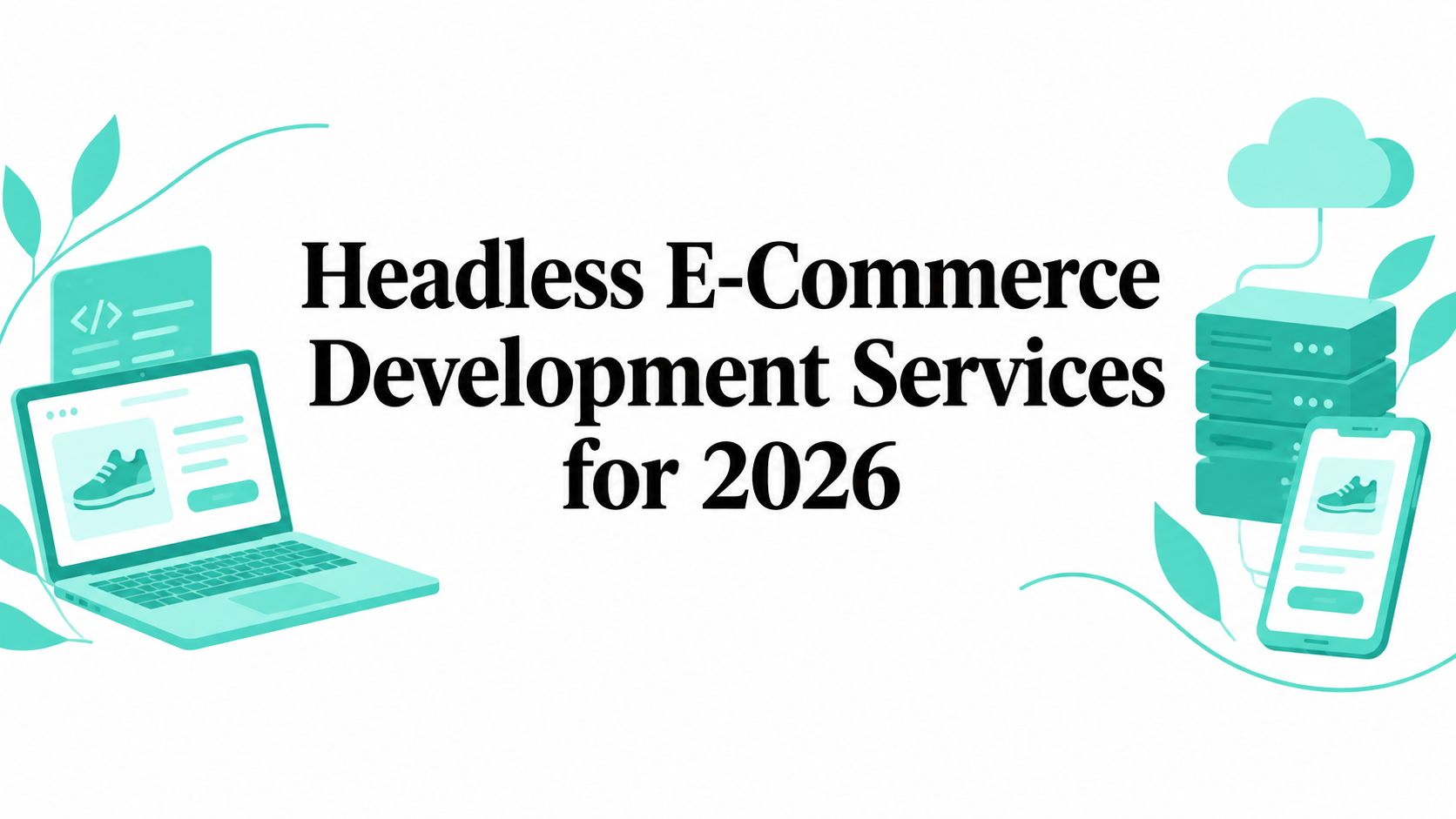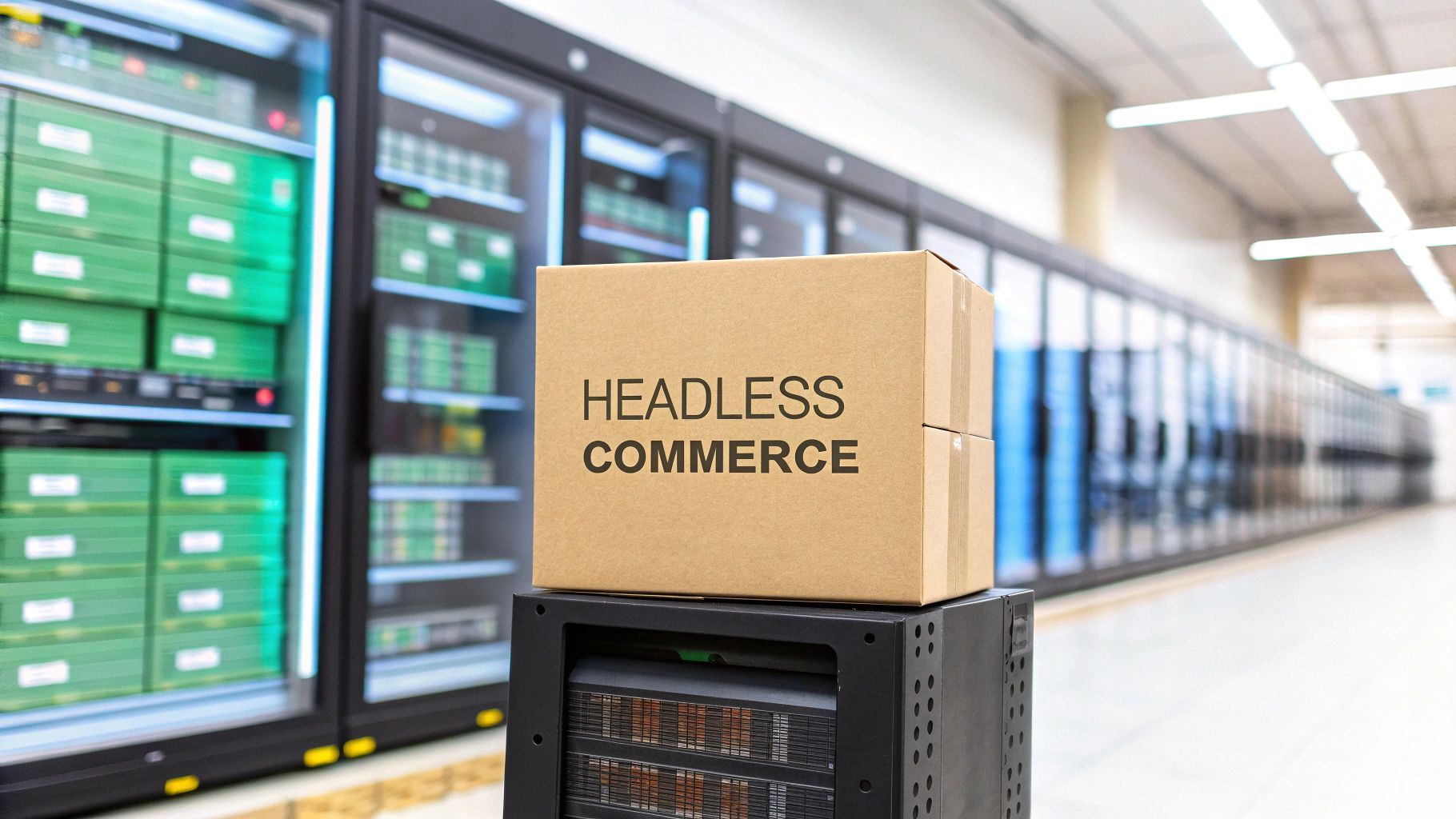



Headless commerce is all about one simple, powerful idea: separating your backend commerce engine from the customer-facing frontend. Think of it as decoupling the "body" (all your product data, pricing, and inventory) from the "head" (the website, mobile app, or even a smart kiosk). This split, a core principle in modern digital architectures like Sitecore's composable DXP, gives you incredible freedom to build unique customer experiences on any digital channel you can dream up.
Defining Headless Commerce Architecture
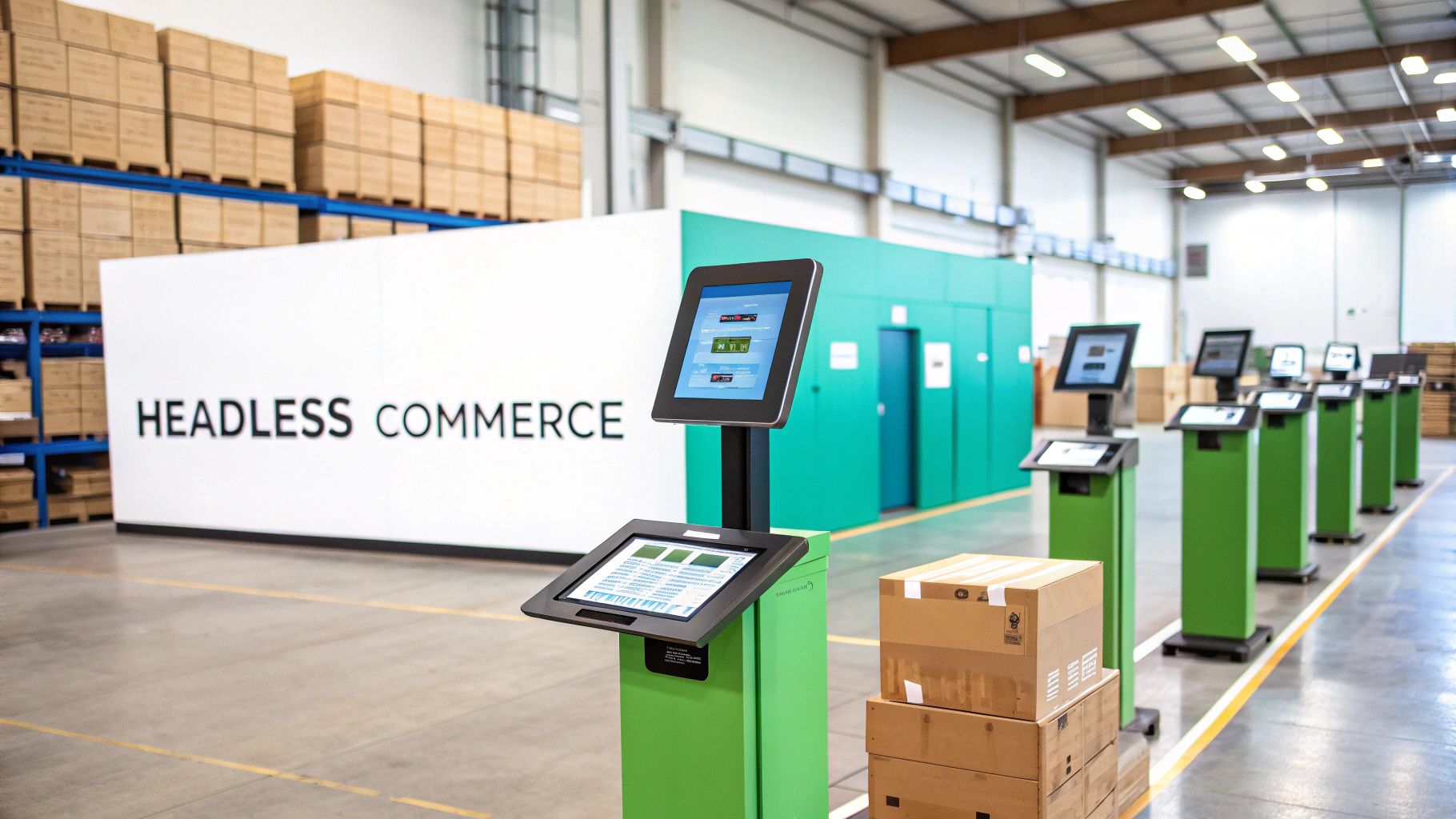
Let's ditch the technical jargon for a minute. Imagine a traditional e-commerce platform as an old-school department store. The storefront, the cash registers, and the stockroom are all locked together in one big, rigid building. If you want to change the window display, you might have to shut down the whole store. It’s clunky and slow.
Now, picture a headless platform as a central, high-tech warehouse—the 'body'—that handles all your products, orders, and logistics. This warehouse, much like Sitecore OrderCloud, can send inventory to any sales channel imaginable: a slick pop-up shop, a polished mobile app, a smart kiosk, or even an internal SharePoint portal. Each one is a separate 'head' that you can design, build, and update on its own without ever messing with the warehouse operations.
That separation is the magic of headless commerce platforms. The backend, which manages everything from product information to order processing, runs completely on its own. It talks to any number of frontends using an Application Programming Interface (API), which acts like a universal translator between the systems.
To get a clearer picture of how these two models stack up, here’s a quick comparison.
Traditional vs Headless Commerce At a Glance
This table breaks down the core differences, showing why so many businesses are moving away from the old all-in-one model.
As you can see, the headless approach is built for agility and innovation, while the traditional model prioritizes simplicity within a single, contained system.
The Power of Decoupling
The freedom you get from decoupling the frontend and backend is a massive strategic advantage. Your marketing and development teams are no longer stuck inside the box of a single, inflexible platform. They can work in parallel, innovate much faster, and deliver consistent, high-quality experiences wherever your customers are.
This architectural shift empowers brands to move beyond template-driven websites and create truly unique digital journeys. It's about delivering the right experience on the right channel at the right moment, a core principle within the Sitecore ecosystem.
This model is the foundation for a more agile, composable future. It lets you pick and choose the best-in-class tools for each job, creating a tech stack that’s perfectly tailored to your business goals. To dig deeper into this modular approach, you can learn more about how composable commerce works and its benefits for enterprise organizations.
Why This Matters for Your Business
At the end of the day, this architecture directly impacts your ability to compete and grow. The advantages are clear and tangible:
- Faster Time-to-Market: Launch new features, promotions, or entire storefronts without getting bogged down by backend development cycles.
- Complete Creative Control: Your designers and marketers can build any customer experience they can imagine, free from the constraints of a traditional platform's themes.
- True Omnichannel Presence: Seamlessly push your product catalog and commerce functions to websites, mobile apps, social media, and emerging IoT devices.
- Improved Performance: Frontends can be optimized for pure speed and responsiveness since they aren't weighed down by heavy backend logic.
The API-First Architecture Explained
At the heart of every headless commerce platform is a brilliantly simple idea: API-first architecture. If you think of the backend commerce engine as the "body" and the customer-facing website as the "head," then Application Programming Interfaces (APIs) are the central nervous system that makes them talk to each other. APIs act like super-efficient messengers, zipping requests and data back and forth between your backend—things like inventory, pricing, and orders—and any frontend you can dream up.
This is a complete reversal of how traditional, monolithic systems were built. Instead of building the storefront first and then scrambling to hook up the data, an API-first approach designs those data connections from day one. This guarantees that every single piece of commerce functionality is available through a clean, well-documented API, ready to be sent to any channel.
The MACH Principles in Action
The gold standard for this modern approach is captured by the MACH acronym. This isn't just a list of buzzwords; it's a strategic blueprint for building digital experiences that are agile, scalable, and built to last—a philosophy that’s deeply ingrained in platforms like Sitecore.
- Microservices: Forget one giant, clunky application. Here, commerce functions are broken down into small, independent services. For instance, your search, cart, and payment functions can all run separately, meaning you can update one without breaking the entire system.
- API-First: As we've covered, all functionality is exposed through APIs. This is the glue that holds the whole composable ecosystem together, allowing different systems and frontends to communicate seamlessly.
- Cloud-Native: The platform is built to take full advantage of the cloud, delivering top-notch scalability, reliability, and performance. This gets rid of the headache of managing on-premise servers and lets you scale resources up or down based on traffic.
- Headless: The frontend presentation layer is completely detached from the backend business logic. This gives you absolute freedom to create unique, compelling customer experiences on any device.
Sitecore's composable DXP is a perfect example of MACH principles at work, especially with products like Sitecore OrderCloud. OrderCloud is a true API-first, cloud-native commerce engine built for complex B2B, B2C, and B2X business models. Its entire feature set is accessible via its RESTful API, giving developers the power to build the exact experience a business needs, without compromise.
A Strategic Advantage Beyond Technology
Moving to an API-first architecture is far more than just a tech upgrade; it's a massive strategic advantage. It empowers your marketing and development teams to work in parallel. While developers are busy building and refining backend microservices with Sitecore's tools, marketers can simultaneously design and launch new campaigns on any frontend without having to wait for backend changes.
This parallel workflow slashes time-to-market. What once took months of coordinated effort can now be done in a matter of weeks, giving businesses the agility to experiment and react to market shifts at lightning speed.
This agile method is a must-have for any modern enterprise. For businesses already in the Microsoft ecosystem, this architecture opens up even more possibilities. Imagine turning a SharePoint intranet into a slick internal B2B ordering portal. By calling the headless commerce APIs, SharePoint can pull live product data, pricing, and availability, creating a frictionless purchasing experience for employees or partners right inside an interface they already know. It’s a perfect example of how API-first design fuels creative, high-value integrations.
Getting a handle on how APIs work is the key to unlocking all this potential. For a closer look at the mechanics, checking out examples from platforms like Sitecore on sitecore.com can provide great insights into how they expose their backend logic. Of course, making sure these connections are solid is critical. Our guide on best practices for API integration in DXPs offers a clear roadmap for building stable and scalable connections.
Integrating Headless Commerce with Sitecore and SharePoint
This is where the magic happens—when you pair a powerful headless commerce engine with an enterprise-grade Digital Experience Platform (DXP). For companies already invested in the Sitecore ecosystem, this integration unlocks the ability to create personalized, content-rich shopping journeys that don't just sell products but build real customer loyalty. It’s the difference between a simple transaction and a memorable digital experience.
The whole strategy hinges on Sitecore's composable product lineup. A tool like Sitecore OrderCloud acts as the API-first commerce engine—it's the powerful, headless "body" that manages everything from complex B2B pricing rules to intricate order workflows. Its true strength is its flexibility; it's built from the ground up to handle the sophisticated B2B, B2C, and marketplace scenarios that often leave traditional platforms struggling.
Now, connect OrderCloud with a content hub like Sitecore XM Cloud, and the synergy is immediate. As a cloud-native, headless CMS, XM Cloud gives marketing teams the freedom to create and manage compelling content—from engaging blog posts to rich product stories—completely independently of the commerce backend. APIs then pull that content into any frontend you can imagine, seamlessly blending it with live product data from OrderCloud.
The Sitecore Advantage: A Composable Approach
This composable model gives you a massive advantage. Instead of being stuck with a single, monolithic system, you can assemble a best-of-breed solution tailored to your exact needs. You might use Sitecore Discover for AI-powered search, feeding intelligent product recommendations to a custom-built React frontend, all while managing content in XM Cloud and orders in OrderCloud.
This architecture is all about decoupling. Backend systems communicate with frontend experiences through a mediating API layer, giving everyone room to breathe.
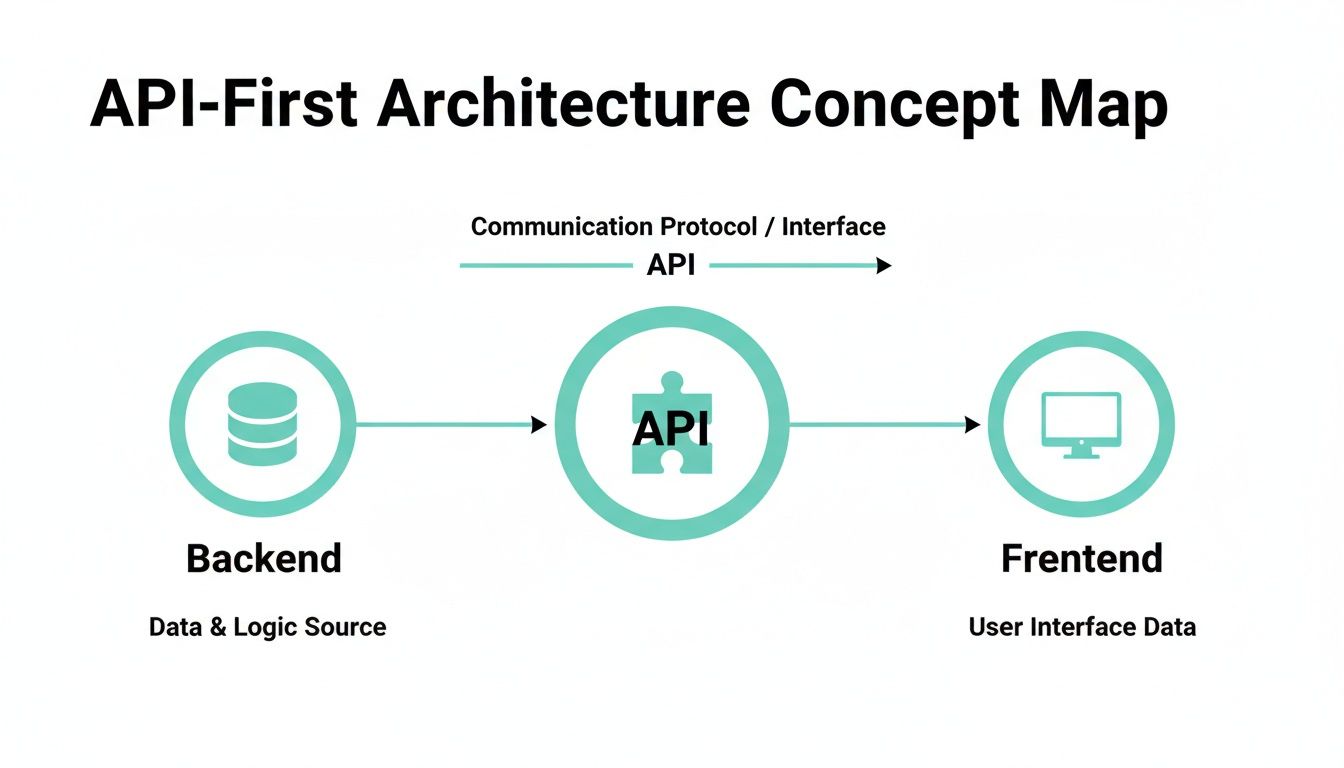
This separation is what gives your development and marketing teams the autonomy to innovate in parallel. The result? You get new features and campaigns to market much, much faster.
The entire headless ecosystem is built on this principle. The MACH (Microservices, API-first, Cloud-native, Headless) architecture, which is central to Sitecore's philosophy, is the leading design pattern for modern digital experiences. This isn't just theory; businesses leveraging this model can push hundreds of product updates per year, a pace that's simply impossible with older, monolithic setups.
Connecting Commerce with SharePoint Solutions
For enterprises deeply rooted in the Microsoft ecosystem, the power of headless commerce creates some fascinating opportunities, especially with platforms like SharePoint. While it's not your typical e-commerce storefront, SharePoint excels as a secure hub for content and documents, making it a perfect candidate for specialized B2B commerce.
Think about a large manufacturing company with a complex network of distributors. Instead of building a B2B portal from scratch, they can extend their existing SharePoint intranet.
By integrating with a headless commerce platform like Sitecore OrderCloud, the SharePoint portal can be transformed into a secure, streamlined ordering system. Distributors can log in to a familiar environment, access personalized catalogs with contract-specific pricing, view technical documents, and place orders directly.
This approach delivers some serious wins:
- Leverages Existing Infrastructure: It works with a platform your partners or employees already know, which cuts down on training and boosts adoption.
- Enhances Security: SharePoint's robust permission controls ensure users only see the products and pricing they're supposed to.
- Centralizes Information: Technical specs, manuals, and marketing materials stored in SharePoint can be linked directly to product listings, creating a single source of truth.
Another great use case is an internal employee store. A company can spin up a private purchasing site within their SharePoint environment for employees to buy branded merchandise or equipment. The entire experience—from browsing to checkout—is powered by the headless commerce engine working silently in the background to handle inventory, payments, and fulfillment.
This is a perfect example of what headless truly enables. It's not just about building websites; it's about embedding commerce functionality wherever it's needed most, driving efficiency in ways you might not have expected. To dig deeper into the modular concepts behind this, our guide on ecommerce microservices architecture offers a detailed overview.
The Real Business Benefits and Strategic Trade-Offs
So, beyond the technical diagrams and API calls, what does a move to headless commerce actually do for your business? The real value isn't just in the technology itself, but in the fundamental shift it creates—moving away from a rigid, one-size-fits-all system to a flexible, mix-and-match approach. It’s about prioritizing speed, creativity, and the customer experience above everything else.
One of the first things you'll notice is a serious boost in site speed. By separating the customer-facing frontend from the heavy backend commerce engine, your developers can build incredibly light and fast experiences. Faster load times aren't just a nice-to-have; they directly lead to higher engagement, better SEO rankings, and more conversions.
This separation also unlocks a level of agility that’s impossible with traditional platforms. Your marketing and development teams can finally stop stepping on each other's toes. While your tech team is tweaking the checkout logic in Sitecore OrderCloud through an API, the marketing team can be designing and launching a brand-new interactive product finder. No more waiting in line for development resources.
Supercharged Time-to-Market
In a market where being first often means being the winner, the ability to launch new features, campaigns, or even entirely new storefronts is a massive advantage. Headless architecture is built for speed.
- Rapid Prototyping: Marketers can dream up and test new customer experiences on the frontend without getting stuck in long backend development cycles.
- Independent Deployments: Frontend changes can be pushed live multiple times a day without any risk to the stable, secure commerce backend.
- Faster Channel Expansion: Want to launch a mobile app or an in-store kiosk? You just build a new "head," not rebuild your entire e-commerce operation from scratch.
This is where headless really proves its worth. Businesses using a composable DXP like Sitecore can cut the time it takes to launch new digital experiences significantly. For brands that get it right, this newfound speed and flexibility can lead to substantial jumps in conversion rates, drawing a clear line between agility and revenue.
Balancing the Benefits with Strategic Trade-Offs
While the perks are powerful, headless isn't a silver bullet. It’s a strategic decision that demands a clear-eyed look at the trade-offs. You aren't just buying a product; you're adopting a new way of working.
The very flexibility that makes headless so appealing also brings a higher degree of initial complexity. You’re no longer managing one big system; you’re conducting an orchestra of best-in-class services. This requires a dedicated team with the right skills to manage APIs, juggle integrations, and handle multiple vendor relationships.
The upfront investment of time and money can also be greater than with a traditional platform. When weighing custom software versus off-the-shelf options, a headless approach often leans toward custom work to nail that unique brand experience, and that requires specialized talent.
A successful headless implementation is less about the technology itself and more about the organizational mindset. It requires a commitment to agile workflows, cross-functional collaboration, and a willingness to invest in the right development expertise and partnerships.
The Role of Expertise and Partnership
Successfully navigating these trade-offs often comes down to having the right partners in your corner. For enterprises using a platform like Sitecore, this means working with experts who get both the technology and the bigger strategic picture of a composable DXP.
An experienced partner can help you:
- Audit Your Current Stack: Figure out what you can keep and what needs to go.
- Design the Right Architecture: Choose the best frontend frameworks and microservices that align with your business goals.
- Build a Phased Migration Plan: Create a roadmap that delivers value quickly without disrupting your day-to-day operations.
Ultimately, going headless is an investment in making your business future-proof. It gives you the architectural backbone to adapt to whatever comes next, whether it’s changing customer habits or new market opportunities, and to do it with speed and confidence.
How to Plan Your Migration to a Headless Platform
Making the switch to a headless platform is a strategic journey, not just a technical flip of a switch. For any enterprise leader, a successful migration starts long before a single line of code is written. It begins with a clear-eyed look at your current systems and a sharp definition of the business problems you’re trying to solve.
The first step is a thorough audit. Get under the hood of your existing monolithic platform—where are the real bottlenecks? Are slow page loads killing conversions? Is your marketing team stuck with rigid templates when they need to launch a new campaign? Documenting these pain points is the foundation for building a rock-solid business case for change.
This planning phase is also the time to size up the market opportunity. Headless commerce is a significant industry-wide shift to API-first architectures. By adopting a modern, composable stack, you position your business to stay competitive and agile for years to come.
Building Your Migration Dream Team
A headless migration isn’t a one-person show. It demands a cross-functional team of experts who get both the tech and the business goals. If you're running on Sitecore, for example, your team absolutely needs specialists who know the composable DXP inside and out.
Your winning lineup should include:
- A Sitecore Architect: The visionary who can map out the end-to-end solution, making sure Sitecore OrderCloud, XM Cloud, and your frontend play nicely together.
- Frontend Developers: Experts in modern frameworks like React, Vue, or Next.js who will build the customer-facing "heads."
- Backend & API Specialists: The engineers who manage the data flow and ensure the APIs connecting everything are bulletproof and secure.
- A Project Manager: The conductor of the orchestra, keeping the project on track, managing expectations, and making sure everyone is rowing in the same direction.
This team’s first job is to turn those business goals into a technical blueprint. They’ll pick the right frontend frameworks to pair with your Sitecore backend and design the API strategy that will serve as the project's backbone.
Designing a Phased and Strategic Rollout
One of the biggest mistakes you can make is attempting a "big bang" launch where everything changes overnight. That approach is a recipe for risk and disruption. A much smarter strategy, especially for complex enterprises, is a phased rollout that minimizes risk while delivering quick, tangible wins.
For instance, you could start by migrating just one high-impact piece of your customer journey. Maybe you decouple the product detail pages (PDPs) first. This lets you test the new architecture in a controlled way, gather real performance data, and show stakeholders some immediate value.
A phased migration allows your team to learn and adapt as you go. You can refine your processes and build momentum, using each successful phase to secure buy-in for the next stage of the project.
For organizations on SharePoint, a similar phased approach works wonders. You could kick things off by building a proof-of-concept internal portal for a single department, integrating it with Sitecore OrderCloud to prove the model works before a company-wide rollout.
Planning is everything, and a structured approach ensures nothing falls through the cracks. To get your efforts organized, check out our guide on the 12 critical steps in a digital platform migration checklist. This roadmap will help set your project up for success from day one.
Future-Proofing Your E-Commerce Strategy
Thinking about headless commerce platforms isn't just about chasing the latest trend. It's a strategic move to build agility right into your business, preparing you for a future you can't even see yet. The logic is simple: a headless architecture gives you the resilience to handle whatever the market or your customers throw at you next.
But you don't have to rip and replace everything at once. That's a recipe for disruption. Instead, the best way forward is to pick one high-impact area where headless can deliver a quick, measurable win. This approach proves the concept, minimizes risk, and gets key stakeholders excited about what's possible.
Starting Your Headless Journey
So, where do you start? Look for a business goal that's being held back by your current, rigid setup. A few smart starting points could be:
- Fixing mobile conversion rates: You could launch a lightning-fast, purpose-built mobile experience without touching your main desktop site.
- Launching an international storefront: Need to expand into a new region? Spin up a new "head" with localized content and currency, all running on your existing Sitecore commerce engine.
- Creating a B2B partner portal: You can extend your SharePoint environment with commerce functions, letting partners place orders directly in an interface they already know and trust.
Each of these is a self-contained project that can demonstrate the power of a headless approach.
The ultimate goal is to build a flexible, composable foundation with Sitecore that allows you to adapt, innovate, and win for years to come. This isn't just a technology upgrade; it's a fundamental shift toward a more adaptable business model.
By building a composable strategy with tools like Sitecore OrderCloud and XM Cloud, you're not just buying software. You're buying the ability to react to new opportunities with speed and precision. Every company's journey to digital maturity looks different.
Ready to figure out what your path looks like? Connect with our Sitecore experts today to explore how a headless strategy can secure your e-commerce future and drive real growth.
Common Questions About Headless Commerce
When leaders start exploring headless commerce, a lot of good questions come up. It's a different way of thinking, especially if you're used to traditional systems like Sitecore or SharePoint. Getting clear on the details is the first step toward making the right call.
We've heard all the common questions, and here are the honest answers based on our experience.
The conversation almost always starts with cost. Yes, a headless setup can have a higher initial price tag than an all-in-one platform. But it's better to think of it as a long-term investment in your business's agility.
The real payoff isn't just in the setup; it's in the speed you gain later. You'll be able to launch new features and tweak customer experiences without needing to rip apart your backend systems, which is where the hidden costs of monolithic platforms really add up.
Is Headless Only for Large Enterprises?
Absolutely not. While huge companies running on platforms like Sitecore certainly see massive benefits from headless scalability, the same logic applies to any business that wants to grow.
One of the best things about going headless is that you don’t have to do it all at once. A mid-sized company could start small by decoupling just its mobile app to make it faster. This lets you prove the value and get a quick win before committing to a full-blown migration. A phased approach like this makes headless a realistic option for businesses of all sizes.
The real question to ask is: does your company want to build unique, high-performance customer experiences and grow across multiple channels? If the answer is yes, headless is worth a serious look.
What Skills Does My Team Need?
Shifting to headless definitely changes the kind of skills you'll need on your team. It's no longer about managing one big system. Now, it's about connecting a bunch of specialized tools. This means you'll need developers who are comfortable with modern frontend frameworks (like React or Vue.js) and know their way around APIs.
Successfully managing a headless setup, especially with a powerful DXP like Sitecore, requires a team that understands how to connect disparate systems seamlessly. This includes API management, frontend development, and backend commerce logic.
If you're using SharePoint for B2B portals, your team will also need to be good at integrating Microsoft technologies with various third-party APIs. The job shifts from being a "platform manager" to an "experience orchestrator." Building that skillset internally or finding the right partner to fill the gaps is a non-negotiable step for success.
At Kogifi, we specialize in guiding enterprises through the complexities of digital transformation. Our experts in Sitecore and SharePoint can help you build a powerful, future-proof headless commerce strategy. Learn more about our services at Kogifi.com.