


Marketing automation is no longer a luxury; it's the core engine of a successful Digital Experience Platform (DXP). Simply owning the tools, however, isn't enough. The difference between a high-performing automation strategy and a costly, ineffective one lies in the adherence to proven principles. This guide dives deep into 10 essential marketing automation best practices, providing actionable, expert-level insights tailored for enterprise ecosystems.
Our primary focus is on maximizing the capabilities within Sitecore's powerful DXP portfolio and integrating sophisticated workflows within SharePoint environments. We will move beyond generic advice to offer specific implementation strategies that transform your platform from a simple tool into a revenue-generating powerhouse. To truly master automation workflows and achieve wins in the modern DXP era, it's crucial to understand how to leverage specific platforms; for instance, you can discover how efficient email automation tools can enhance your marketing strategy and integrate seamlessly with broader DXP functions.
This comprehensive listicle is designed for professionals seeking to elevate their automated marketing from basic triggers to intelligent, multi-channel orchestration. Whether you are using Sitecore Experience Platform (XP), leveraging the real-time decisioning of Sitecore Personalize, or managing communications in SharePoint, these practices provide a clear roadmap. From advanced segmentation and lead scoring to robust data governance and analytics, you will learn how to build scalable, personalized, and highly effective automated marketing campaigns that deliver measurable results. Let's explore the strategies that separate the novices from the experts.
1. Mastering Hyper-Personalization with Sitecore's Profile and Pattern Cards
True marketing automation best practices go far beyond basic demographic splits. For enterprises using a Digital Experience Platform (DXP) like Sitecore, the gold standard is leveraging its native personalization engine. This means using Sitecore's Profile and Pattern Cards to build nuanced, behavior-driven user personas in real-time. This approach moves you from targeting broad groups to engaging with individuals based on their actual intent.
By assigning points to content based on specific "Profile Keys" (e.g., 'Product-focused', 'Price-sensitive'), Sitecore dynamically tracks each visitor's interests. As a user interacts with your site, their scores accumulate, and the platform automatically maps them to a pre-defined "Pattern Card" that represents a specific persona, such as 'The Diligent Researcher' or 'The Quick Buyer'. This real-time persona matching is the catalyst for powerful automation.

Why This Approach Works
This method allows Sitecore's automation engine to trigger highly relevant personalization rules, content swaps, and journey enrollments that align precisely with user intent. It transforms the digital experience from a one-size-fits-all brochure into a dynamic, one-to-one conversation.
- Example 1: Financial Services: A financial institution identifies a user accumulating points in its 'Retirement' profile. Once they match the 'Retirement Focused' pattern, Sitecore automatically personalizes the homepage hero to feature pension-planning articles and triggers a workflow inviting them to a relevant webinar.
- Example 2: E-commerce: An e-commerce site maps a user to a 'Bargain Hunter' pattern after they visit multiple sales pages. This match can trigger an automated email with an exclusive discount code, directly addressing their price-sensitive behavior and increasing conversion likelihood.
Actionable Implementation Tips
To effectively implement this strategy, start with a focused plan and iterate.
- Start Small: Begin with 3-5 core, business-critical personas and build their corresponding Profile and Pattern Cards in Sitecore first.
- Align with Sales: Collaborate with your sales and business development teams to ensure your Profile Keys accurately reflect the attributes of your ideal customer profiles.
- Audit and Refine: Regularly review the Pattern Card matches in Sitecore Analytics. This data will reveal if your scoring logic is accurate or needs adjustment.
- Validate with Testing: Use Sitecore's built-in A/B and multivariate testing features to validate the impact of your personalization rules. This proves ROI and guides future optimization. For more on this, you can explore the principles of AI-driven segmentation to sharpen your strategy. Learn more about applying AI to segmentation.
2. Implementing a Predictive Lead Scoring and Nurturing Framework
A systematic approach to lead scoring is a cornerstone of effective marketing automation best practices. This involves evaluating and ranking leads based on their engagement, demographic data, and fit with your ideal customer profile (ICP). When combined with automated nurture campaigns, this practice bridges the critical gap between marketing and sales, ensuring sales teams focus only on the most qualified, sales-ready leads.
This methodology assigns numerical values to various lead attributes and actions. For instance, a user's job title or industry (explicit data) and behaviors like downloading a whitepaper or visiting a pricing page (implicit data) contribute to their total score. Once a lead reaches a predefined threshold, they are automatically flagged as a Marketing Qualified Lead (MQL) and routed to the sales team, complete with a full history of their engagement.
Why This Approach Works
This strategy transforms lead management from a subjective guessing game into a data-driven science. It systematically prioritizes high-value prospects, increases sales efficiency, and ensures that potential customers receive relevant, timely communication that guides them through the sales funnel instead of pushing them away with a premature sales pitch.
- Example 1: B2B SaaS: A SaaS company uses lead scoring to differentiate between free trial users. A user who integrates the product with other tools and invites team members receives a high engagement score, triggering a personalized email from a product specialist to offer a guided demo, accelerating their journey to a paid plan.
- Example 2: Higher Education: A university scores prospective students based on their program page visits and information request form submissions. High-scoring leads are automatically entered into a nurture campaign that delivers content specific to their department of interest, such as faculty interviews and student testimonials, increasing enrollment conversions.
Actionable Implementation Tips
A successful lead scoring model requires collaboration, data, and continuous refinement.
- Define Criteria with Sales: Work directly with your sales team to define the attributes and behaviors that characterize a high-quality lead. This alignment is the single most critical factor for success.
- Weight Explicit Factors: Initially, give more weight to explicit demographic and firmographic data (e.g., company size, job title, industry) to ensure you are attracting the right fit.
- Implement Negative Scoring: Assign negative scores for actions that indicate a poor fit, such as a student email address for a B2B product or visits to the careers page. This helps filter out unqualified leads.
- Monitor and Refine: Regularly analyze your lead-to-customer conversion rates. If leads are not converting, it's a clear sign that your scoring thresholds or criteria need adjustment. For platforms like Sitecore, this data can be analyzed within its analytics suite to inform scoring model refinements.
3. Building Scalable Engagement with Email Automation Workflows
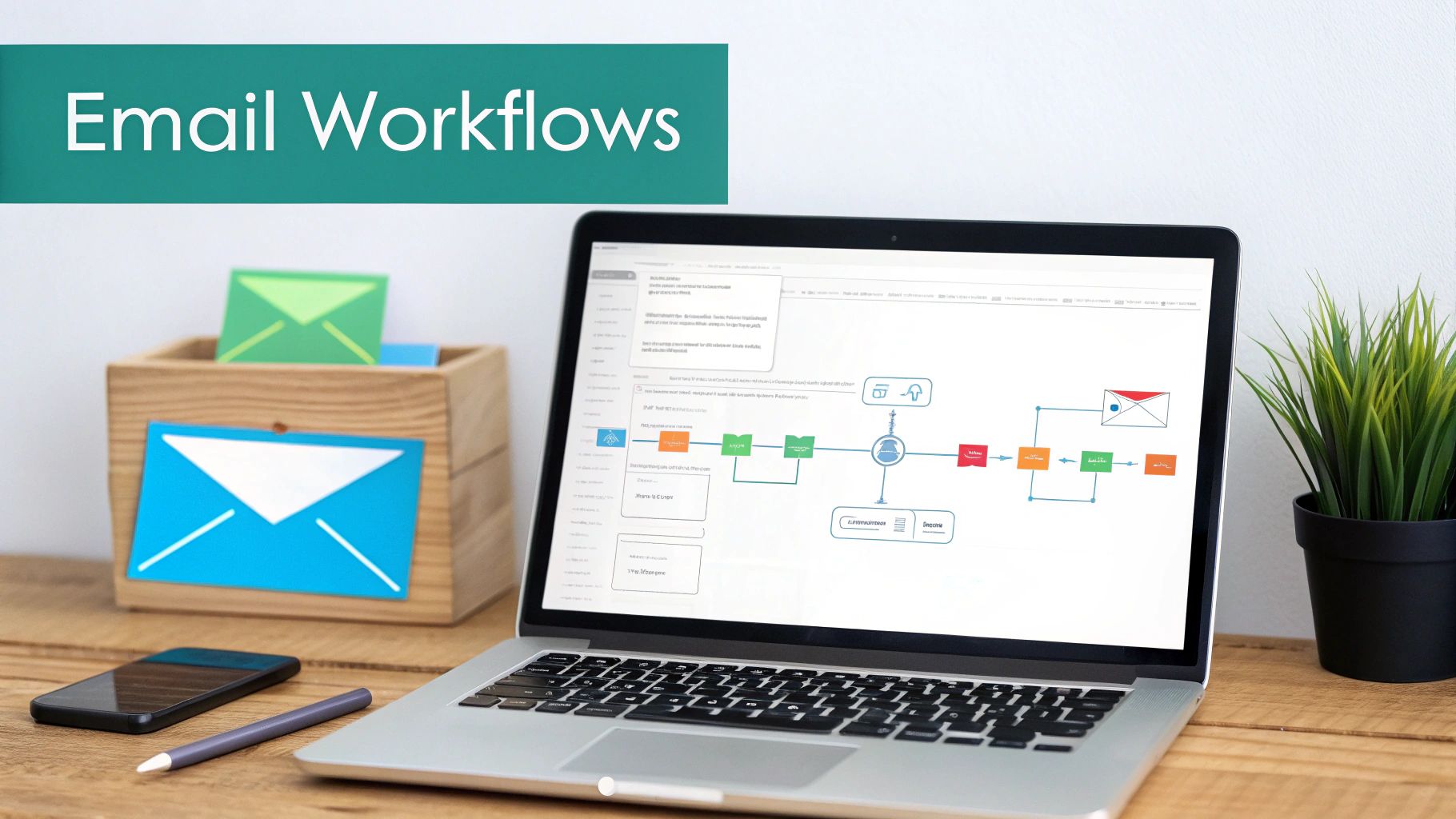
Effective marketing automation best practices hinge on delivering timely, relevant communication without manual intervention. Email automation workflows, or pre-designed, triggered email sequences, are the cornerstone of this principle. These systems automatically send messages to contacts based on specific actions, time intervals, or segment criteria, ensuring consistent and context-aware engagement at every stage of the customer lifecycle. This shifts the focus from one-off campaigns to building ongoing, automated relationships.
Platforms like Sitecore Send excel at creating these intricate journeys. By integrating with a DXP's core data, these workflows can be triggered by a vast range of behaviors, from a simple form submission to complex pattern card matches. This allows marketers to nurture leads, onboard new customers, and re-engage at-risk accounts with precision and efficiency, directly responding to user behavior as it happens.
Why This Approach Works
This method ensures no lead falls through the cracks and every customer receives the right message at the right time. By automating communication, marketing teams can scale their efforts, improve response times, and focus on strategy rather than repetitive execution. It turns a static contact list into a dynamic ecosystem of engagement.
- Example 1: E-commerce: A business using a platform like Sitecore OrderCloud can use an abandoned cart workflow to automatically email a user who left items behind. The sequence starts with a simple reminder, followed by an offer of assistance, and finally a small discount, successfully recovering a significant percentage of otherwise lost sales.
- Example 2: SaaS Onboarding: A software company can initiate a welcome series upon signup using Sitecore Send. This automated workflow guides the new user through key features, shares tips for success, and gradually introduces them to premium functionalities, increasing product adoption and conversion from trial to paid.
Actionable Implementation Tips
To build effective workflows, start with clear objectives and a deep understanding of your customer journey.
- Map the Journey: Create separate, dedicated workflows for different customer stages: awareness (welcome series), consideration (nurture sequences), and retention (post-purchase follow-ups).
- Prioritize Personalization: Use personalization tokens (like name, company, or last viewed product) within your automated emails to make them feel individual and relevant.
- Monitor Key Metrics: Closely watch open rates, click-through rates, unsubscribe rates, and spam complaints. High unsubscribe rates are a clear signal that your frequency or content needs adjustment.
- Keep it Concise: Limit most automated sequences to 5-7 highly focused emails. Longer series should only be used for deeply segmented, high-intent audiences to avoid fatigue. For more advanced strategies, explore how this fits into broader enterprise systems. Learn more about the benefits of enterprise workflow automation.
4. Aligning Automation with Strategic Content Marketing
One of the most effective marketing automation best practices involves moving beyond purely promotional messaging and integrating a strategic content marketing engine. This means using your automation platform not just to sell, but to educate, inform, and build trust by delivering the right content to the right person at the right stage of their journey. The goal is to make every automated touchpoint a value-add, guiding prospects with helpful resources rather than just sales pitches.
This approach transforms your marketing automation from a simple messaging tool into a sophisticated content delivery network. By mapping content assets like blog posts, whitepapers, and case studies to specific buyer journey stages (Awareness, Consideration, Decision), you can create workflows that nurture leads intelligently. As users engage, the system learns more about their needs and can serve up progressively more targeted content, building a relationship based on expertise and trust.
Why This Approach Works
Connecting content directly to automation workflows ensures that your audience receives relevant, timely information that addresses their specific questions and challenges. This educational approach builds brand authority and keeps your organization top-of-mind, making the eventual sales conversation much more effective. A common challenge in modern marketing is integrating disconnected marketing channels; this content-centric method ensures a cohesive narrative across all touchpoints.
- Example 1: B2B Technology (SharePoint): A company using SharePoint as its intranet can automate the distribution of internal training documents based on an employee's role and recent project assignments. When a team member is added to a new project, a workflow could automatically send them links to relevant case studies and best practice guides stored in a SharePoint document library.
- Example 2: Higher Education (Sitecore): A university uses Sitecore to track a prospective student's interest in the 'Engineering' program. The automation engine sends them a series of emails featuring student testimonials, a downloadable guide to campus labs, and an invitation to a webinar with the head of the engineering faculty, all content designed to nurture their specific interest.
Actionable Implementation Tips
To successfully fuse content with automation, a methodical content mapping process is essential.
- Map Content to Journey Stages: Audit your existing content and assign each piece to a specific buyer journey stage (e.g., top-of-funnel blog posts, mid-funnel case studies, bottom-of-funnel implementation guides).
- Use Progressive Profiling: Gate high-value content with forms that use progressive profiling. This allows you to gather more data over time without overwhelming the user with a long initial form.
- Track Content Performance: Use your automation platform’s analytics to identify which content assets are most effective at moving leads through the funnel. Double down on what works.
- Repurpose Cornerstone Content: Take your most valuable content (e.g., a comprehensive research report) and repurpose it into smaller formats like infographics, blog posts, and social media snippets to fuel various automation workflows.
5. Orchestrating Seamless Multi-Channel Journeys
Effective marketing automation best practices demand a move beyond siloed channels like email. True customer engagement involves orchestrating a seamless, unified conversation across every touchpoint, including SMS, push notifications, social media, and web interactions. This omnichannel approach ensures customers receive cohesive, context-aware messages that respect their preferences and reduce redundant communication, creating a single, consistent brand experience.
In a sophisticated DXP like Sitecore, this is achieved by leveraging a unified customer profile within Sitecore CDP. This allows marketers to design journeys in Sitecore Personalize or Sitecore Connect that trigger actions across different channels based on a customer's real-time behavior, regardless of where that behavior occurs.

Why This Approach Works
This strategy meets modern customers where they are, acknowledging that their path to purchase is not linear or confined to one channel. It allows automation to deliver the right message on the right platform at the right time, significantly boosting engagement and conversion rates by making interactions feel helpful and contextually relevant.
- Example 1: Retail (Omnichannel): A customer abandons a cart on a retail website. Instead of just an email, Sitecore's automation engine first sends an SMS reminder two hours later. If there's still no action, a push notification is triggered the next day with a limited-time offer, all orchestrated from a single journey workflow.
- Example 2: B2B Technology: A prospect downloads a whitepaper from a SharePoint-hosted resource center. This action triggers an automated, personalized email sequence. When the prospect later visits the pricing page, the system alerts the assigned sales representative via an internal message and simultaneously displays a targeted in-browser message inviting them to a live demo.
Actionable Implementation Tips
To build an effective multi-channel strategy, begin with a solid foundation and expand methodically.
- Start with 2-3 Core Channels: Don't try to orchestrate every channel at once. Master the interplay between email, web personalization, and SMS before adding more complexity.
- Centralize Customer Data: Ensure a unified customer profile exists, like in Sitecore CDP, to track interactions across all channels. This is crucial for preventing contradictory or repetitive messaging.
- Implement Frequency Capping: Set rules within your automation platform to limit the number of messages a user receives within a specific timeframe across all channels to prevent fatigue.
- Honor Channel Preferences: Provide clear options for customers to manage their communication preferences, allowing them to opt-in or opt-out of specific channels like SMS or push notifications.
- Test and Optimize Channel Mix: Use A/B testing to determine which channel combinations and sequences yield the best results for different segments of your audience.
6. Fostering True Marketing and Sales Alignment Through RevOps
Effective marketing automation best practices are crippled without a foundational alignment between marketing and sales. Adopting a Revenue Operations (RevOps) mindset breaks down the traditional silos, creating a unified team with shared goals, integrated systems, and seamless communication. This ensures that the qualified leads generated by marketing automation are precisely what the sales team needs and can convert, establishing a feedback loop that continuously refines targeting and messaging.
This approach moves beyond simple lead handoffs to a cohesive revenue engine. It requires clear governance, shared metrics (like lead-to-revenue), and collaborative processes that hold both teams accountable for the entire customer lifecycle. When marketing understands sales' challenges and sales trusts marketing's lead quality, the entire organization thrives. This alignment is critical for maximizing the ROI of your DXP and marketing automation investments.
Why This Approach Works
A RevOps model ensures no lead is wasted and no effort is duplicated. It transforms the relationship between marketing and sales from a sequential handoff to a collaborative partnership focused on a single metric: revenue. This unified strategy allows automation platforms to function at peak efficiency, as lead scoring and nurturing are directly informed by sales outcomes.
- Example 1: B2B Technology: A tech firm using a platform like Sitecore defines a Marketing Qualified Lead (MQL) as any contact who downloads a specific whitepaper and visits the pricing page. Sales provides feedback that these leads often lack budget authority. The teams collaborate to adjust the scoring model, adding points for specific job titles, resulting in higher-quality SQLs and better sales efficiency.
- Example 2: Professional Services: A consultancy implements a lead Service Level Agreement (SLA). Marketing automation nurtures a lead until it reaches SQL status, at which point the system assigns it to a sales rep. The SLA mandates that sales must follow up within four hours, ensuring the prospect's interest remains high and maximizing the impact of the marketing nurture campaign.
Actionable Implementation Tips
To successfully integrate sales and marketing, focus on creating shared definitions, processes, and accountability.
- Define Your Terms: Collaboratively establish concrete definitions for what constitutes a Marketing Qualified Lead (MQL) and a Sales Qualified Lead (SQL). This must be a joint decision.
- Create a Lead SLA: Implement a formal Service Level Agreement (SLA) that dictates lead response times and the required number of follow-up attempts from the sales team.
- Implement Closed-Loop Reporting: Ensure your systems (e.g., Sitecore, CRM) are integrated to provide closed-loop reporting. This allows marketing to see which leads converted to customers, proving ROI and refining campaigns.
- Align Incentives: Structure compensation and bonus incentives around shared revenue goals rather than separate MQL or opportunity quotas to encourage genuine teamwork. You can find more insights on creating this synergy in HubSpot’s popular RevOps methodology. Learn more about HubSpot's RevOps framework.
7. A/B Testing and Optimization: Driving Performance with Data
Effective marketing automation best practices are rooted in continuous improvement, not one-time setups. A/B testing, or split testing, is the core discipline for this evolution. It involves systematically comparing two versions of a marketing asset, like an email or a landing page, to determine which one performs better. This data-driven approach removes guesswork from optimization, ensuring your automated campaigns become more effective over time.
In platforms like Sitecore, this capability is a native function of the DXP. Sitecore's integrated testing features allow you to test not just simple elements like a call-to-action button, but entire component variations, personalized experiences, and even multi-page user journeys. This allows you to directly measure how different strategies impact user behavior and conversion goals, turning your automation into a well-oiled, data-validated machine.
Why This Approach Works
This method provides empirical evidence of what resonates with your audience. Instead of relying on assumptions, you gain measurable insights that directly inform campaign strategy and resource allocation. It creates a powerful feedback loop where every automated interaction is an opportunity to learn and refine.
- Example 1: B2B Lead Generation: A technology firm tests two versions of a landing page for a whitepaper download. Version A has a short, direct form, while Version B has a longer form asking for more qualifying information. Testing reveals Version B converts 15% fewer leads but generates 40% more Sales Qualified Leads, proving its superior business value.
- Example 2: Email Nurture Campaign: An e-commerce brand tests the send time for a cart abandonment email. By splitting their audience and sending one version at 10 AM and another at 7 PM, they discover the evening email generates a 22% higher click-through rate and a 12% increase in recovered sales.
Actionable Implementation Tips
To build a culture of optimization, integrate testing into your standard campaign deployment process.
- Isolate Variables: Test only one element at a time (e.g., the headline or the image) to ensure you can attribute performance changes accurately.
- Ensure Statistical Significance: Use a tool or Sitecore's built-in calculator to ensure your test results reach at least a 95% confidence level before making a decision.
- Prioritize High-Impact Tests: Start by testing elements that have the biggest potential impact on your primary KPIs, such as landing page headlines or the main CTA in an email.
- Document and Share Findings: Maintain a central log of all tests, including the hypothesis, results, and next steps. This builds institutional knowledge and prevents repeating failed experiments. For a deeper dive, you can explore strategies to enhance your on-site experience. Learn more about how to improve website conversion rates.
8. Scaling Account-Based Marketing (ABM) with Automation
Account-Based Marketing (ABM) flips the traditional marketing funnel on its head. Instead of casting a wide net, this strategic approach treats high-value accounts as individual markets, orchestrating personalized marketing and sales efforts to win them over. Effective marketing automation best practices are the engine that allows this targeted strategy to scale, moving beyond manual outreach to engage key accounts with precision and relevance.
Platforms like Sitecore, when integrated with CRM and ABM tools, become a powerful hub for this strategy. By identifying visiting IP addresses and matching them to target account lists, your DXP can dynamically personalize the entire digital experience. This allows you to serve bespoke content, messaging, and offers specifically for the key decision-makers within a priority account, transforming your website into a highly relevant, one-to-one engagement channel.
Why This Approach Works
ABM aligns marketing and sales resources on the accounts that matter most, eliminating wasted effort and boosting ROI. Automation enables you to deliver a consistent, personalized experience across every touchpoint, from initial ad impression to the final sales conversation. It proves to high-value prospects that you understand their unique business challenges and are equipped to solve them.
- Example 1: B2B Technology: A SaaS company using Sitecore identifies a visitor from a top-tier target account. The platform automatically adjusts the homepage to feature case studies from their specific industry, highlights enterprise-level product features, and replaces generic CTAs with a prompt to book a demo with their dedicated account executive.
- Example 2: Manufacturing: A manufacturing firm targets a list of key engineering companies. Using account-based advertising, they drive decision-makers to a landing page where Sitecore Personalize serves content about supply chain efficiency. This triggers an automated workflow that notifies the sales team of the engagement and adds the contact to a specialized nurture sequence.
Actionable Implementation Tips
To succeed with automated ABM, a coordinated, data-driven plan is essential.
- Define Your Ideal Account Profile (IAP): Work closely with sales to define the firmographic and behavioral traits of your most valuable accounts. Start with a focused list of 10-20 target accounts.
- Map the Buying Committee: Research and identify the key roles and decision-makers within each target account. Tailor your automated messaging to address the specific pain points of each persona (e.g., CFO, CTO, Operations Manager).
- Create Account-Specific Content: Develop a library of content assets (case studies, whitepapers, webinars) that speak directly to the challenges and goals of your target accounts and their respective industries.
- Align Sales and Marketing: Implement a Service Level Agreement (SLA) that defines roles, responsibilities, and follow-up protocols. Use automation to trigger real-time alerts for the sales team when a target account shows significant engagement.
- Track Account Engagement: Leverage tools to monitor account-level engagement scores. This holistic view helps prioritize outreach and measure the true impact of your ABM campaigns. For deeper insights, you can explore how to connect ABM with your personalization strategy.
9. Data Quality and CRM Hygiene
Effective marketing automation is fundamentally impossible without a clean, reliable data foundation. The best-laid personalization plans will fail if the underlying CRM and contact data is inaccurate, incomplete, or outdated. This foundational practice involves maintaining high-quality information to ensure automation campaigns reach the right people with the correct details, preventing wasted resources and supporting critical compliance.
Data decay is a persistent threat; without proactive data hygiene, your automation engine operates on faulty intelligence, leading to deliverability issues, poor segmentation, and a damaged sender reputation. This is why prioritizing data quality is one of the most critical marketing automation best practices you can adopt.
Why This Approach Works
This method ensures that every automated interaction, from email sends to dynamic content personalization, is based on trustworthy information. Clean data directly improves campaign performance, enhances segmentation accuracy, and is essential for meeting data privacy regulations like GDPR, which mandate the accuracy of personal data.
- Example 1: B2B Lead Nurturing: A technology firm using Sitecore automates lead scoring based on job titles. With poor data quality, a "VP of Marketing" might be mislabeled, causing them to receive an irrelevant, entry-level nurture sequence. Proper hygiene ensures they are correctly identified and placed in a high-value, decision-maker track.
- Example 2: E-commerce Retention: An online retailer triggers a re-engagement campaign for customers who haven't purchased in 90 days. If duplicate contacts exist, a single customer might receive multiple, conflicting offers, creating a confusing and negative brand experience. Deduplication solves this, ensuring a single, coherent customer journey.
Actionable Implementation Tips
To embed data hygiene into your operations, adopt a systematic and continuous approach.
- Implement Validation Rules: Enforce data integrity at the point of entry. Configure your CRM and forms with validation rules for critical fields like email, phone number, and postal code to prevent bad data from ever entering your system.
- Schedule Regular Audits: Don't treat data cleansing as a one-time project. Schedule quarterly data audits to identify and rectify inaccuracies, duplicates, and incomplete records.
- Use Data Enrichment: Leverage integrated data enrichment services, like those available through Sitecore CDP connectors, to append and verify firmographic and demographic data, keeping your customer profiles rich and current.
- Automate Invalidation: Configure your automation platform to immediately flag or remove contacts with hard-bounced email addresses from active campaigns to protect your sender score.
- Establish Governance: Create and enforce a clear data governance policy. This document should outline data standards, define field ownership, and detail the processes for data entry and maintenance. For more on building a robust data strategy, explore how to unify customer data. Learn more about creating a unified data foundation.
10. Analytics, Attribution, and Measurement
Effective marketing automation best practices hinge on one core principle: what gets measured, gets managed. Simply launching campaigns isn't enough; true success comes from implementing comprehensive tracking, robust attribution modeling, and clear analytics to measure performance and prove ROI. This practice bridges the critical gap between marketing activities and tangible business outcomes, providing the visibility needed to justify investment and optimize future strategies.
By moving beyond vanity metrics like open rates, a measurement-focused approach connects specific automation touchpoints to revenue generation. Platforms like Sitecore provide deep analytics that track user journeys from the first interaction to the final conversion, allowing marketers to understand which channels, campaigns, and content pieces are most influential. This data-driven feedback loop is essential for continuous improvement and demonstrating marketing's direct impact on the bottom line.
Why This Approach Works
This method transforms marketing automation from a cost center into a predictable revenue driver. It provides irrefutable data on campaign effectiveness, enabling teams to double down on successful tactics and re-allocate resources from underperforming ones. It answers the fundamental questions: "Which efforts are working?" and "How much revenue did this automation generate?"
- Example 1: B2B Technology: A company using Sitecore tracks a lead's journey from a downloaded whitepaper, through a nurturing email sequence, to a "Request a Demo" form submission. By using consistent UTM parameters and conversion goals, they can attribute the resulting sales opportunity directly back to the initial marketing automation workflow.
- Example 2: Higher Education: A university uses Sitecore Analytics to track prospective student engagement across its website. They identify that students who engage with the "Virtual Campus Tour" automation are 50% more likely to apply. This insight allows them to prioritize promoting this feature in all top-of-funnel campaigns.
Actionable Implementation Tips
To build a culture of measurement, start with foundational tracking and expand from there.
- Establish a Baseline: Start with first-touch and last-touch attribution models to understand the beginning and end of the customer journey before implementing more complex multi-touch models.
- Use UTM Parameters: Enforce consistent and universal use of UTM parameters across all inbound links to ensure accurate campaign and channel tracking within your analytics platform.
- Track Outcomes, Not Just Metrics: While marketing metrics (e.g., clicks, downloads) are important, always connect them to business outcomes like leads generated, opportunities created, and revenue won.
- Create Stakeholder Dashboards: Build tailored dashboards in Sitecore Analytics or your BI tool. The C-suite needs a high-level revenue impact summary, while the marketing team requires granular campaign performance data. For a deeper dive into this, explore different ways to measure marketing effectiveness. Learn more about how to measure marketing ROI.
10-Point Comparison of Marketing Automation Best Practices
Your Blueprint for Intelligent Automation Success
Navigating the expansive landscape of marketing automation can feel daunting, but the journey from basic task execution to intelligent, customer-centric engagement is a clear, achievable path. This comprehensive guide has laid out the essential marketing automation best practices, moving beyond generic advice to provide a strategic blueprint. We have explored the critical pillars that transform a Digital Experience Platform (DXP) from a simple content management system into a dynamic engine for growth. The core takeaway is this: success isn't about flipping a switch; it's about methodically building an ecosystem where strategy, data, and technology work in perfect concert.
From the foundational importance of Data Quality and CRM Hygiene to the sophisticated execution of Account-Based Marketing (ABM), each practice serves a unique, yet interconnected, purpose. Think of it not as a checklist, but as a framework for maturity. You begin by ensuring your data is clean and actionable, then layer on intelligent Segmentation and Personalization, using tools like Sitecore's profiling and pattern matching to deliver experiences that resonate on an individual level. This sets the stage for effective Lead Scoring and Nurturing, allowing you to guide prospects through their journey with relevant, timely communication.
From Disparate Tactics to a Unified Strategy
One of the most significant shifts in perspective offered by these best practices is the move away from siloed activities. True marketing automation excellence is achieved when you break down the walls between your channels, content, and teams.
Content and Channels: Instead of creating one-off email campaigns, the best approach involves deep Content Marketing Integration. With a headless solution like Sitecore Content Hub, your content becomes a fluid, reusable asset that can be automatically orchestrated across email, social media, web, and mobile as part of a Multi-Channel Automation strategy. This ensures a consistent brand narrative at every touchpoint.
Marketing and Sales: The traditional divide between marketing and sales is a major bottleneck to growth. Implementing robust Marketing and Sales Alignment (RevOps) practices, where both teams share a single source of truth within your CRM and DXP, ensures a seamless handoff of marketing-qualified leads (MQLs) and provides sales with invaluable behavioral context. This alignment is what turns marketing efforts directly into revenue.
The Power of Continuous Improvement
Perhaps the most critical mindset to adopt is one of perpetual optimization. Your automation strategy is not a "set it and forget it" program. It's a living system that must be continuously refined based on real-world data. This is where A/B Testing and Optimization become non-negotiable. Whether you are tweaking subject lines in an email workflow or testing personalization rules on a landing page within Sitecore, this iterative process is what drives incremental gains that compound into significant results over time.
This commitment to data-driven decision-making extends to Analytics, Attribution, and Measurement. Without a clear understanding of what’s working, you’re flying blind. Properly configured analytics within your DXP, integrated with your CRM and other platforms, allows you to connect specific automation activities to pipeline generation and closed-won deals, proving ROI and justifying further investment. Mastering these marketing automation best practices is what separates high-performing organizations from the rest. It’s the difference between sending mass emails and building meaningful, one-to-one relationships at scale, ultimately fostering greater customer loyalty and driving sustainable business growth.
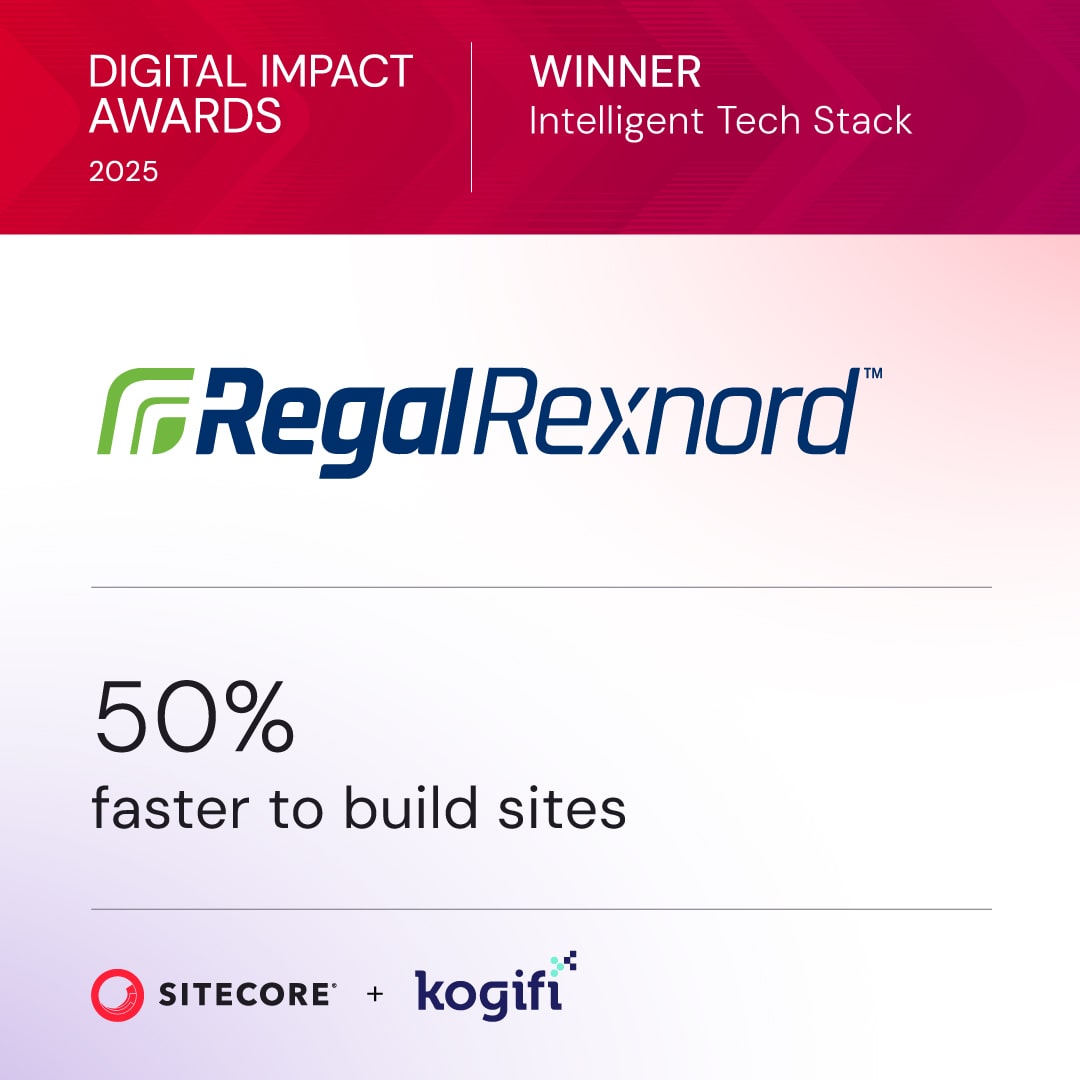
Ready to transform your Sitecore or SharePoint platform into a high-performance marketing automation engine? As certified experts, Kogifi specializes in implementing these advanced best practices, helping you unlock the full potential of your DXP to drive measurable results. Visit Kogifi to learn how we build sophisticated, data-driven automation strategies that deliver exceptional customer experiences and accelerate revenue growth.