


Most enterprise teams aren't short on technology. They're short on connected execution.
The pattern is familiar. A company licenses a serious DXP, migrates content, launches a polished frontend, and still serves the same homepage hero, the same campaign message, and the same journey to everyone. Marketing calls it personalized because segments exist in slides. Customers experience it as generic because nothing materially changes for them.
That gap is larger than many teams realize. While 92% of retailers believe they effectively offer personalized experiences, only 48% of consumers agree, and 50% more brands have made personalization a core strategy since 2022 according to Envive's personalization statistics roundup. The issue usually isn't ambition. It's architecture, data, decisioning, and operating model.
Personalizing customer experiences at enterprise scale requires more than rules on a website. It needs a platform that can unify identity, assemble content dynamically, apply AI-driven decisions in context, and deliver consistently across channels. In Sitecore terms, that means treating XM Cloud, Sitecore CDP, Sitecore Personalize, and Sitecore Search as part of one operating model, not isolated products. In Microsoft-centric environments, it also means being honest about where SharePoint helps, particularly for employee and portal scenarios, and where it stops being the right engine for external customer personalization.
If you need a baseline definition before diving into implementation, Kogifi's overview of what personalization means in practice is a useful starting point.
Table of Contents
- Introduction The Personalization Imperative
- Why composable architecture matters for personalization
- A practical Sitecore reference architecture
- Where SharePoint fits and where it doesn't
- Move from rules to decisioning
- Build content AI can use
- A next best action pattern in Sitecore Personalize
- Measure business impact not activity
- Governance keeps personalization from becoming chaos
- Scale in layers not in a big bang
Introduction The Personalization Imperative
A personalization program usually fails long before the first experience is published. It fails when the business treats personalization as a campaign feature instead of a delivery capability.
A global brand might run on Sitecore, have regional content teams, support multiple languages, and push traffic from paid media, CRM, and organic search into the same estate. Yet the customer still lands on a page that doesn't reflect their history, market, intent, or stage in the journey. The DXP is live, but the experience is flat.
That's the essential personalization imperative. The question isn't whether your team can target a banner. The question is whether your digital stack can recognize a person, interpret context, select an action, assemble the right content, and do it fast enough to matter.
Personalization starts working when the platform stops thinking in pages and starts operating in decisions.
For enterprise leaders, the commercial case is already established. Personalized experiences lift revenue by 10% to 15% on average and can lower customer acquisition costs by as much as 50% based on the figures summarized by Monetate's hyper-personalization statistics. That's why personalization architecture isn't just a marketing concern. It belongs in the same conversation as cloud migration, integration strategy, security, and content operations.
The practical challenge is that many organizations are trying to run advanced personalization on top of fragmented systems. Commerce data sits in one platform. CRM data sits in another. Web behavior lives in analytics. Consent lives somewhere else. Content authors work in page-centric workflows. The result is predictable. Teams have data, but not decision-ready data. They have content, but not reusable content. They have tools, but not a machine.
Building Your Foundation A Composable DXP Architecture
A global manufacturer launches XM Cloud, migrates content, and adds audience rules to key pages. Six months later, marketing still waits on developers to ship new variants, product teams cannot reuse decision logic across channels, and customer signals sit in separate systems. The platform is modern, but personalization still behaves like a page publishing exercise.
That gap usually comes from architecture, not ambition.
A monolithic platform can publish content well enough. It struggles once personalization depends on real-time events, reusable content, API delivery, and decisioning that has to work across web, app, email, and commerce touchpoints. In a Sitecore-first model, those responsibilities stay separate for a reason. XM Cloud manages structured, headless content and presentation patterns. Sitecore Personalize runs decisioning and experimentation. Sitecore CDP supplies the profile and event context that decisions depend on. Search, analytics, commerce, consent, and integration services plug into that core instead of being forced into the CMS.

Why composable architecture matters for personalization
The business case has already been established earlier. Personalized experiences improve conversion and efficiency enough that architecture decisions show up in revenue, acquisition cost, and operating speed. Analysts summarized by Monetate's hyper-personalization statistics point to meaningful commercial upside, which is why hard-coupled systems become expensive once personalization matures beyond simple audience rules.
What changes with composability is execution. Teams stop binding content, data, and decision logic to one rendering layer and start building a system that can respond to context consistently.
A composable Sitecore stack handles three architectural requirements better than a page-centric platform:
| Architectural need | Monolithic pattern | Composable Sitecore pattern |
|---|---|---|
| Channel delivery | Tied closely to one presentation layer | Content delivered through APIs to web, app, kiosk, and email workflows |
| Personalization logic | Embedded in CMS rules and templates | Decisioning handled in dedicated services like Sitecore Personalize |
| Change velocity | Frontend, data, and content changes often collide | Teams can update integrations, experience logic, and presentation with less coupling |
For CTOs, the main benefit is control over dependencies. Frontend teams can improve performance and rendering without rewriting business logic. Data teams can add events and identity rules without touching page templates. Marketing teams can run experiments in Sitecore Personalize without opening a platform-wide release window.
That separation also creates discipline. A composable stack gives teams more freedom, but it exposes weak operating models fast. In practice, personalization programs slow down when event names are inconsistent, content models are too page-bound, decision logic is duplicated by brand or region, or consent rules are applied differently by channel. The architecture supports scale only if governance supports it too.
A broader modernization view is covered in Kogifi's article on future-proofing with composable DXP architecture, especially for enterprises planning phased replacement rather than a single cutover.
A practical Sitecore reference architecture
For customer-facing personalization, the reference pattern usually looks like this:
XM Cloud for structured content
Model content as reusable components rather than fixed pages. Hero banners, offer cards, proof points, CTAs, legal notices, product highlights, and localized disclaimers should be independently managed and independently rendered.Sitecore Personalize for decisioning
Put the decision logic in a service built for it. Eligibility, next-best action, suppression rules, experiment logic, and offer arbitration belong here, not in front-end code and not inside CMS template sprawl.Sitecore CDP for profile context
Feed the decision layer with identity, behavior, order history, and consent-aware event data. The next section covers CDP design in detail. At the architectural level, the point is simple. Decisioning needs usable context, not disconnected records.Frontend orchestration through APIs
The presentation layer requests content and decision outputs and renders them in the channel context. That is what makes consistent web and app behavior realistic without forcing every channel into the same delivery model.
One rule helps avoid expensive rework. If personalization depends on page cloning, campaign-specific templates, or hardcoded audience branches in the front end, the design will not scale cleanly.
Where SharePoint fits and where it doesn't
Platform fit matters more than platform loyalty.
For employee intranets, partner portals, knowledge hubs, and role-based internal publishing, SharePoint is often the sensible choice. It works well with Microsoft 365 groups, Entra ID attributes, audience membership, document relevance, and authenticated internal experiences. If the main requirement is getting the right operational content in front of the right employee or partner, SharePoint is usually enough and often faster to govern.
For external customer experience, the threshold changes. Real-time behavioral decisions, cross-channel experimentation, identity-aware offers, and API-driven delivery are core Sitecore use cases. SharePoint can support targeting, but it is not designed to run the kind of enterprise decisioning model that Sitecore Personalize supports.
A practical maturity model looks like this:
- Use SharePoint when the goal is internal relevance, role-aware publishing, employee search, or controlled portal delivery.
- Use Sitecore XM Cloud with Sitecore CDP and Sitecore Personalize when the business needs customer identity resolution, real-time decisioning, omnichannel delivery, and experimentation at scale.
- Use both when the organization runs separate internal and external experience estates and wants each platform used for its specific strengths.
I see teams run into trouble when they try to make one platform cover both maturity levels. SharePoint gets stretched into a customer experience engine, or Sitecore gets forced into internal publishing scenarios that Microsoft tools already handle well. The better pattern is a clear split. Use SharePoint where identity is organizational and mostly authenticated. Use Sitecore where the experience depends on behavior, context, experimentation, and business rules that need to change fast.
Unifying Data and Identity with a Customer Data Platform
A global brand launches XM Cloud in one market, keeps legacy commerce in another, runs service interactions through a separate platform, and asks marketing for real-time personalization across all of it. The problem is rarely a lack of data. The problem is fragmented identity, inconsistent events, and profile updates that arrive after the moment to act has passed.
Sitecore CDP gives enterprise teams an operational customer profile they can use in decisioning. That is the distinction that matters. A data warehouse can store history. A CDP has to support the next experience, in context, with enough confidence that Sitecore Personalize or downstream channels can act on it.

Start with identity, not channels
Source-system thinking is one of the fastest ways to weaken a CDP design. The web team wants clickstream first. CRM wants account and lead fields. Commerce wants order history. Service wants case data. If onboarding follows internal ownership, the profile reflects org charts instead of customer reality.
Start with identity rules. Define which identifiers are authoritative, which are provisional, and which must never be merged without higher confidence. In Sitecore CDP, that usually means setting clear logic for email hash, login ID, CRM contact ID, loyalty ID, device ID, and anonymous browser ID before expanding the profile model.
A practical sequence looks like this:
- Define identifiers first. Set merge rules, confidence thresholds, and exceptions for shared devices, household accounts, and B2B buying groups.
- Map lifecycle states. Anonymous visitor, known lead, active customer, lapsed customer, subscriber, open-service-case customer, employee, and partner should each have clear downstream implications.
- Separate facts from interpretations. “Purchased category A” is event data. “Likely to renew” is a model output. Store and govern them differently.
For teams comparing platforms, Kogifi's explanation of CDP vs CRM responsibilities is a useful reference. Many enterprise programs still expect the CRM to serve as a real-time profile and activation layer, which creates delays and poor audience quality.
What data belongs in the profile
Useful profiles stay focused. They include enough data to drive a decision, but not every field available in every system.
In Sitecore CDP, the data that consistently proves useful falls into four groups:
| Data group | What it includes | Why it matters |
|---|---|---|
| Behavioral data | Page views, searches, product views, cart actions, downloads, repeat visits | Indicates current intent and journey momentum |
| Transactional data | Orders, renewals, subscriptions, returns, service purchases | Anchors value, recency, and commercial relevance |
| Profile data | Market, language, account type, consent status, preferences | Sets eligibility and compliance boundaries |
| Interaction outcomes | Email engagement, recommendation clicks, support resolution state | Prevents redundant, mistimed, or conflicting experiences |
Analysts cited in Contentful's review of personalization data found a familiar pattern. AI use in data preparation is increasing, yet executives still report integration-driven inconsistency across personalization programs in its summary of personalization statistics. That matches delivery reality. Poor joins produce false audiences. Late events trigger irrelevant offers. Duplicate identities create the kind of experience customers notice for the wrong reasons.
This issue is also shaping the future of AI-driven marketing. Systems that remember prior decisions, eligibility constraints, and customer state outperform stacks that only react to the latest click.
How to keep the profile usable
A CDP only helps if downstream systems can trust it. XM Cloud components, Sitecore Personalize decision models, email platforms, service tools, and analytics workflows all depend on consistent profile outputs.
Three practices make the difference:
Event taxonomy discipline
Enforce a strict event taxonomy. “Product Viewed,” “Viewed Product,” and “PDP Visit” must not coexist if they describe the same action.Consent-aware activation
Apply market, channel, and consent logic before the experience is assembled. If consent checks live outside the decision flow, teams end up auditing campaigns by hand and fixing mistakes after launch.Segment restraint
Start with a small set of business-relevant audiences. Enterprise teams often create too many overlapping micro-segments before they have confidence in identity quality, event coverage, and activation logic.
Data unification creates value when the profile changes the next decision, not when it simply stores more records.
The contrast with SharePoint is useful here. For intranets and role-based internal experiences, Entra ID groups, user profile properties, and document metadata often provide enough identity context to target content responsibly. For external customer experience, especially where anonymous-to-known journeys, cross-channel recognition, and real-time decisioning matter, Sitecore CDP is built for a different level of maturity and operational complexity.
Activating Intelligence with AI and Content Strategy
A retail team launches personalization in XM Cloud. The homepage hero changes by country, a few audience rules drive campaign banners, and marketing reports a lift in clicks. Six months later, the same team wants the site to respond differently when a returning visitor compares products twice, abandons a quote flow, then comes back from a paid search ad. Static rules start to break down at that point. They become hard to maintain, easy to duplicate, and difficult to govern across brands and markets.
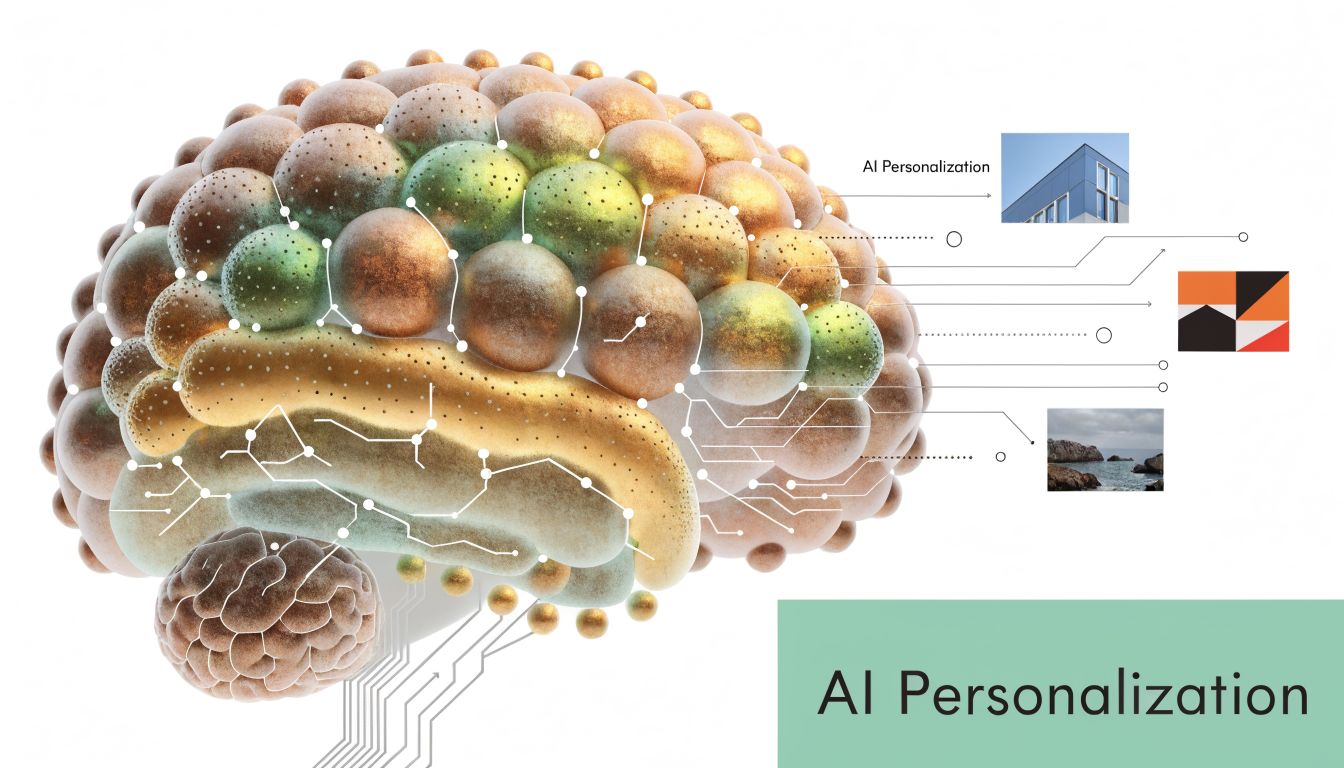
Sitecore Personalize addresses a different problem. It evaluates context at decision time and chooses the next action based on behavior, profile data, and business policy. Variant targeting changes what a component looks like. Decisioning determines what the customer should see next, what should be held back, and when the system needs more evidence before making a stronger move.
Move from rules to decisioning
The useful shift is from page personalization to journey decisioning.
In practice, enterprise teams usually need four inputs working together inside Sitecore Personalize:
- Real-time context such as referral source, session depth, products viewed, search behavior, device class, geography, and authenticated state
- Profile traits from Sitecore CDP such as affinity, purchase history, lifecycle stage, value band, and eligibility
- Business constraints such as stock availability, campaign priority, market rules, service status, and consent boundaries
- Experience inventory including offers, content modules, journeys, recommendations, suppressions, and fallback experiences
That model matters because the hard question is rarely which banner to show. The harder question is whether the visitor needs reassurance, comparison support, a stronger commercial prompt, or no prompt at all.
That broader shift is part of the future of AI-driven marketing, where systems improve outcomes by remembering prior decisions and using that history in the next interaction.
For organizations earlier in maturity, SharePoint can still support useful targeting. Role-based internal content, policy visibility, and departmental messaging often only require Entra ID groups, profile properties, and page audience targeting. For external commerce, subscription, or multi-brand acquisition journeys, Sitecore Personalize supports a level of decisioning SharePoint was not designed to handle. That distinction matters for CTOs deciding whether they need audience targeting or a true personalization engine.
Build content AI can use
AI will not compensate for poor content modeling. If content is inconsistent, duplicated, or trapped in page templates, the decision layer has little to work with.
In XM Cloud, the stronger pattern is modular content with clear responsibility boundaries. Authors should not create five nearly identical pages for five audience segments unless ownership, compliance, or localization rules require separate pages. In most enterprise programs, reusable components are easier to govern, easier to test, and easier to activate across channels.
Use content in layers:
- Stable core content for product facts, policy language, regulated copy, and evergreen value propositions
- Variable persuasive content for proof points, urgency framing, social validation, and audience-specific calls to action
- Contextual wrappers for language, market adaptation, and channel presentation
If authors cannot identify which content is reusable, the AI layer will scale inconsistency faster.
Metadata design matters just as much as component design. Product family, solution area, intended persona, industry relevance, journey stage, and market should be structured fields in the model. They should not live in spreadsheets, naming conventions, or author memory. Retrieval, recommendations, and decision logic depend on that discipline.
Kogifi covers this operating model in more detail in its guide to AI personalization implementation in DXP, especially where content structure and decision logic meet.
A next best action pattern in Sitecore Personalize
Consider a subscription business. A known visitor has returned to pricing pages three times in a week, viewed integration documentation, and started but did not complete a demo request. A basic rules setup keeps serving the same generic promotion. A better Sitecore Personalize strategy evaluates intent and friction together.
A practical decision flow looks like this:
Detect intent signals
Repeated pricing visits, comparison behavior, deeper product exploration, search refinement, or return visits from high-intent channelsCheck blockers
Prior abandonment, repeated exposure to the same offer, open support cases, implementation concerns, or market restrictionsChoose one action
Show a comparison module, surface integration guidance, offer consultation, adjust recommendation logic, or suppress the generic campaignMeasure business impact
Track progression to the next meaningful step such as quote completion, demo booking, assisted conversion, or reduced abandonment
One action is usually enough. Enterprise teams often underperform because they stack too many messages into the same moment and call it personalization.
The video below shows the kind of modern Sitecore context many teams are moving toward when they operationalize AI for connected experience delivery.
Human control still needs clear boundaries. Legal copy, regulated claims, accessibility requirements, and market restrictions should remain deterministic. Let Sitecore Personalize optimize within approved limits. Keep policy, compliance, and brand controls explicit.
Delivering Seamless Omnichannel Experiences
Customers don't experience your stack. They experience continuity, or they experience friction.
A global retailer gives a simple example. A customer browses running shoes on a laptop during lunch, compares two products, and leaves. Later that day, the same customer opens the brand's app. If the app leads with the homepage default and the email team sends a generic promotion overnight, the business has wasted the customer's clearest signal of intent.

A journey that feels connected to the customer
In a better setup, the website interaction is captured as a usable event, attached to the profile, and made available to the channels that need it. The next touchpoint doesn't start from zero.
The app might open with a relevant category tile and a “continue exploring” module. Email might suppress the broad campaign and send a product-comparison message instead. If the customer returns to the site, the PDP or listing page can prioritize sizes in stock, buying guidance, or related products rather than the same generic hero they saw yesterday.
That's what headless delivery enables in practice. The content isn't trapped in one site. XM Cloud can expose structured content to multiple frontends, while Sitecore Personalize helps determine which experience should surface in each context.
The delivery model behind omnichannel consistency
The technical pattern is straightforward, even if the implementation takes discipline:
| Channel | What the customer sees | What the platform must supply |
|---|---|---|
| Website | Dynamic modules, tailored navigation paths, relevant proof points | Real-time decisions, profile context, structured content APIs |
| Mobile app | Personalized home screen, resume-journey prompts, relevant offers | Shared identity, event history, channel-aware presentation |
| Email or messaging | Triggered follow-up with aligned message and suppression of irrelevant campaigns | Journey events, segment rules, orchestration with campaign systems |
The trade-off is orchestration overhead. Omnichannel doesn't mean duplicating every experience across every channel. It means preserving the logic of the journey while adapting the format of the touchpoint.
A connected journey should feel like one conversation with different surfaces, not three departments competing for attention.
SharePoint usually sits outside the main flow for external customer journeys. It can support internal operations around content governance, campaign documentation, or partner communications, but it typically isn't the channel orchestration layer for public customer personalization. Trying to force it into that role often creates handoffs, not continuity.
The most effective omnichannel programs are selective. They identify a few journey moments where continuity matters most, such as product discovery to conversion, onboarding, renewal, or support recovery. Then they connect those moments tightly rather than spreading weak personalization everywhere.
Measuring ROI Governance and Scaling Your Program
A personalization program turns into operating cost fast when leadership cannot answer three questions. What changed, who approved it, and should it expand?
Measurement usually breaks first. Teams report what the platform makes visible. Variants launched, segments created, experiments started, journeys configured. Enterprise buyers do not fund personalization for activity counts. They fund it for revenue lift, stronger retention, better lead progression, lower service cost, or a shorter path to conversion.
Measure business impact not activity
Use Sitecore Personalize to test decision logic against a control. The useful comparison is not only creative A versus creative B. It is rule set versus rule set. For example, does a profile-based next-best-action in XM Cloud increase qualified demo requests more than a static journey path? Does a suppression rule reduce wasted impressions without hurting pipeline?
A workable measurement model has three layers:
Immediate response
Did the customer engage with the experience they were shown?Journey progression
Did that interaction move them to the next meaningful step?Business result
Did the change affect revenue contribution, retention, lead quality, or service efficiency?
Governance and paid acquisition also intersect. If your team is reviewing traffic quality and post-click performance together, a useful companion read is Is Amazon Advertising Worth It, because acquisition economics and personalization logic should be assessed in one model, not in separate reporting streams.
Governance keeps personalization from becoming chaos
Early wins create a predictable problem. Every region wants its own segments. Every campaign wants an exception. Every product team wants one more decision rule. Without controls, Sitecore Personalize becomes a rule archive nobody wants to clean up.
The common failure pattern is overproduction. SuperOffice's discussion of personalization pitfalls points to the same operational issues enterprise teams see in practice. Data silos, inflated claims of personalization maturity, and customer frustration caused by irrelevant targeting. The technology is rarely the only problem. The operating model is usually weaker than the architecture.
A governance model that holds up in production usually includes:
Decision ownership
Assign an owner to each experience rule, experiment, or AI decision policy. Ownership has to include review and retirement, not only launch.Approval boundaries
Define approval paths for brand, legal, privacy, accessibility, and regional stakeholders before rollout. Dynamic content still needs controls.Lifecycle management
Set start dates, review dates, and end dates. Old offers, stale segments, and abandoned journeys create platform debt and reporting noise.
Personalization maturity shows up in controlled execution, not in the number of experiences a team can publish.
Kogifi works on DXP implementations, upgrades, audits, and support across Sitecore AI, Adobe Experience Manager, and SharePoint environments. That mix matters because enterprise teams rarely start from a blank slate. Some need Sitecore Personalize and XM Cloud for advanced decisioning across customer-facing channels. Others need a practical SharePoint model for internal content operations, partner communications, or an earlier-stage personalization program with tighter constraints on data, budget, and team capacity.
Scale in layers not in a big bang
The safer path is to scale proven patterns.
Start with a small set of high-intent use cases on one channel. Then standardize profile traits, content models, and event definitions. After that, extend orchestration across channels with shared governance. Sitecore-first programs usually outperform improvised stacks at this stage. XM Cloud, Sitecore CDP, and Sitecore Personalize can share decision logic and content structure across markets when the taxonomy and identity model are set up correctly. SharePoint can still play a useful role, but usually as a supporting platform rather than the public experience layer.
A practical sequence looks like this:
| Scaling stage | Focus | What to avoid |
|---|---|---|
| Stage one | A few high-intent use cases on one channel | Launching dozens of segments before identity is stable |
| Stage two | Shared profile traits and reusable content patterns | Rebuilding logic separately in each region |
| Stage three | Omnichannel orchestration and governed experimentation | Letting every market invent different taxonomies and events |
Restraint is part of scale. A good personalization engine does not personalize every touchpoint. It decides where relevance will change an outcome and where a simpler experience is the better choice.
If your team is trying to turn Sitecore XM Cloud, Sitecore CDP, Sitecore Personalize, or SharePoint into a reliable personalization engine, Kogifi can help assess the architecture, data model, content design, and operating model needed to make it work.