


Picking a new CMS is a massive business decision, not just another item on the IT department's shopping list. You have to stop thinking about it as a software purchase and start seeing it as a foundational choice that will either fuel or stall your long-term growth. Getting this mindset right from the start is the most critical step.
Your CMS Is a Business Decision Not Just a Tech Purchase

The whole game of choosing a CMS has changed. It’s not just about finding a tool to publish blog posts anymore. Your CMS is now the central nervous system for your entire digital presence, with a direct line to your marketing agility, sales pipeline, and customer loyalty.
Looking at this decision through a purely technical lens is a classic mistake. I’ve seen it happen time and again. A team gets bogged down in feature checklists and ends up with a system that’s functional on paper but fails to be a true growth engine. The conversation has to start with your business goals.
Are you trying to deliver hyper-personalized experiences? Do you need to finally unify customer data from a dozen different systems? Is streamlining internal collaboration the top priority? The answers to these questions will point you toward the right type of platform.
The Shift from CMS to DXP
The market has moved way beyond traditional content management. What enterprises really need now is a Digital Experience Platform (DXP). This is a much more sophisticated solution that blends content with commerce, customer data, and analytics—and it's where a platform like Sitecore really shines.
A DXP lets you manage the entire customer journey, from the first time someone hears about you to long after they've become a loyal advocate. It connects all those disconnected systems and gives you a single, unified view of the customer. That's the secret to delivering consistent, personalized interactions at every single touchpoint.
For example, a Sitecore DXP can:
- Personalize content on the fly based on a visitor's real-time behavior.
- Integrate seamlessly with your CRM, finally getting sales and marketing on the same page.
- Deliver content headlessly to anything from a mobile app to a digital kiosk or IoT device.
This integrated approach is what separates a modern DXP from a clunky, old-school CMS. It’s the difference between just managing content and actually orchestrating powerful digital experiences that drive real, measurable business results.
Aligning Platform Choice with Business Strategy
Thinking strategically means matching a platform's strengths to your specific business objectives. If your goal is to build a world-class, customer-facing digital ecosystem, a platform from the Sitecore portfolio is engineered for that exact purpose. Its powerful analytics and AI-driven tools are built from the ground up to boost conversions and increase customer lifetime value.
On the other hand, if your main goal is to improve internal operations—think document management and team collaboration—a solution like SharePoint is often a perfect fit. It’s a beast when it comes to creating secure, efficient intranets and knowledge hubs that make your employees' lives easier.
The right platform isn't just software; it's a strategic asset that should directly support revenue growth or operational efficiency. Choosing between a DXP like Sitecore and an internal platform like SharePoint depends entirely on the business problem you are trying to solve.
Ultimately, this decision will define your company's ability to compete for years to come. By starting with a business-first mindset, you’re setting yourself up to choose a platform that not only meets today’s technical needs but gives you the flexibility to pivot and adapt to whatever the market throws at you next.
Charting Your Digital Experience Requirements
Before you even think about looking at a single platform, you need a detailed blueprint of what you want to achieve. Skipping this step is like building a house without architectural plans—it almost always leads to costly rework and a final product that just doesn't do what you need it to. The goal here is to get past vague ideas and define the specific functions your business needs to actually compete and grow.
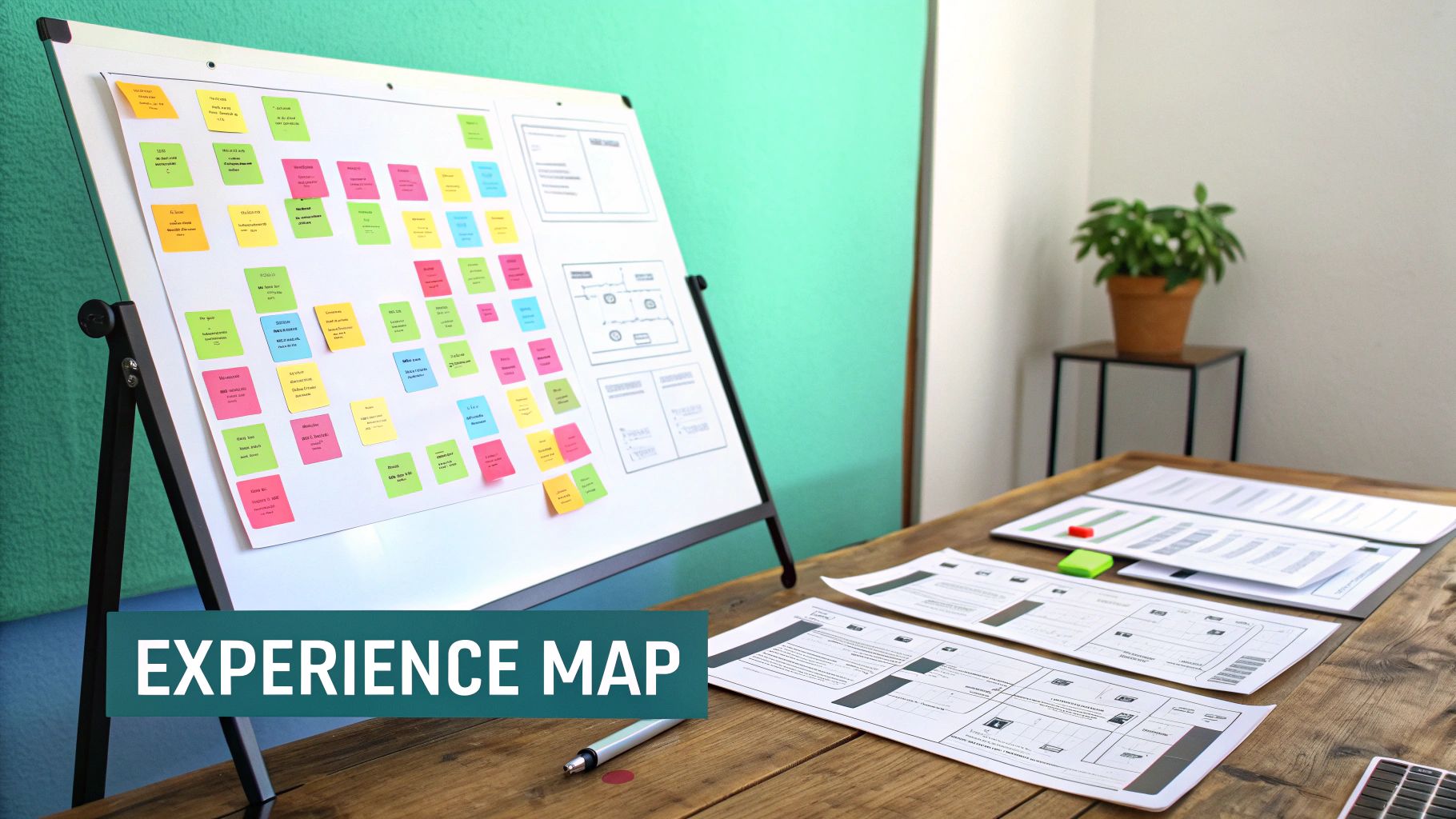
A solid requirements gathering process isn't just a task for IT or marketing. It’s a group effort. You need to pull key people from across the organization—sales, customer service, even legal and compliance—into the same room. Each department sees customers and content through a different lens, and their input gives you that crucial 360-degree view of your real operational needs.
The insights from these workshops become the backbone of your requirements document. This document is your North Star for the entire selection process, making sure every decision is tied to a clear business outcome.
From Vague Goals to Concrete Needs
The most common mistake I see is when teams stop at high-level goals like "improving customer engagement." To properly evaluate a CMS, you have to translate those big ideas into specific technical and functional requirements. This means asking sharp, focused questions that link your business strategy directly to platform features.
For instance, a goal to "increase personalization" becomes much more powerful when you break it down:
- Need: We have to show different hero banners based on a visitor's industry, which we track in our CRM. That means the CMS must integrate seamlessly.
- Need: The system should suggest relevant articles and products in real-time based on what a user is browsing. This points to needing an AI-driven personalization engine.
- Need: The marketing team needs to build and launch segmented campaigns without waiting for a developer. This tells you a user-friendly authoring experience is non-negotiable.
This approach turns fuzzy concepts into a checklist of must-have features. It’s the difference between asking for "a fast car" and specifying "a vehicle that can go from 0 to 60 in under 4 seconds with all-wheel drive."
The quality of your CMS choice is directly proportional to the quality of your requirements document. Vague inputs lead to a generic platform that fails to deliver a competitive advantage.
Building for Tomorrow with a Composable Mindset
Thinking about the future is absolutely critical, especially with how fast the enterprise content market is moving. The global CMS market is projected to hit $123.5 billion by 2026, so investing in an agile, future-proof architecture isn't just smart—it's essential for growth.
This is where a composable DXP architecture, a model championed by platforms like Sitecore, offers a real strategic advantage. Instead of being locked into a monolithic, all-in-one suite, you can pick best-in-class services (like search, personalization, or commerce) and connect them via APIs. The flexibility is immense.
As you map your requirements, make sure to prioritize architectural principles that support this model:
- Headless-First Delivery: Can the platform push content to any channel—a website, mobile app, smartwatch, or digital sign—from a single repository? Sitecore’s architecture is built for this omnichannel reality.
- API-Driven Integrations: How easily can the CMS talk to your existing martech stack, like your CRM, ERP, and marketing automation tools? A strong API framework is key to avoiding data silos.
- Scalability and Performance: Does the platform offer a cloud-native solution, like Sitecore XM Cloud, that can handle sudden traffic spikes without someone manually intervening and deliver content globally at high speed?
Building a detailed map of your requirements is an intense exercise, but it's an invaluable one. For more help on visualizing these needs from your customer's point of view, check out our guide on creating a customer journey mapping template. This document will become your most powerful tool in navigating the complex process of picking the right enterprise CMS.
Evaluating Enterprise Platforms: Sitecore vs. SharePoint
When you’re trying to choose a CMS, the conversation almost always lands on the enterprise heavyweights. Two names that pop up constantly—though for very different reasons—are Sitecore and SharePoint.
This isn't really a head-to-head battle. It’s more about understanding their core DNA to make sure you’re aligning the right platform with the right business problem. Think of it this way: Sitecore is purpose-built as a customer-facing Digital Experience Platform (DXP), designed to manage and optimize every touchpoint of the customer journey. SharePoint, on the other hand, is the undisputed king of internal collaboration, document management, and corporate intranets.
The Sitecore DXP Ecosystem for Customer Engagement
Let's cut through the marketing jargon. Sitecore's real power isn't in a single product but in its interconnected ecosystem, built from the ground up for sophisticated digital marketing and commerce. To get why it's a strategic choice, you need to understand the moving parts.
Sitecore Experience Platform (XP): This is the classic, all-in-one DXP. It bundles a powerful CMS with native analytics, marketing automation, A/B testing, and a centralized customer data repository (xDB). For companies that want a single, unified platform to handle both content and customer data, XP is still a beast.
Sitecore XM Cloud: This is where the platform is heading. XM Cloud is a SaaS, cloud-native, and headless CMS that delivers incredible speed, scalability, and agility for developers. It's the perfect fit for businesses embracing a composable architecture, letting them plug in best-of-breed tools via APIs. For a deeper look at this approach, our headless CMS comparison offers more context.
Sitecore Content Hub: This piece is a lifesaver for big organizations drowning in content chaos. Content Hub centralizes digital asset management (DAM), product information management (PIM), and marketing resource management (MRM). It’s all about ensuring brand consistency and streamlining content workflows for global teams.
We see this play out all the time with global manufacturing firms managing dozens of regional, multilingual websites. Using Sitecore XP, their marketing teams can set up personalization rules to show different product info and case studies to visitors from North America versus Asia—all from one place. The built-in analytics then show which variations are driving more quote requests, tying marketing spend directly to revenue.
Sitecore shines when your primary goal is to acquire, convert, and retain customers through personalized digital experiences. Its entire toolkit is designed to answer questions about customer behavior and use those insights to boost lifetime value.
SharePoint for Unlocking Internal Efficiency
While Sitecore looks outward at the customer, SharePoint looks inward, focusing on employee productivity and internal processes. For any organization running on the Microsoft 365 suite, it's the bedrock of the modern digital workplace. Its strength isn't in public-facing marketing; it's in creating a secure, centralized hub for corporate knowledge.
SharePoint is the go-to for building powerful intranets that streamline how a company operates. Picture a legal department managing thousands of contracts. With SharePoint, they can build a secure document library with version control, approval workflows, and powerful search, making sure everyone is working from the right document and that compliance standards are locked down.
This is a fundamentally different job than what Sitecore does. You wouldn't use SharePoint to run a personalized e-commerce campaign, just like you wouldn't use Sitecore to manage internal HR policies.
Strategic Alignment Is Everything
So, how do you choose? Or do you need both? It all comes down to your primary use case. The question isn’t which platform is “better,” but which one was built to solve your specific business problem.
Choosing the right platform is critical, as enterprises are increasingly investing in specialized systems to gain a competitive edge. This shift highlights a market that is maturing beyond one-size-fits-all solutions, moving towards platforms that solve specific business challenges, whether customer-facing or internal.
To see how other specialized platforms stack up, a detailed ecommerce platforms comparison can provide valuable insights.
To simplify the decision, we've put together a table that aligns common business needs with the platform best suited for the job.
Platform Use Case Alignment
This table offers a high-level overview, matching common business requirements to the ideal platform choice. It’s designed to help you quickly see which solution—Sitecore DXP or SharePoint—is the natural fit for your goals.
Ultimately, many large enterprises discover they need both. They rely on Sitecore to power their public-facing digital properties that drive revenue, and they use SharePoint to power the internal collaboration that drives operational efficiency. Grasping this distinction is the first critical step in choosing the right tools for your enterprise.
Analyzing Total Cost of Ownership and Real ROI
When you're evaluating a new enterprise CMS, it’s easy to get fixated on the sticker price. But that initial quote? It’s just the tip of the iceberg. A truly strategic decision requires a full financial framework that looks past the upfront cost to understand the platform’s real cost and its eventual return.
This means shifting from a simple budget mindset to a sophisticated financial analysis, starting with a deep dive into the Total Cost of Ownership (TCO). TCO isn't just about the annual license; it's the comprehensive sum of every expense tied to getting the platform running—and keeping it that way.
Deconstructing the Total Cost of Ownership
To accurately gauge the investment for an enterprise platform like Sitecore, you have to account for several critical cost centers. These often-overlooked expenses are where budgets can spiral if you don't plan for them from the very beginning.
- Platform Subscription and Licensing: This is the most obvious cost. It might be an annual license for a self-hosted solution like Sitecore XP or a recurring subscription for a SaaS model like XM Cloud.
- Implementation Partner Costs: Unless you have a deeply experienced in-house team ready to go, you’ll need a specialized partner. Their fees cover everything from discovery and architecture to development, integration, and project management. This is often the largest one-time expense.
- Cloud Infrastructure and Hosting: For on-premise or PaaS solutions, you need to budget for servers, whether they're physical or virtual. With a pure SaaS platform, these costs are thankfully bundled into the subscription, which simplifies the math.
- Team Training and Enablement: A powerful DXP is only as good as the team using it. Set aside a budget for comprehensive training for your marketers, content authors, and developers to ensure they can actually use the platform’s advanced features.
- Ongoing Support and Maintenance: Don't forget about life after launch. This includes retainer agreements with your implementation partner for ongoing support, bug fixes, and continuous optimization.
Calculating Realistic Return on Investment
Once you have a firm grasp of the TCO, the conversation has to shift to Return on Investment (ROI). This is where you draw a straight line from platform features to concrete business outcomes. Beyond just the CMS costs, a truly strategic approach means understanding how to measure and maximize your Marketing ROI.
A platform like Sitecore is a significant investment, yes, but it’s engineered to deliver measurable returns by directly impacting your KPIs. It's not just about making your website look better; it’s about making it perform better.
The core of a strong ROI case for a DXP is linking specific features to tangible revenue growth or cost savings. For example, Sitecore's personalization engine isn't a "nice-to-have"; it's a tool that can directly increase average order value by 5-15%.
To build a compelling business case, you need to focus on metrics you can actively track and measure. Here are a few practical examples:
- Increased Conversion Rates: Use the platform's A/B testing and AI-driven personalization to fine-tune calls-to-action, headlines, and user journeys. Then, track the lift in lead form submissions or completed checkouts.
- Improved Content Team Efficiency: Centralizing assets in a system like Sitecore Content Hub can slash the time marketers spend hunting for approved images or product info. This translates directly to lower operational costs and faster campaign launches.
- Higher Customer Lifetime Value (CLV): By using an integrated customer data platform to deliver relevant content and offers, you can encourage repeat purchases and build loyalty, which directly boosts CLV.
Calculating these figures requires a solid framework. For a step-by-step guide, you can learn more about how to measure ROI in our detailed article. By putting numbers to these benefits, you transform the CMS discussion from an expense into a strategic investment in growth.
From Blueprint to Reality: Nailing Your Implementation, Migration, and Governance
Choosing your new CMS is a huge milestone, but it's really just the starting line. I've seen even the most powerful platforms fail to deliver because what comes next wasn't given the attention it deserved. After more than a decade helping enterprises navigate these projects, I can tell you that a successful launch always comes down to three things: a smart, phased implementation; a strategic migration; and a rock-solid governance plan.
This whole journey, from initial cost analysis to the final return on investment, needs a clear financial framework.
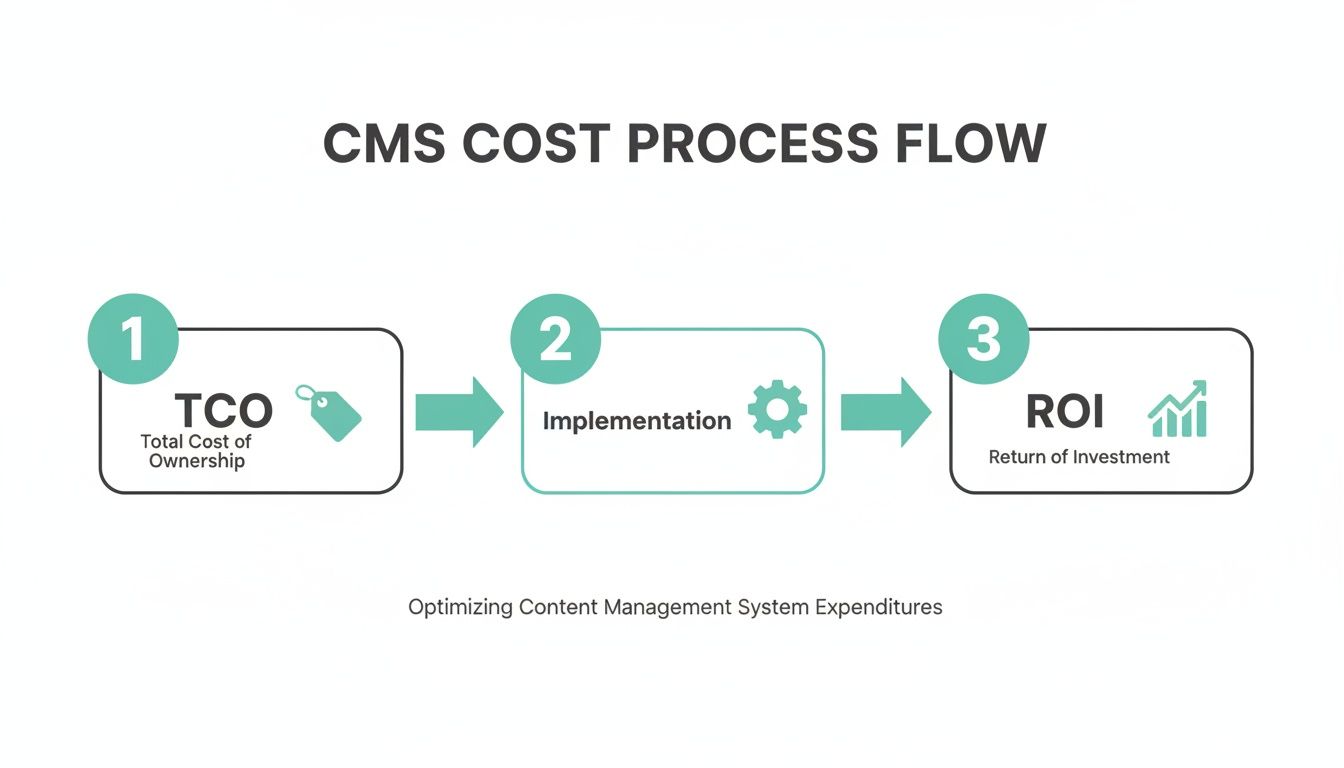
Thinking about the process through this lens—cost, implementation, and return—helps keep every decision tied to real business goals.
Designing a Phased Implementation
Avoid the temptation of a "big bang" launch where everything goes live at once. It's a classic mistake and a recipe for absolute chaos. A much safer and more effective path is a phased implementation. This means breaking the project down into smaller, digestible stages, each with its own clear goals and deadlines.
For instance, with a new Sitecore DXP, you might roll out the core marketing website first. Phase two could be integrating your CRM to unlock personalization features, and phase three could introduce the e-commerce functionality. This approach dramatically lowers the project risk, lets you gather user feedback early, and gets critical features into the market faster, so you start seeing value sooner.
An effective implementation is not just a technical deployment; it's a change management process. You must ensure the new system is not just installed but fully adopted by the people who will use it every single day.
Executing a Strategic Content Migration
One of the biggest blunders I see is when teams just lift and shift all their old content into the shiny new system. A migration is the perfect chance to clean house, not just move it. Before you even think about moving a single page, a thorough content audit is absolutely non-negotiable.
This means looking at every single article, blog post, and landing page and asking some hard questions:
- Is this content still accurate and relevant? Does it reflect our current brand?
- How is it performing? Are people actually reading it?
- Should we keep it as is, give it a major rewrite, or just archive it for good?
Once you know what's coming with you, you can map out a phased migration that won't disrupt the business. Our comprehensive website migration checklist breaks this down into a step-by-step framework to keep things smooth. This careful approach minimizes headaches and ensures only your best, highest-value content makes it into your powerful new CMS.
Establishing a Robust Governance Model
Think of your governance model as the rulebook that keeps your digital presence from descending into chaos. It’s the combination of rules, roles, and processes that ensures consistency and quality long after the launch party is over. Without it, you end up with brand inconsistencies, broken pages, and a ton of wasted effort.
Defining user roles and permissions from day one is critical. In a platform like Sitecore, you can get incredibly granular. A "Content Author" might only be able to create drafts in German, while a "Publisher" has the keys to approve and push content live globally. On a SharePoint intranet, you might lock down who can create new team sites or mess with the master page layouts.
This structure creates clear lines of accountability. Your governance plan should be a living document that clearly outlines:
- Workflow and Approvals: The exact journey a piece of content takes from draft to publication.
- Brand and Style Guidelines: Firm rules on tone of voice, image use, and formatting.
- Training and Support: A clear plan for getting new users up to speed and providing ongoing help.
By dedicating real energy to planning your implementation, migration, and governance, you’re not just buying a piece of technology. You’re building a strategic asset that will drive business growth for years to come.
Got Questions About Choosing a CMS? We Have Answers.
Picking a new enterprise platform is a huge decision, and it’s natural to have questions. Getting clear, straightforward answers is the only way to make a strategic choice that actually fits your long-term goals. Here are a few of the most common questions we hear from organizations just starting this journey.
What's the Real Difference Between a CMS, a DXP, and a Composable DXP?
Let’s break it down. At its core, a Content Management System (CMS) is your foundation—a tool for creating, managing, and publishing content on your website. Simple as that.
A Digital Experience Platform (DXP), like the traditional Sitecore Experience Platform (XP), is the next step up. It takes that core CMS functionality and bundles it with powerful tools for analytics, personalization, and marketing automation. Think of it as an all-in-one suite designed to manage the entire customer journey across different channels.
Then you have the Composable DXP, which is where the industry—and products like Sitecore XM Cloud—is headed. This approach breaks the monolithic DXP into a collection of flexible, best-in-class microservices. It's an API-first model that lets you pick and integrate only the capabilities you need, like search, personalization, or content delivery. This gives you incredible agility and helps you avoid getting locked into a single vendor's ecosystem.
How Long Does an Enterprise CMS Implementation Actually Take?
This is the million-dollar question, isn't it? For an enterprise-level platform like Sitecore or even a complex SharePoint intranet, you should realistically budget for a 6 to 12-month implementation. The final timeline really boils down to the complexity of your project.
Several key factors will stretch or shorten that timeline:
- Data Migration: How much content are you moving from your old system, and how messy is it?
- Integrations: How many other critical business systems, like your CRM or ERP, need to be connected?
- Custom Development: Are you building bespoke features or highly unique user experiences from scratch?
- Organizational Readiness: Is your team prepared? Do you have a content strategy in place and people available to support the project?
To get value faster, we often suggest a phased rollout. Launch the core, must-have functionalities first, and then build out the more advanced features in later stages.
Should We Go with a Cloud-Based or On-Premise CMS?
For the vast majority of businesses today, a cloud-based CMS (SaaS or PaaS) like Sitecore XM Cloud is the smartest strategic move. Cloud platforms mean lower initial infrastructure costs, automatic updates managed by the vendor, fantastic scalability to handle traffic spikes, and top-tier security.
On-premise solutions, on the other hand, give you absolute control over your hosting environment and data. This can be a non-negotiable for organizations with strict regulatory or data sovereignty requirements. But that control comes with a hefty price tag—a significant internal IT investment to manage servers, security patches, and all the ongoing maintenance.
The decision really hinges on what your organization values more: control, scalability, or internal resource management. While on-premise offers direct oversight, the agility and reduced overhead of cloud platforms make them the go-to choice for modern digital experiences.
At Kogifi, we guide enterprises through every stage of their digital transformation. From defining requirements to implementing and supporting world-class DXP solutions, our expert teams make sure your investment drives real, measurable results. See how we can help you build your digital future at https://www.kogifi.com.